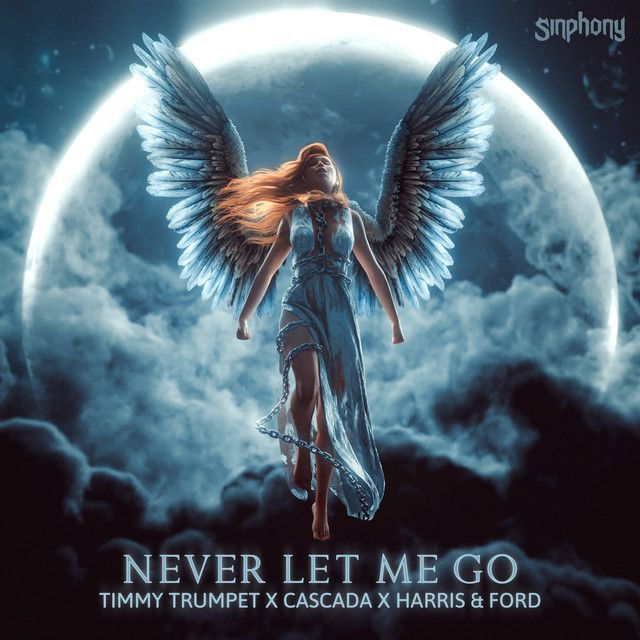
Why “Never Let Me Go” Feels Bigger Than Romance
The heart of the song in one glance
The meaning of Never Let Me Go Timmy Trumpet, Cascada, Harris & Ford centers on emotional closeness that feels so intense it becomes almost physical. The lyrics describe someone who fears distance, craves certainty, and wants a moment of connection to last.
"Never Let Me Go" - Timmy Trumpet, Cascada, Harris & Ford
I'll find a way to make you stay 'cause I wanna have you close
And I wanna make you mine, let you know what I feel inside
Loading lyrics...
Unable to load lyrics
We're unable to display the lyrics at this time. Please try again later.
On the surface, it is a dance-love song. They frame the speaker as fully committed, overwhelmed, and desperate not to lose the person they love. But the wording also suggests something wider: the fear that joy is temporary, and the need to hold on before it slips away.
That is why the hook lands so hard. The repeated plea, never let me go
, is romantic, but it also sounds like a response to change itself.
A love song built on motion and fear
One of the song’s smartest choices is its contrast between movement and attachment. The verses use images of distance and escape, such as fly away
and hide away
, but each image is answered by a request for closeness. The person being addressed can move, disappear, or pull back, yet the speaker keeps asking them to remain emotionally connected.
That push and pull creates the song’s tension. They are not describing a calm, settled relationship. They are describing love at full speed, where desire and anxiety arrive together.
Interpretation: This tension is what gives the track its emotional charge. The speaker is not only in love; they are afraid of losing the feeling that love creates.
Who is speaking, and what do they want?
The narrator speaks in direct, personal language, addressing one person as girl
. The goal is simple: to stay close, to be chosen, and to turn intense emotion into something stable.
A key line paraphrases that wish clearly: they want to keep this person near and make the relationship real. Another moment, I’m all in
, confirms total commitment. There is no emotional distance in the song’s voice. Everything is immediate.
Flying high
Shining, bright
I’m all in
Never let me go
Those images matter because they tie romance to elevation and light. Love is not described as quiet comfort. It feels like lift, glow, and risk.
Why the chorus matters more than the verses
The chorus does more than repeat the title. It changes the song’s meaning from a private request into a full emotional state. The verses tell listeners what the speaker wants. The chorus tells listeners what the feeling does to them.
They feel elevated, transformed, and almost stunned by the moment. Phrases like flying high
and shining, bright
suggest that love has changed their perception. Everything feels larger than normal.
That is common in festival-ready dance music. Big choruses often translate emotion into physical sensation, so listeners do not just understand the feeling—they feel it in the drop, the tempo, and the repetition.
The sound explains the meaning
This collaboration brings together artists known for high-energy electronic music. Timmy Trumpet has built a global profile through explosive festival EDM, while Cascada became famous for Eurodance and vocal-forward club anthems; Harris & Ford are also known for hard-hitting dance production. Basic career context can be found on their official and label pages, including Timmy Trumpet, Cascada, and Harris & Ford.
That context matters because the song’s production supports the lyrics at every step. The beat is designed for release. The synth layers create uplift. The chorus repeats with the kind of force that turns a personal plea into a crowd chant.
Factual point: The song credits list Timothy Jude Smith, Jeremy Bunawan, Kevin Kridlo, Marius Groeh, and Patrick Poehl as writers. Those names align with the collaborative nature of the track, where pop phrasing meets festival dynamics.
Interpretation: The production makes the song feel less possessive than the words might look on paper. In a softer acoustic setting, the repeated request could sound fragile or controlling. In this setting, it feels ecstatic—more like a plea to hold on to a perfect shared moment.
Symbols that keep showing up
Several motifs shape the song’s emotional world:
- Flight: rising above ordinary life, losing control, chasing freedom
- Light: love as something dazzling and hard to ignore
- Distance: fear that the other person may drift away
- Day and night: a wish for constant connection, not a passing thrill
These images are simple, but that simplicity helps. Dance-pop often works best when the emotional symbols are broad enough for listeners to project their own lives onto them.
More than romance: another possible reading
There is also a second way to hear the track. Interpretation: It may not be only about a person. It can also be about a feeling, a peak experience, or the rush of being alive in a perfect moment.
The lyrics keep returning to states of intensity rather than detailed relationship scenes. There is little story, little conflict, and almost no outside world. Instead, the song circles one emotional command: do not let this disappear.
That makes it work in both private and public settings. Someone can hear it as a love song. A festival crowd can hear it as an anthem about togetherness, release, and not wanting the night to end.
Why the song connects so easily
The track succeeds because it is emotionally direct. They do not bury the message in complicated poetry. They use repeated phrases, vivid upward imagery, and a huge electronic frame to make longing feel universal.
For U.S. listeners, that helps explain the appeal. The song sits in a familiar crossover space between EDM rush, Eurodance melody, and pop simplicity. It is easy to sing, easy to feel, and easy to map onto real life.
Final takeaway
The meaning of Never Let Me Go Timmy Trumpet, Cascada, Harris & Ford is about holding on—to a person, a bond, or a rare emotional high that feels too good to lose. Its lyrics present love as both joy and fear, while its production turns that tension into uplift.
In the end, the song says that the brightest moments can feel fragile. The reason it hits so well is that they make that fear sound thrilling instead of small.
Disclaimer: This interpretation is based on the released lyrics, songwriting credits, and artist context. As with any song, listeners may hear different meanings.







