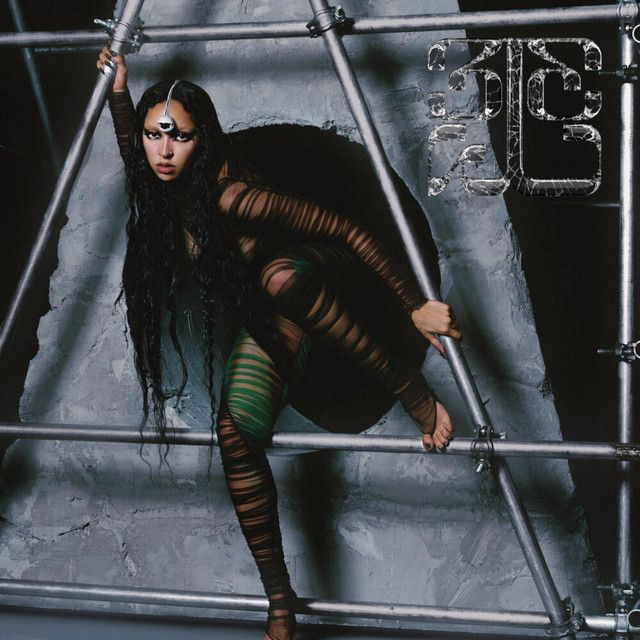
HMU for a Good Time by Tinashe, Channel Tres
A party song with a sharp social edge
The meaning of HMU for a Good Time Tinashe, Channel Tres starts with its obvious surface: this is a late-night invitation song. It lives in a world of phones buzzing, drinks pouring, smoke in the air, and people trying to get into the right room. But under that party setup, the track is also about status, access, and control.
"HMU for a Good Time" - Tinashe, Channel Tres
Sometimes I gets bored and then I'll switch up
Add a couple of drinks, that's a few shots (hey)
Loading lyrics...
Unable to load lyrics
We're unable to display the lyrics at this time. Please try again later.
They present a social scene where attention is constant and selective. The title itself turns casual texting language into a filter: if someone should “hit them up,” it is only for fun, not for romance, commitment, or emotional depth. That makes the song feel playful, but also guarded.
On the factual side, “HMU for a Good Time” appears on the deluxe edition of Tinashe’s 2021 album 333, released in 2022. The song features Channel Tres and was produced by Leven Kali, Digi, and Channel Tres. That context matters because 333 often balances independence, pleasure, and self-possession, themes that fit this track well.

Watch the official HMU for a Good Time
music video
Who is speaking, and what do they want?
The song’s voice is confident and social, but not especially intimate. The speakers are not opening their hearts. They are setting the terms of entry.
Early lines paint that picture fast. A phrase like one ring
suggests instant access, while switch up
hints at restlessness and a short attention span. In plain terms, the song describes a person who can call, choose, and move on quickly.
That matters because the hook is not really about connection. When they say hit me up for a good time
, the emphasis is on the experience, not the relationship. People are drawn to them because they seem fun, plugged in, and socially powerful.
Interpretation: The track can be heard as a flex about being desired. It is less “come know the real me” and more “come join the energy if you can keep up.”
How the verses build a world of access and exclusion
One of the song’s strongest ideas is that fun is tied to exclusivity. The lyrics keep separating insiders from outsiders: day ones versus strangers, invited guests versus people watching from outside.
A short phrase like we control the house
turns a party into a kingdom. The house is not just a physical place. It becomes a symbol of social power. Whoever runs the room decides who belongs.
That is why the repeated line about wanting to be a friend lands differently than it first seems. It sounds casual, but it carries a challenge. Friendship here is not warm and equal. It is aspirational. Other people want proximity because the speakers seem to have the money, the mood, and the magnetism.
There is also a strain of dismissal in the song. Rivals are brushed off, and hurt feelings are treated as irrelevant. The point is not to be fair. The point is to protect the vibe.
We in a mood, mood
you know I got the juice
Waiting on you
This short section captures the song’s social logic. They already have the energy and influence. Everyone else is catching up.
The hook says more than it seems
The chorus is catchy because it reduces the whole message to a single offer: contact them if someone wants excitement. But the hook also makes pleasure feel transactional.
There are references to phones, locations, substances, money, and being “ready.” Nothing is framed as deeply emotional. Even desire feels organized through convenience. Send the pin, come through, match the vibe.
Interpretation: That can make the song sound cold, but it may be more accurate to call it controlled. Tinashe often writes from a position of agency, especially in her independent era. In a brief iHeartRadio interview, she said making music on her own helped build her creative confidence. That sense of self-direction shows up here as social direction too.
Why Channel Tres changes the meaning
Channel Tres is a smart feature choice because his style often blends deadpan cool with club-ready rhythm. His verse adds swagger and a touch of menace, turning the song from flirtation into scene management.
His references to boredom, changing things up, and being heavily accessorized make the night feel unstable in an intentional way. Fun is never simple here. It depends on mood, chemistry, and power.
He also helps push the song away from pop sweetness and toward a more underground club texture. That matters for meaning: this is not a dreamy fantasy of love at the party. It is a hard-edged portrait of nightlife as performance.
How the production carries the message
Musically, “HMU for a Good Time” works because the production sounds sleek, mobile, and a little intimidating. Reviews around 333 described it as an “electrifying house-infused pop record,” and that label fits. The beat feels built for motion rather than reflection.
The groove is tight and repetitive, which mirrors the lyrics’ loop of calling, arriving, drinking, smoking, and repeating. The bass and percussion create a sense of forward pull. Instead of opening emotional space, the track keeps bodies moving.
Tinashe’s delivery is crucial too. She sounds light on top of the beat, while Channel Tres sounds grounded and commanding. Together, they create a push-pull between seduction and authority. That contrast is a big reason the song feels cool instead of chaotic.
Final takeaway: pleasure, power, and limits
In the end, the meaning of HMU for a Good Time Tinashe, Channel Tres is not just “let’s party.” It is about curating a night, a mood, and a social circle. Pleasure is central, but so is control over who gets access to that pleasure.
The song turns modern nightlife into a set of signals: a ringing phone, a dropped location, a packed room, a chosen few. Its fun comes with boundaries. That is what gives it edge.
Interpretation: Listeners can hear it either as a pure club anthem or as a sly commentary on how attention works in the social media era. Either way, it presents fun as something powerful people host, not something everyone gets equally.
Disclaimer: This article offers an informed interpretation of the song based on its lyrics, credited context, and production. Meanings can vary from listener to listener.








