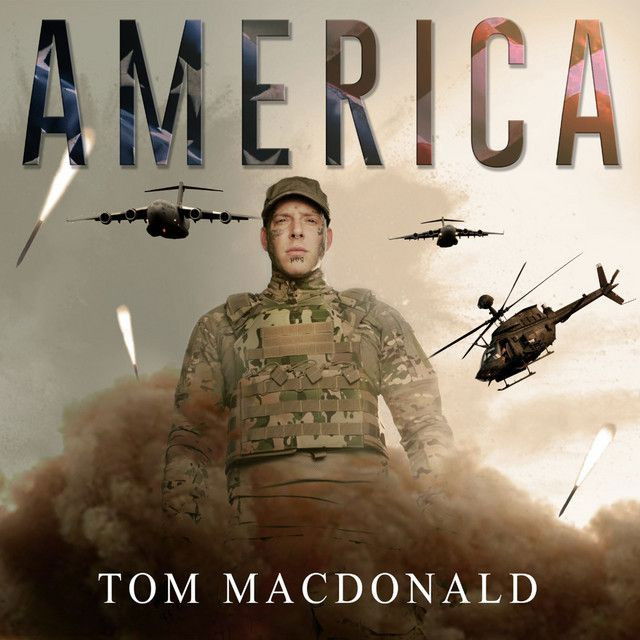
America by Tom MacDonald
Tom MacDonald’s “America” is a blunt, political rap about patriotism, division, and cultural backlash. For listeners searching for the meaning of America Tom MacDonald, the core idea is simple: the song argues that many people in the United States criticize the country while benefiting from the freedoms it provides. MacDonald turns that frustration into a protest song from the political right.
"America" - Tom MacDonald
Half of the Americans I see all hate America
They hate the cops doin' they best to take care of us
Loading lyrics...
Unable to load lyrics
We're unable to display the lyrics at this time. Please try again later.
A Patriotic Anthem Built on Frustration
At its center, “America” presents love of country as an active stance, not just a feeling. The speaker sees public anger, protest, and social conflict as signs that national pride has been replaced by contempt. When MacDonald says “freedom ain’t free”
, he ties everyday speech and protest to military sacrifice.
That idea drives much of the track. The song suggests that rights like dissent and free expression exist because others fought for them. From that angle, criticizing the flag while enjoying those rights looks hypocritical to the speaker.

Watch the official America
music video
The Main Argument in the Verses
MacDonald builds his case by listing the issues he believes are breaking the country apart: anti-police anger, riots, cancel culture, partisan labels, gender debates, and historical guilt. He treats these not as separate problems but as proof of a deeper national identity crisis.
One of the song’s clearest messages comes when it says people can hate government and still love their country. That line matters because it shows the track is not trying to defend every institution. Instead, it separates America as an ideal from the people and systems running it.
Interpretation: this is why the song feels broader than a campaign slogan. It is less about one party than about a worldview that says national unity has been weakened by constant outrage.
The Chorus Turns Belief Into a Pledge
The chorus is where “America” becomes more than complaint. It repeats ideas about sacrifice, speech, and loyalty until they sound like a vow. The phrase “take a knee”
becomes a key symbol. In the song, that gesture is framed not as peaceful protest but as disrespect toward the nation and those who served it.
That framing is important because it places the song inside a real U.S. culture-war debate. MacDonald is not vague here. He clearly sides with a form of patriotism that treats the flag as sacred and public protest against it as harmful rather than necessary.
“In America, the freedom ain’t free
In America, got soldiers dyin’ overseas”
Those lines compress the song’s worldview into two claims: freedom is costly, and that cost should produce gratitude.
Where the Song Pushes Against Left and Right
Although many lines target progressive politics, the song also attacks both major sides. MacDonald says “Republicans and Liberals”
are labels used to create chaos. That matters because it lets him speak as an outsider, a common role in his catalog.
This anti-establishment pose has defined much of MacDonald’s career on his official YouTube, where he has built a large audience through independent releases and commentary-heavy songs. “America” fits that brand closely: it is designed to sound like an unfiltered message from someone tired of elite scripts.
Still, the balance is uneven. The song criticizes both sides in theory, but most of its examples aim at left-coded ideas such as cancel culture, pronouns, and anti-flag protest. So while it claims independence, its emotional center is clearly conservative-populist.
How the Sound Supports the Meaning
Musically, “America” is built to feel forceful rather than subtle. The beat is heavy, the tempo steady, and the hook is broad enough to sound like a chant. That production style helps the message land as a rallying cry.
MacDonald and Nova Rockafeller have often collaborated across writing and visuals, and the credits here list Thomas MacDonald and Nova Paholek as writers. Their independent model has been widely noted, including by Billboard, because it allows songs like this to reach a loyal audience without major-label filtering.
The vocal delivery matters too. MacDonald raps in a clipped, emphatic style, with little softness in the verses. That hardness mirrors the song’s message: there is no attempt to sound undecided. Even the repeated title, “America”
, lands less like celebration than challenge.
Why the Song Connects and Why It Divides
The meaning of America Tom MacDonald depends partly on the listener’s politics. Supporters may hear a defense of gratitude, order, and shared national identity. Critics may hear oversimplified arguments that dismiss protest, race, and history.
Both responses make sense because the song is intentionally confrontational. It does not ask questions so much as draw lines. Its purpose is to energize people who feel mocked for loving their country in a traditional way.
Final Take
Interpretation: “America” is best understood as a patriotic grievance song. It argues that national freedom, military sacrifice, and pride in country deserve more respect than they currently receive in public life. Whether a listener finds that stirring or limiting will depend on how they view protest, history, and what patriotism should mean now.
This interpretation is based on the song’s lyrics, delivery, and public context, and other listeners may reasonably hear it differently.








