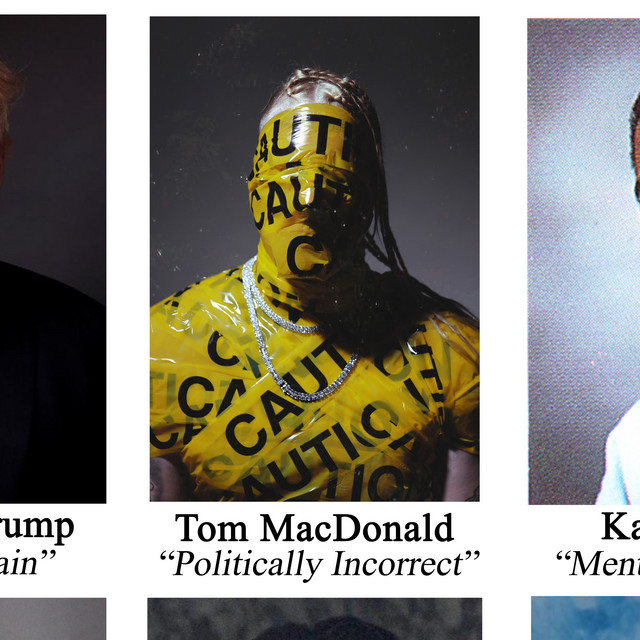
Why 'Politically Incorrect' Wants the Backlash
The meaning of Politically Incorrect Tom MacDonald starts with a simple idea: the song is built as a fight. It does not just describe a culture war; it tries to step into one on purpose.
"Politically Incorrect" - Tom MacDonald
My generation's afraid of opinions, y'all so intolerant
(Y'all so intolerant)
Loading lyrics...
Unable to load lyrics
We're unable to display the lyrics at this time. Please try again later.
Tom MacDonald has built much of his public image around songs that challenge “wokeness,” cancel culture, and modern political language. Coverage of his career often describes him as a divisive, independent rapper with a large conservative audience and a DIY approach to releases and videos. It also notes that he has openly leaned into provocation as part of his persona. Those facts matter here because this track works best when heard as both message and strategy.
A Protest Song About Social Pressure
At its core, the song argues that people have become too eager to police language, jokes, clothing, and opinions. MacDonald frames public life as a place where small mistakes become moral scandals.
Throughout the verses, they attack what they see as a culture of hypersensitivity. Short phrases like too sensitive
and being offended
point to the song’s central complaint: public outrage has become a kind of power.
Interpretation: the song is less interested in careful policy debate than in the feeling of walking on eggshells. Its emotional target is fear—fear of saying the wrong thing, dressing the wrong way, or being shamed online.
Watch the official Politically Incorrect
music video
Who the Song Is Talking To
The track speaks to a broad, unnamed “y’all.” That choice matters. Instead of arguing with one person, MacDonald turns a whole social trend into an opponent.
That opponent includes online critics, activists, and what the song treats as performative moral voices. When the lyric mocks people chasing approval through public correctness, it suggests that social values are being used for status.
The Villain Is Collective, Not Personal
By keeping the target vague, the song becomes more universal for fans who already feel frustrated by public debate. Anyone who feels silenced can map their own enemies onto it.
That is one reason the hook lands so hard. The repeated line I will not be censored
turns the song into a personal pledge, not just a complaint.
How the Verses Build the Argument
The song moves in a clear sequence:
- It opens by claiming that offense now rules public life.
- It expands that claim into criticism of identity politics and online outrage.
- It shifts toward holidays, costumes, and religion to show everyday examples.
- It ends with sarcasm, mocking the idea that enforced tolerance makes society better.
That structure helps explain the meaning of Politically Incorrect Tom MacDonald. The verses gather examples, but the real point is repetition: they want listeners to feel surrounded by absurd rules.
One sharp phrase, paying homage
, is especially revealing. MacDonald uses it to defend intent over public reaction. In other words, they argue that what a person means should matter more than how strangers interpret it.
The Chorus Turns Complaint Into Identity
The chorus is where the song stops being only social criticism and becomes self-mythology. It is not enough for the narrator to say society is restrictive; they also present themselves as the one person willing to resist it.
I'm not afraid
My name will be remembered
This is the article’s only multi-line lyric quote, and it shows the shift clearly. The message becomes larger than politics. MacDonald casts backlash as proof of courage and even as a path to legacy.
Interpretation: this is why the song feels closer to a brand statement than a neutral observation. The controversy is not a side effect. It is part of the design.
Sound, Delivery, and Why the Production Matters
The beat supports that confrontational message. The production is hard, direct, and chant-ready, with a heavy rhythm that gives the chorus a rallying quality.
MacDonald is known for a DIY model that often includes self-production and close creative work with Nova Rockafeller, who is also credited here as a writer. That independence matters because the song’s anti-censorship message fits an artist who sells themself as outside mainstream gatekeepers.
Vocally, the performance relies on force more than nuance. The delivery is clipped, loud, and mocking. That tone tells listeners how to hear the song: not as uncertainty, but as challenge.
Artist Context Changes the Meaning
MacDonald’s career gives the track extra context. Major profiles have described him as a provocateur and culture-war rapper whose songs spread through outrage as much as support. In one interview, he said he wanted to be aware
and also to show people he was not a “brainwashed right-wing zombie.” That tension matters.
On one level, the song presents itself as free-speech resistance. On another, it fits a public persona that benefits from conflict. Critics hear that as calculated trolling, while fans hear it as honesty.
Both responses make sense because the song is built to invite them.
Final Take: Defiance as Performance
So, what is the meaning of Politically Incorrect Tom MacDonald? Most plainly, it is a song about resisting social shame and rejecting public pressure to self-censor.
But it is also about performance. The song turns defiance into identity, and identity into spectacle. It does not just ask for disagreement; it almost needs it.
That is why the track remains easy to understand but hard to settle. Supporters hear courage. Critics hear provocation. The song is strongest where those two readings overlap.
Disclaimer: This interpretation is based on the lyrics, artist context, and public reporting, and other listeners may reasonably hear the song differently.









