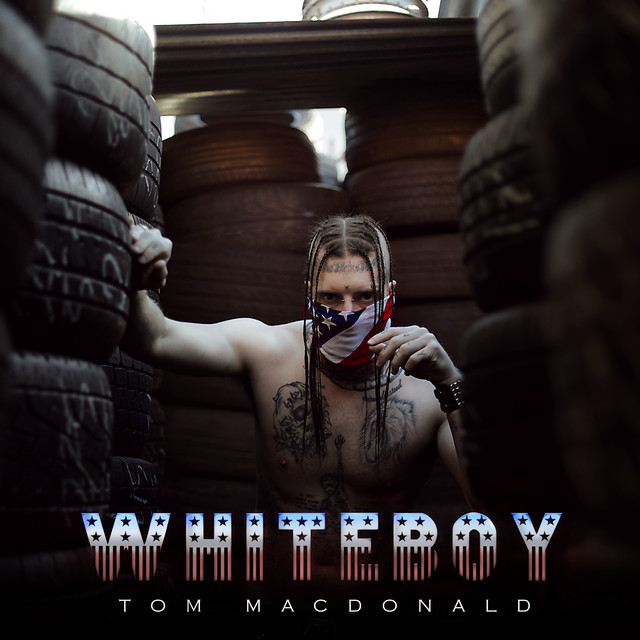
What WHITEBOY by Tom MacDonald Is Arguing
The meaning of WHITEBOY Tom MacDonald starts with a provocation. The song is built to spark a fight about race, blame, and identity in modern public life. Rather than telling a story with characters, it stages an argument: the speaker insists they are being judged by skin color before anyone looks at their own actions.
"WHITEBOY" - Tom MacDonald
But I can understand the reasons why you think that I should
Yeah I'm white but I never put your neck in no noose
Loading lyrics...
Unable to load lyrics
We're unable to display the lyrics at this time. Please try again later.
That approach fits Tom MacDonald’s broader career. The Canadian rapper has built a large independent audience through controversy-heavy releases and DIY visuals made with Nova Rockafeller, his partner and frequent creative collaborator. Rolling Stone described “Whiteboy” as one of the songs that helped define his viral, outrage-driven style, and reported that the video drew tens of millions of YouTube views while also attracting backlash and mockery.
The Song’s Core Claim, Stripped Down
At its simplest, the track says one thing over and over: being white is not the same as being racist. The verses reject inherited guilt, while the hook dramatizes the experience of being stereotyped. When the speaker says I didn't do
, the point is not subtle. They are separating personal morality from historical crimes.
That is the song’s factual center. Interpretation: the deeper goal is to argue for individual judgment over group judgment. The speaker accepts that racist atrocities happened, but they resist the idea that ancestry alone makes someone morally suspect.
This is why the lyrics spend so much time naming what the speaker is not: not a Klansman, not a Nazi, not a supremacist. The repeated denials are not just defensive. They are the engine of the song.

Watch the official WHITEBOY
music video
How the Chorus Turns Mockery Into Theme
The chorus matters because it sounds less like reflection and more like public shaming. Short taunts like White boy, don't say that
and white noise
make the hook feel like a crowd talking over the rapper rather than listening.
White boys, white lies
Don't tell me
through my white eyes
In context, that brief refrain suggests the speaker feels trapped by assumptions before speaking. Interpretation: the hook is less about literal censorship than social dismissal. They believe their viewpoint is being invalidated because of identity, not content.
The Verses Build a Defense of Individualism
Much of the song works like a courtroom statement. The speaker lists examples of how they say they treat people equally, then argues that race-based suspicion is itself a form of prejudice. When the lyric says we all bleed the same
, it reaches for a universal human point instead of a policy argument.
That line also shows the song’s biggest rhetorical move: it shifts from history to personal ethics. Instead of discussing systems at length, it asks a simpler moral question—should people be hated for traits they did not choose?
For many listeners, that directness is the appeal. For critics, it is also the limitation. Interpretation: the song narrows a complex debate about structural racism into an argument about personal innocence. That makes the message emotionally clear, but politically incomplete.
Why WHITEBOY Became So Divisive
MacDonald did not stumble into controversy here; he leaned into it. Rolling Stone reported that he said he hoped angry reactions would spark the conversation
. That helps explain the song’s design. Everything about it is blunt, repetitive, and easy to argue with online.
The same report also noted a darker side: white nationalists embraced the track, and MacDonald said he spent time deleting supportive comments from them because it “freaked” him out. That does not mean the song openly endorses those views. In fact, the lyrics directly reject supremacists. But it does show how provocative art can travel beyond an artist’s intended audience.
That split is key to understanding reception in the United States. Supporters heard a plea against collective blame. Critics heard a “white victim” anthem that ignores power, history, and inequality in the present.
The Sound Makes the Message Harder, Not Softer
Production is a major part of the song’s meaning. The beat is heavy and stripped for impact, giving MacDonald space to punch each line with a confrontational cadence. The chorus is chant-like, almost like a schoolyard taunt or protest slogan.
That matters because the song is not trying to sound nuanced. It is trying to sound cornered and defiant at the same time. The tense delivery, repeated hook, and harsh rhythm all reinforce the idea that the speaker is under attack and answering back.
In visual terms, that message was pushed further by the music video’s classroom setup, where MacDonald is mocked and silenced while performing. According to Rolling Stone, that scene helped turn the song into a viral flashpoint.
A Fair Reading of What the Song Means
A balanced reading of the meaning of WHITEBOY Tom MacDonald should hold two truths together:
- The song clearly condemns overt racism and white supremacy.
- The song also frames race mainly through personal blame, not systemic inequality.
That is why different audiences hear very different songs. One group hears a defense of fairness. Another hears a complaint that sidesteps larger realities.
Final Take on the Debate
“WHITEBOY” is best understood as an argument song. It is less interested in healing than in forcing a reaction. Its central message is that people should be judged by what they do, not by racial ancestry, but its controversy comes from how sharply it pushes that point while treating broader social context as secondary.
That tension is why the track still gets discussed. It is not subtle, but it is revealing about how culture-war music works: it turns a social debate into a personal grievance, then amplifies it with hooks built for conflict.
Disclaimer: Song meaning is always part fact, part interpretation. The analysis above separates clear lyrical content from critical reading and does not claim to state the artist’s only possible intent.









