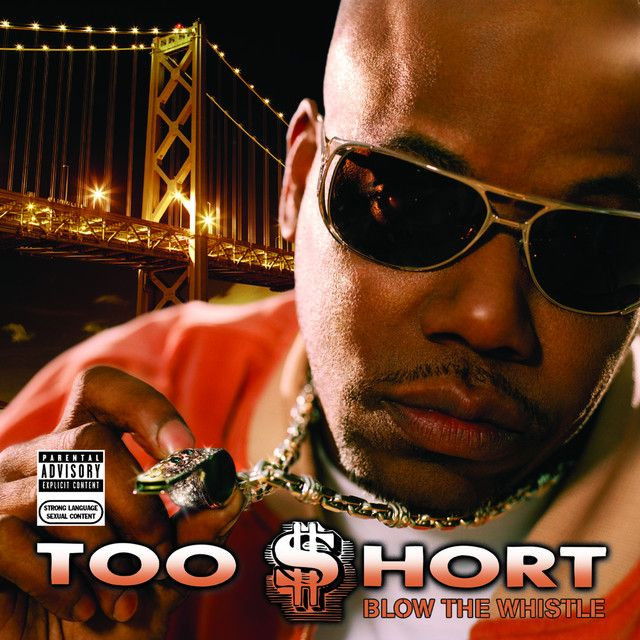
Why 'Blow the Whistle' Still Hits So Hard
The meaning of Blow the Whistle Too $hort starts with a flex, but it does not end there. On the surface, the 2006 single is a club record built for instant crowd response. Underneath, it is also a statement about survival, influence, and Oakland identity.
"Blow the Whistle" - Too $hort
Can't understand how I last so long
I must have super powers
Loading lyrics...
Unable to load lyrics
We're unable to display the lyrics at this time. Please try again later.
Released as the lead single from Too $hort’s sixteenth album, Blow the Whistle, the track was issued on March 3, 2006 and produced by Lil Jon and Too $hort, according to widely cited release data and credits. It is often described as one of Too $hort’s signature songs, even though it did not become a major Hot 100 crossover hit. Its long life in sports, TV, and later samples says a lot about why it matters.
More Than a Party Record
At its core, the song is about staying power. Too $hort opens by counting years, albums, and hours spent rapping, framing himself as someone who did not just have a hit but built a career. When they boast about making songs that move crowds, the point is bigger than ego. They are arguing that longevity itself is proof.
That is why short phrases like I go on and on
and album number 16
matter. They are not random brag lines. They establish the speaker as a veteran looking at a younger rap scene and saying: they were here first, they shaped the sound, and they are still standing.
Watch the official Blow the Whistle
music video
A Hook That Acts Like a Command
The chorus is one of the simplest in rap, and that simplicity is the point. When Too $hort repeats blow the whistle
, it works like a command that stops the room and redirects attention.
Interpretation: the whistle can be heard in at least two ways:
- As a party signal, telling the crowd to react.
- As a referee-style call, declaring authority and setting the rules.
That second reading fits the verses. Too $hort spends much of the song measuring distance between them and imitators, and the hook becomes a way of saying they can still control the game.
Oakland Pride Sits at the Center
The song also carries strong regional meaning. Too $hort names Oakland directly and places themselves inside a Southern-and-Western rap map that includes UGK, 8Ball & MJG, Bun B, and others. That list is not filler. It shows solidarity with artists who built durable local styles before rap became fully nationalized.
When they say that’s Oakland, baby
, they are planting a flag. The track is tied to Bay Area energy and often linked to the hyphy era, while Lil Jon’s production also brings in crunk force. That mix helps explain the song’s reach: it sounds rooted in one scene but loud enough for every club.
Bragging, Influence, and the Question of Originality
Another key part of the meaning of Blow the Whistle Too $hort is influence. Too $hort complains that others have copied their language, delivery, and style. The verses are full of indirect scorekeeping: who borrowed from whom, who can claim originality, and who really earned a place in rap history.
One sharp phrase is stay on the porch
. In plain terms, they are separating veterans from pretenders. The message is blunt: many artists may copy the surface, but they cannot enter the inner circle.
This is where the song becomes more than a club chant. It is also an elder’s warning about imitation. Too $hort is not asking for respect quietly. They are demanding it in public, over a beat designed for maximum visibility.
The Beat Explains the Message
Production does a lot of meaning-making here. Lil Jon and Too $hort build the song around hard handclap-style percussion, spare synth tones, and the signature whistle effect. There is very little clutter.
That minimalism matters. It leaves room for Too $hort’s voice to sound direct and unhurried, almost conversational, even while the beat pushes the room forward. The empty spaces make each boast hit harder.
What's my favorite word? BitchWhy they gotta say it like $hort?
Those lines are controversial, but within the song they serve a rhetorical purpose: they turn a catchphrase into evidence of influence. Too $hort is arguing that even the way others speak carries their imprint.
Why the Song Lasted
The track’s legacy helps confirm its meaning. It reached the Billboard Bubbling Under Hot 100 and also charted on rap, R&B, and rhythmic lists, but its cultural life grew far beyond chart peaks. Later artists reused or nodded to it, including Drake on “For Free” and Saweetie on “Tap In.” It also kept showing up in games, TV series, and sports celebrations.
That afterlife makes sense because the song is built on three durable ideas:
- a simple hook people remember fast
- a beat that works in clubs and arenas
- a message about reputation that never gets old in rap
Interpretation: listeners may not quote every verse, but they understand the feeling immediately. The song announces presence. It tells people a legend has entered the room.
The Real Takeaway Behind the Whistle
In the end, the meaning of Blow the Whistle Too $hort is not just “look at me.” It is “look at what lasted.” Too $hort uses humor, swagger, and repetition to make a larger point about endurance, authorship, and hometown pride.
That is why the record still lands nearly two decades later. It is loud, funny, and built for movement, but it is also a veteran artist’s victory lap.
Disclaimer: This interpretation focuses on themes, context, and musical choices. As with most songs, some meanings remain open to listener interpretation.








