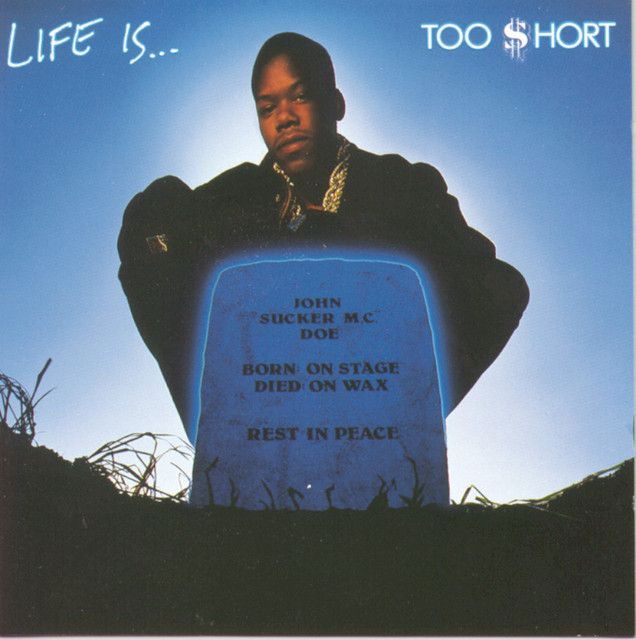
Why Too $hort’s “Don’t Fight the Feelin’” Hits So Hard
The meaning of Don't Fight the Feelin' Too $hort starts with conflict, not romance. The song is built like a verbal fight between sexual bragging and sexual refusal. Too $hort opens with a blunt, aggressive persona, then the women answer back with ridicule and rejection, and later another male voice tries to reclaim control. That structure matters.
"Don't Fight the Feelin'" - Too $hort
Yeah you
Can I ask you a question
Loading lyrics...
Unable to load lyrics
We're unable to display the lyrics at this time. Please try again later.
Rather than telling one smooth story, the track stages a dirty, chaotic argument about desire, power, ego, and consent. It is loud, provocative, and intentionally hard to ignore. That is also why it became one of the most talked-about records in Too $hort’s catalog.
A Battle, Not a Love Song
At its core, this song is about competing claims over who gets to define sex: the man who assumes access, or the women who reject that assumption. Too $hort’s opening verses present a familiar persona from his early work: a hyper-confident Oakland player who treats seduction like a hustle. He boasts, pushes, and talks as if resistance is temporary.
Then the song swerves. The female response flips his whole frame back on him. Instead of being impressed, they mock his body, his mouth, and his game. When they say there is no attraction to resist, they turn the title into an insult. In other words, the hook does double duty. For the men, it means give in to desire. For the women, it means there is no desire there at all.
That back-and-forth is the song’s real engine.
Watch the official Don't Fight the Feelin'
music video
The Title’s Trick Changes Everything
The phrase don’t fight the feeling
sounds simple, but the song keeps changing what that “feeling” is. In the male verses, it means hidden lust that will eventually surface. In the female verses, the point is the opposite: they feel disgust, not temptation.
This is why the song lands as a “battle of the sexes” performance rather than a straightforward seduction track. The title becomes a contested slogan. Each side tries to own it.
to fight the feeling
there would have to be one
That brief line is the sharpest reversal in the song. It cuts through all the swagger and says the man has mistaken pressure for chemistry.
How the Verses Build the Theme
Too $hort’s persona: control through talk
Too $hort’s writing here leans on his long-running “player” image. Across his career, he built a style around conversational flow, sex talk, pimp slang, and direct address, especially in Bay Area rap during the 1980s and 1990s. Biographical overviews from Encyclopaedia Britannica and The Recording Academy note how central that persona was to his rise.
In this song, the point is not subtle emotion. It is domination through language. He keeps promising gifts, pressure, and sexual skill as if confidence itself should win the argument. Phrases like I’m the man
and won’t be no punk
show that his masculinity is on display as much as his desire.
The women’s answer: humiliation as defense
The female response is what gives the track its dramatic shape. They do not politely refuse. They roast him. Their insults are extreme, funny, and meant to shrink his ego in public.
Interpretation: This section can be heard as the song exposing male bravado by letting women puncture it. Even inside a very crude rap record, their verse creates a counter-force. They refuse his script and write their own.
Rappin’ 4-Tay’s section: denial becomes a challenge
Rappin’ 4-Tay enters to argue that some women pretend not to want sex while secretly wanting it. That does not soften the track; it escalates it. His verse treats refusal as a game of delay, not a final answer.
This is one reason the song remains controversial. It is not simply explicit. It is built around clashing ideas of sexual truth, and one side repeatedly tries to override the other.
The Sound Makes the Message Feel Bigger
Production helps sell the record’s confrontational mood. The beat is sparse, funky, and street-level, with a heavy low end and a steady groove that leaves room for long, taunting verses. Too $hort’s best-known music often used stripped-down drum programming and bass-forward production, a hallmark of early Bay Area rap documented in histories of West Coast hip-hop like AllMusic’s artist overview.
That minimalism matters here. With so much empty space in the beat, every insult and every boast lands harder. The track feels less like a polished pop song and more like a live argument over a car stereo.
The delivery also shapes the meaning. Too $hort raps with a calm, almost casual confidence, which makes the content feel even more blunt. The women’s verse sounds sharper and more animated, turning rejection into spectacle. 4-Tay’s tone then restores the male side’s swagger, making the song feel cyclical rather than resolved.
Artist Context Matters
“Don’t Fight the Feelin’” came from a period when Too $hort was already known for explicit content and for pushing sexual speech to its commercial limits. His work often mixed humor, shock, and street storytelling. In that context, this song is not an outlier; it is a concentrated example of what made him famous and divisive.
Reception history supports that view. The song is remembered both as a fan favorite and as one of the clearest examples of how raunchy early mainstream West Coast rap could get. Its notoriety is part of its meaning: the record is designed to test limits.
So What Does the Song Mean?
The meaning of Don't Fight the Feelin' Too $hort is less about romance than about sexual power as performance. It dramatizes people talking past each other, each trying to control the story of attraction. One side insists desire is inevitable; the other says that confidence can be delusion.
Interpretation: The smartest way to hear the song is as a clash between fantasy and refusal. Its men speak as if charisma guarantees access. Its women answer that arrogance can be laughable, not irresistible. That tension is why the song still stands out.
In the end, the track is memorable not because it solves that conflict, but because it refuses to. It leaves listeners inside the noise, ego, and argument.
Disclaimer: This interpretation is based on the song’s lyrics, performance, and public artist context. Meaning can vary by listener.








