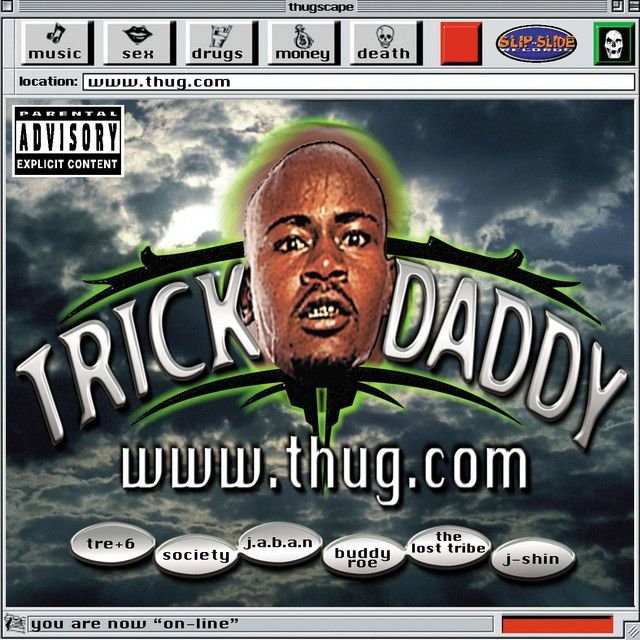
What Trick Daddy Means in Back in the Days
A memory song that is not really nostalgic
The meaning of Back in the Days Trick Daddy starts with a twist. On the surface, the song sounds like a look back at an earlier time. But it is not a warm, easy piece of nostalgia. It is more like a hard inventory of what changed in the streets, what got worse, and what that says about survival.
"Back in the Days" - Trick Daddy
It wasn't no AIDS
It wasn't no AK's
Loading lyrics...
Unable to load lyrics
We're unable to display the lyrics at this time. Please try again later.
Trick Daddy, born Maurice Young in Miami, built much of his music from real street detail and Southern rap realism. He came out of Liberty City and first gained attention in the late 1990s before becoming one of Miami rap's biggest voices. That background matters because this song speaks with the authority of someone describing a world they knew closely, not from a distance.
Watch the official Back in the Days
music video
Looking backward to measure loss
The hook centers on the idea of back in the days
, but Trick Daddy uses that phrase to compare two different social climates. Early lines recall older styles and older dangers. He mentions more afros than braids
and says violence used to feel less automatic than it does now.
That does not mean the past was peaceful. In fact, one of the song's sharpest moves is admitting that even childhood memories include brutality. He remembers seeing a boy badly beaten when he was young. Then he contrasts that with a present where bodies are torn apart by guns and whole streets become crime scenes.
Interpretation: the song is not saying the past was good. It is saying the present feels more extreme, more chaotic, and more numb. Memory becomes a measuring tool for moral and social decline.
How the verses build the theme
Violence becomes bigger and colder
The first verse tracks escalation. Trick Daddy compares older fights with newer gun violence, and the point is scale. Problems that once ended in fists now lead to heavy weapons, police tape, and permanent loss.
When he says people are quick to go to gunplay
, he frames the modern street code as impulsive and fragile. Small disputes become deadly. The song's fear comes not only from violence itself, but from how easily it starts.
Fame and the street code both changed
He also argues that the culture around crime has shifted. In his telling, the old world was not driven so much by image. He says it wasn't bout fame
, which suggests a move from survival to performance.
That idea is important in hip-hop context. Trick Daddy often rapped with blunt anti-glamour realism, even when his records were radio-friendly. Here, they push back against the idea that street life is stylish. The song says the new era chases clout, talks too much, and pays for it.
Snitching is a major symbol
A later section turns toward betrayal, especially by informants and untrustworthy partners. The song gives a long, detailed picture of people telling police everything they know. Trick Daddy presents this as another sign that the rules of the older neighborhood have collapsed.
Interpretation: this part is bigger than one person informing. It represents a world where loyalty has been replaced by self-protection and fear. In that reading, the song is about broken trust as much as street crime.
Race and power in the final verse
One reason the meaning of Back in the Days Trick Daddy stands out is that it widens from personal memory to racial history. In the last section, he stops talking only about neighborhood behavior and speaks about Black pain, white power, and inherited anger.
He suggests that Black communities were punished, ignored, and criminalized long before the present moment. He points to racism directly, including references to the Klan and prison. That shift changes the song from local storytelling into social commentary.
Back in the days
I was young and afraid
trapped in a maze
This brief closing thought matters because it strips away macho pose. After all the hard talk, Trick Daddy ends by admitting fear and confusion. That honesty gives the song emotional weight. They are not only criticizing the world around them; they are also describing what it felt like to grow up inside it.
Why the production matters
The beat supports the song's message by staying grounded and uncluttered. Instead of a glossy club sound, the production leaves room for Trick Daddy's voice, which is the real center of the track. Their delivery is direct, heavy, and conversational, almost like testimony.
That style fits Trick Daddy's broader catalog. Although he had major crossover moments later in his career, including chart success with hits like "Let's Go," his strongest serious records often depend on a plainspoken voice and regional detail. In songs like this, the lack of polish feels intentional. It keeps the focus on witness, not spectacle.
The strongest interpretation
The best reading is that this is a song about distorted progress. Things changed, but not in a healthy way. Violence got louder, loyalty got weaker, race tensions stayed deep, and young people inherited a maze with fewer safe exits.
At the same time, the track avoids simple nostalgia. Trick Daddy does not paint the past as innocent. They admit that fear, poverty, and brutality were there all along. What changed is intensity and social meaning: the old pain hardened into a more reckless present.
Why the song still lands
For many listeners, the power of the song is its bluntness. It speaks to people who have seen neighborhoods mythologized by outsiders or flattened into headlines. Trick Daddy offers something messier and more believable: memory mixed with anger, pride mixed with warning.
That is why the meaning of Back in the Days Trick Daddy still feels clear. It is a street memoir, a cultural critique, and a confession at once. It asks what happens when a community's past was already wounded, and the future still found ways to make it worse.
Disclaimer: This interpretation is based on the lyrics, performance, and known artist context. As with any song, listeners may hear different meanings in different lines.







