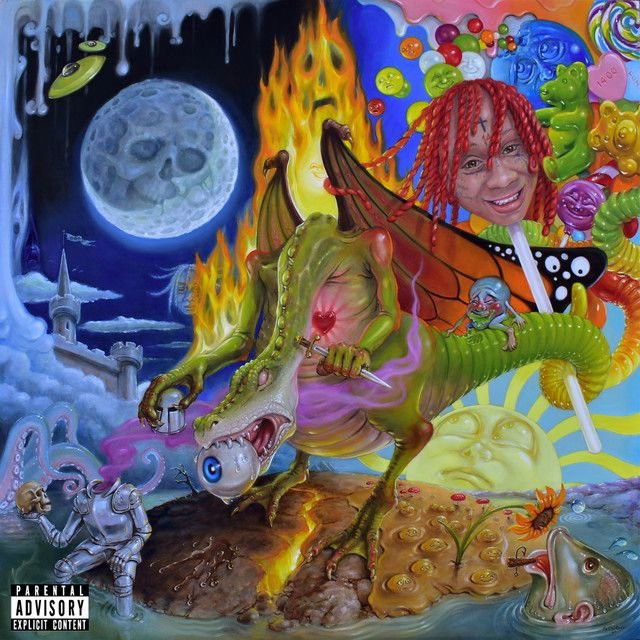
Betrayal by Trippie Redd, Drake
When fans search for the meaning of Betrayal Trippie Redd, Drake, they’re really asking two things: What does betrayal look like from inside rap’s pressure cooker—and who is Drake aiming at? The track answers both with blunt hooks, gaming-coded bravado, and a verse that turned a private feud into public sport.
"Betrayal" - Trippie Redd ft. Drake
(PinkGrillz)
Paper planes (paper planes), Novocaine (Novocaine)
Loading lyrics...
Unable to load lyrics
We're unable to display the lyrics at this time. Please try again later.
A Shot at Loyalty in the Spotlight
At heart, Betrayal is about trust taxed by fame. Trippie’s hook lays out the injury and the stance. He repeats I swear I been betrayed
and stacks it with Too many to count
, then insists he stayed the course: Solid how I stayed
. The message is simple: success attracts disloyalty; character is staying steady anyway.
Interpretation: The title isn’t only about enemies. It hints at broken ties within a circle—friends, crews, even business. That’s why the chorus lands with a tired calm rather than grief; they’ve seen this before.
Watch the official Betrayal
music video
The Hook That Hurts: What the Chorus Means
The refrain moves like a mantra. It admits pain but refuses to fold. Each return of the hook reinforces a boundary—If you ain't with me, you against me
. In effect, the chorus resets the room: loyalty is binary; ambiguity gets you pushed to the edges.
Who’s Talking, and Why It Stings
Trippie narrates in first person, mixing neighborhood poise and superstar insulation. He walks “without a stain,” flashes designer grit, and turns betrayal into fuel. Drake then enters with surgical cool, tightening the lens from general mistrust to specific score-settling. Media coverage at the time highlighted his lines as a sharpened message to Kanye West and Pusha T, reviving a long-running cold war in a few bars.
All these fools I’m beefin’ that I barely know Forty-five, forty-four, let it go ’Ye ain’t changin’ s— for me, it’s set in stone
On impact, these lines do three things: minimize the opposition as distant acquaintances, dismiss their age-bracket jabs as tired, and declare Drake’s plan unmovable. It’s not just a diss; it’s a posture—untouchable, forward-only.
Symbols, Games, and Street Myths
Trippie laces his verse with pop-culture armor. References to “Resident Evil,” “BloodRayne,” “Max Payne,” “Johnny Cage,” and “Liu Kang” turn violence and stamina into video-game shorthand—instant images of power-ups, combos, and bosses. Jewelry flexes like “Johnny Dang” signal status that’s both art and shield.
He also tosses in numbing agents—“paper planes,” “Novocaine,” and “Mary Jane”—to sketch a mood of gliding past threats. Interpretation: those items aren’t just props; they’re symbols for emotional anesthesia, a way to dull the sting of betrayal while keeping motion.
And then there’s precision. When Drake cracks, Head shot, Drizzy
, he’s claiming aim—lyrical and strategic. Interpretation: it’s about accuracy over chaos, proof that he doesn’t spray; he selects.
The Beat’s Armor: Production Choices
The instrumental comes from Taz Taylor, PinkGrillz, and 88Dynox, who thread Trippie’s Trip At Knight aesthetic—bright, glassy synths and clipped, hyperpop-adjacent textures—into a hard trap chassis. The drums are tight and forward, the 808s punchy, and the synth lead cuts through like neon. That contrast matters: sugary timbres with aggressive rhythms mirror the song’s stance—wounds acknowledged, defenses up.
Trippie’s melodic bark rides the pocket, doubling key words for impact, while Drake’s tone turns colder and drier, letting pauses do work. Interpretation: the production acts like armor plating; even when the lyrics admit hurt, the mix projects invincibility.
Culture Clash: Subliminals Become Headlines
Betrayal appeared on the Complete Edition of Trip At Knight in August 2021, one day after the standard album. It immediately trended because Drake’s verse reignited the years-long tangle with Kanye West and Pusha T, which had flared after Pusha’s 2018 reveal of Drake’s son and the volley of competing tracks. Coverage and fan decoding framed Betrayal less as a Trippie single and more as a moment in a saga. That spotlight—rightly or wrongly—shifted the center of gravity toward Drake’s guest turn.
Even so, the song works beyond the gossip. Interpretation: Betrayal doubles as a blueprint for boundaries. It says fame narrows trust and that public wins require private walls.
Alternate Reads and Why They Matter
- Interpretation: The song is a flex drill dressed as therapy. Boasts and pop-culture quips keep the mood high so the hook’s pain doesn’t buckle the track.
- Interpretation: It’s a cautionary tale. The video-game motif hints at respawns and extra lives, suggesting cycles—betrayal will happen again, but they’ll be ready.
Final Takeaway
If you’re chasing the meaning of Betrayal Trippie Redd, Drake, start with the chorus’s bruised resolve and end with the guest verse’s ironclad posture. It’s not just who betrayed them; it’s how they set the rules after.
Disclaimer: Song meanings are interpretive. This analysis blends reported context with lyrical and production-based inferences.








