Why "Code Blue" by T.S.O.L. Still Disturbs
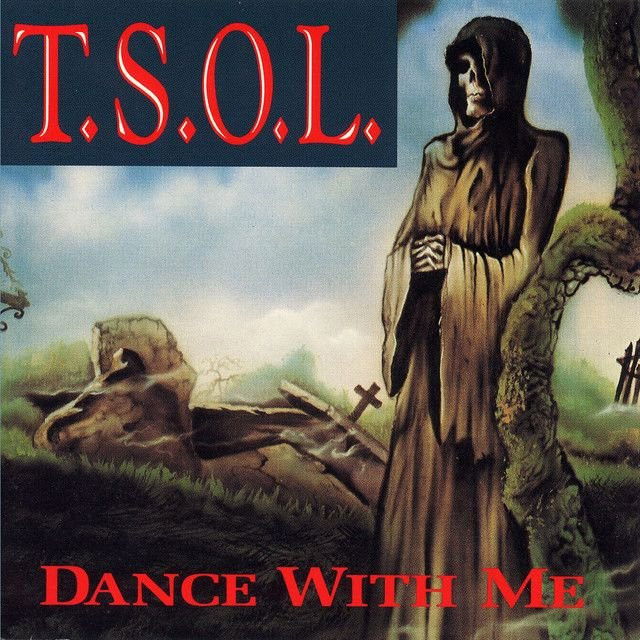
The meaning of Code Blue T.S.O.L. starts with a simple truth: this is a song built to offend, unsettle, and test limits. Released on Dance with Me in 1981, the track became one of T.S.O.L.'s most notorious songs, and it still lands like a dare. It is short, ugly, and impossible to mistake for polite punk.
"Code Blue" - T.S.O.L.
I never got along with the girls at my school
Filling me up with all their morals and their rules
Loading lyrics...
Unable to load lyrics
We're unable to display the lyrics at this time. Please try again later.
Factually, the song is commonly described as necrophilia-themed, and it appears on T.S.O.L.'s first full-length album, a record produced by Thom Wilson and recorded in 1981 at Redondo Pacific Studios in California. That album marked a move away from the band's earlier political material toward horror and gothic imagery.
A Horror Voice, Not a Normal One
To understand the song, it helps to separate narrator from artist. The lyrics speak in first person, but that does not automatically make them confession. In punk, especially horror-punk, artists often create a character whose job is to provoke.
Here, the speaker rejects everyday social life almost immediately. They mock school rules, other people's morals, and emotional demands. That rejection leads to the song's central shock line, fuck the dead
, which is less a subtle metaphor than a deliberate act of lyrical violence.
Interpretation: many listeners hear this as a grotesque fantasy of total control. The speaker wants a partner who cannot speak back, disagree, or make demands. That is what makes the song disturbing beyond its gore. It turns intimacy into domination.
Watch the official Code Blue
music video
What the Story Is Doing Under the Shock
The plot is blunt and quick. The speaker slips into a mortuary, opens a casket, and describes physical contact with a corpse. Phrases like middle of the night
and the mortuary
give the song a B-movie setting, while cold blue flesh
turns the body into a visual image rather than a person.
That matters. The song strips away humanity on purpose. The dead person is treated as an object, and the speaker keeps praising the fact that they won't complain
. In plain language, the lyric keeps returning to silence, passivity, and lack of resistance.
Interpretation: beneath the exploitation-horror surface, the song can be read as a savage parody of selfish desire. The speaker does not want love, sex, or connection in any normal sense. They want a world with no consent, no conflict, and no consequences. That makes the song less about romance than about the ugliest version of control.
Why the Chorus Hits So Hard
The repeated hook is the key to the song's meaning. It is crude, simple, and impossible to soften. Instead of building a story toward insight, the chorus doubles down on obsession.
That repetition does two things:
- It makes the speaker sound trapped inside one impulse.
- It turns the song into confrontation rather than confession.
Punk choruses often work like slogans. Here, the slogan is intentionally vile. T.S.O.L. use that bluntness to force a reaction, which is one reason the track became infamous.
The Band Context Changes the Meaning
The song makes more sense within T.S.O.L.'s wider history. According to coverage of Dance with Me, the band shifted from the radical politics of their earlier EP toward horror-film and gothic subject matter on this album. The record is now regularly cited as an early bridge between Southern California hardcore and the American goth/deathrock scene.
That context matters because "Code Blue" was not random shock for its own sake. It fit a larger aesthetic turn. Jack Grisham later argued that the horror side had been part of the band all along, not a sudden reinvention. In other words, the song reflects T.S.O.L.'s taste for graveyard imagery, theatrical menace, and taboo subjects.
How the Sound Sells the Nightmare
Musically, "Code Blue" is only about two minutes long, but it crams in a lot of force. The guitars hit with hardcore speed and abrasion, the drums keep everything rushing forward, and the vocal delivery sounds mocking rather than emotional. There is no softness in the arrangement.
That production choice is important. If the band had played the song slowly and mournfully, it might feel like a gothic lament. Instead, the fast tempo makes it feel reckless and confrontational. The track behaves like a punk grenade.
Interpretation: the music tells listeners not to enter this world as realism. They are entering a lurid, comic-book nightmare. That does not make the content harmless, but it does frame the song as theatrical extremity.
Why People Still Talk About It
Part of the reason the song endures is simple: almost no one forgets it after hearing it once. Critics and historians of punk have often singled it out when discussing T.S.O.L.'s mix of hardcore energy and horror imagery. The track's reputation also helped Dance with Me become a landmark beyond basic punk circles.
There is also a dark humor in how exaggerated the speaker is. Even when the lyrics are nasty, the performance can sound like a sneer at good taste itself. Some hear that as satire; others hear only ugliness. Both responses are understandable.
Final Read on the Meaning
So, what is the meaning of Code Blue T.S.O.L.? Factually, it is a horror-punk song about a narrator obsessed with sex and death. Interpretation: its deeper target is the fantasy of absolute control, pushed so far that it becomes monstrous.
That is why the song still shocks. It is not just graphic. It imagines desire with all humanity removed.
Disclaimer: Song meaning is always part fact, part interpretation. This reading separates documented context from critical inference, and other listeners may hear the song differently.








