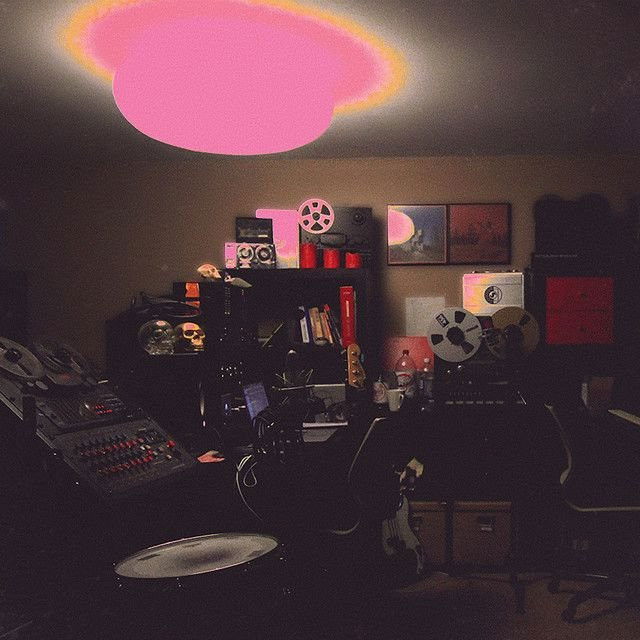
What 'Multi-Love' by Unknown Mortal Orchestra Means
For listeners searching for the meaning of Multi-Love Unknown Mortal Orchestra, the short answer is this: the song turns the thrill and strain of a three-person relationship into a bright, uneasy pop confession. It sounds sweet and airy, but its words keep circling confusion, desire, jealousy, and emotional overload.
"Multi-Love" - Unknown Mortal Orchestra
Checked into my heart and trashed it like a hotel room
Who is your God? Where is she?
Loading lyrics...
Unable to load lyrics
We're unable to display the lyrics at this time. Please try again later.
The track is the title song from Multi-Love, Unknown Mortal Orchestra's third album, released in 2015. Factually, the album grew out of Ruban Nielson's real experience in a polyamorous relationship involving himself, his wife, and another woman, a context widely noted in coverage of the record (Wikipedia). That background matters, because the song does not treat nontraditional love as a joke or a scandal. Instead, it shows how exciting and destabilizing it can feel at the same time.
A Love Song Split Three Ways
At its center, the song describes a bond that has changed shape. The key line is the chorus idea: We were one, then become three
. In simple terms, the singer remembers a pair becoming a trio, and that shift shakes their sense of self.
That is why the chorus also lands on I'm half crazy
. They are not just saying they are heartbroken. They are saying the new arrangement has scrambled their emotions and even their identity. The song's title, repeated like a mantra, makes "multi-love" sound both beautiful and overwhelming.
Interpretation: the song is not arguing for or against polyamory in a broad social sense. It is narrower and more human than that. It captures what happens when love expands faster than anyone's ability to control it.

Watch the official Multi-Love
music video
The Verses Turn Romance Into Damage
One of the song's sharpest images compares emotional harm to property damage: trashed it like a hotel room
. The idea is easy to grasp even without the full line. Someone entered the singer's emotional space and left chaos behind.
That image matters because hotels are temporary places. They suggest travel, secrecy, intensity, and impermanence. In one stroke, the song links passion with mess and with the sense that this arrangement may never have been built to last.
Another strange line asks, Who is your God?
That question sounds bigger than a breakup. It pushes the song toward spiritual confusion: when desire changes the rules, what values are left to trust? The song keeps asking emotional questions in religious or mythic language, as if ordinary romance vocabulary is not enough.
Gender, Desire, and Refusal of Categories
One of the boldest lines says She don't want to be a man
and then rejects the opposite category too. The point is not just gender in a literal sense. The song portrays a person who refuses fixed roles and wants to exist mainly as desire, connection, and feeling.
That fits the wider album, which critics described as a record about sexual experimentation, euphoria, and emotional exhaustion (Wikipedia). In the song, labels fail before feelings do. The people involved are not easily sorted into neat boxes like lover, spouse, rival, or savior.
Interpretation: this may be why the song sounds so slippery. It is about a relationship that breaks the usual map, so the lyrics keep slipping into surreal images instead of direct explanation.
How the Chorus Explains the Whole Song
The chorus is the emotional anchor. It turns a complicated setup into three simple stages:
- there was a stable pair,
- a third person entered,
- the speaker's mind and body buckled under the pressure.
Multi-Love has got me on my kneeWe were one, then become threeMama what have you done to meI'm half crazy
Even here, the song mixes clarity with confusion. The first two lines are almost factual. The last two sound desperate, childlike, and stunned. That contrast helps explain why the track connects with so many listeners: even if they have never been in a poly relationship, they know the feeling of being emotionally outmatched.
Why the Music Sounds So Warm and Unsteady
The production deepens the meaning. Ruban Nielson produced, engineered, and mixed the album, while Kody Nielson co-produced parts of it; the title track also features a rich blend of guitar, synths, drums, and even sitar in the album credits (Wikipedia).
What listeners hear is a glossy, psychedelic groove that never fully settles. The keyboards shimmer, the rhythm bounces, and the vocals float with a tired sweetness. That creates a smart tension: the arrangement feels inviting, but the words reveal strain underneath.
Pitchfork described the album as full of "lush synths" and "hallucinogenic funk and R&B," a useful summary of why this song feels both dreamy and nervous (Wikipedia). The sound suggests the high of new intimacy, while the lyrics show the crash that follows.
Artist Context Changes the Meaning
Ruban Nielson spoke openly about the album's roots, calling that period a beautiful but difficult time in his life, as quoted in profile coverage summarized by Wikipedia. That honesty keeps the song from feeling like fiction for fiction's sake.
It also explains why the track avoids easy moral lessons. They are not preaching. They are documenting. Reviews often praised Multi-Love for turning deeply personal upheaval into accessible psychedelic pop, and the album became a breakthrough release, reaching the Billboard 200 and appearing on several 2015 year-end lists (Wikipedia).
The Best Way to Hear "Multi-Love"
The best reading is that "Multi-Love" is about expansion with consequences. Love gets bigger, but so do fear, ego, and instability. The song never says desire is fake. It says desire can be real and still leave wreckage.
That is why the track remains compelling: it is catchy enough to feel like a pop single, yet strange enough to hold several meanings at once. Interpretation: listeners can hear it as a portrait of polyamory, a breakup song in disguise, or a wider statement about how modern love outgrows old definitions.
Disclaimer: This interpretation is based on the lyrics, documented artist context, and public reception. As with any song, meaning can remain personal and open to more than one valid reading.









