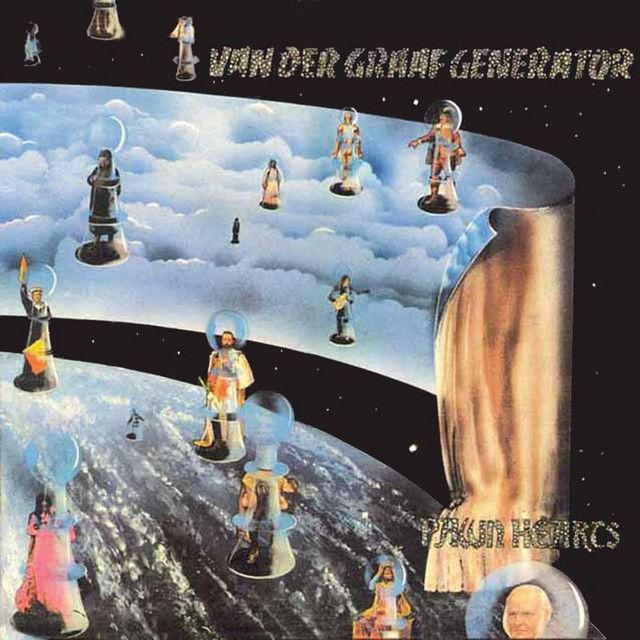
Lemmings by Van der Graaf Generator
Why This Song Still Feels So Alarming
The meaning of Lemmings Van der Graaf Generator is not hard to feel, even if some lines are dense. The song is about people moving together toward ruin, then being challenged to stop, think, and choose life instead. It begins in despair and ends in resistance.
"Lemmings" - Van der Graaf Generator
Looked down, around, and all that I could see
Were those that I would dearly love to share with
Loading lyrics...
Unable to load lyrics
We're unable to display the lyrics at this time. Please try again later.
Released on Pawn Hearts in 1971, Pawn Hearts was the fourth Van der Graaf Generator album. It was recorded at Trident Studios and produced by John Anthony with the band. That setting matters, because this is progressive rock at its most dramatic: long form, sharp mood changes, and a sound built to carry big moral questions.
Watch the official Lemmings
music video
A Cliff, a Crowd, and a Terrible Momentum
The opening image is one of the strongest in the song. A lone observer stands above a crowd and sees people rushing toward disaster. The title “Lemmings” points to the old myth of animals following one another off cliffs, and the song uses that image as a metaphor for human behavior.
At first, the narrator sounds horrified and isolated. They watch others move blindly to the sea
, which suggests not just death, but unthinking surrender. The crowd is not made of villains. These are people the speaker says they would love to share life with. That detail makes the warning sadder: the tragedy is collective, not personal.
The First Voice: Why People Give In
Soon the song shifts. Instead of one observer speaking, a group voice answers back. That voice sounds defeated, angry, and half-convinced that destruction is the only path left.
There is no escapeexcept to go forward.
This is the song’s key trap. The crowd believes history has failed them. Heroes are inadequate, kings are corrupt, and the future offers no dawn
. In that mindset, fatalism begins to feel noble. If all systems are broken, then rushing toward the edge can seem honest, even brave.
Interpretation: this section is about how despair becomes ideology. People do not always walk into disaster because they are foolish. Sometimes they do it because they feel betrayed, exhausted, and unable to imagine any real alternative.
From Mob to Machine
About halfway through, the imagery changes from cliffs and crowds to industry and violence. The song starts describing greasy machinery
, steel, cogs, bones, and monsters with iron throats. That section is why the subtitle “Including ‘Cog’” matters.
The point is clear: once people join the rush, they stop acting like individuals. They become parts inside a system. The mob and the machine are really the same image. One is social pressure; the other is mechanical force.
This is one of Peter Hammill’s sharpest ideas as a writer. The danger is not just death. It is dehumanization before death. Human beings become function, fuel, and noise. Their dreams are flattened by the very structures they help keep moving.
The Song’s Great Turn Toward Life
What makes “Lemmings” more than a dark apocalypse song is its final reversal. After spending much of its running time inside panic and surrender, it rejects that logic. The song says clearly that copying the mob solves nothing: Lemmings can teach nothing
.
That line changes everything. Death is no longer framed as meaningful rebellion. Instead, the real challenge is harder and less dramatic: stay alive, think clearly, and work for those who come after.
The repeated question switches from “why die?” to “why live?”—and then answers itself. The duty is to protect the little ones
, meaning future generations. That gives the song an ethical center. It is not only anti-destruction. It is pro-responsibility.
Interpretation: the ending argues that choosing life is the radical act. In a world driven by hatred, speed, and despair, survival with conscience becomes a form of resistance.
How the Sound Carries the Message
Van der Graaf Generator’s lineup on the album was Peter Hammill, David Jackson, Hugh Banton, and Guy Evans. Their arrangement style is crucial to the song’s meaning. Banton’s organ tones feel severe and almost religious, while Jackson’s saxophones add panic, abrasion, and emotional overload.
Evans’s drumming pushes the music forward like a force that cannot easily stop. Hammill’s singing is central too. He does not deliver the lyrics calmly; he strains, pleads, and erupts. That makes the song feel less like a story and more like a public crisis happening in real time.
The track runs 11:35, which gave the band room to build argument through structure, not just words. On a record later praised by Q as a misunderstood masterpiece, “Lemmings” works as an opening statement: human beings are in danger, but they are not beyond saving.
Context on Pawn Hearts and Reception
Pawn Hearts came out on November 12, 1971. It was not a major UK commercial hit, though the album became especially beloved in Italy. Critics were split at the time, but later reviews often treated it as one of progressive rock’s boldest records.
That history helps explain “Lemmings.” The song is intense, literary, and confrontational. It does not offer easy hooks or simple comfort. Yet that difficulty is part of its power. It asks whether modern people, surrounded by failed authority and violent systems, can still refuse the cliff.
Final Reading: A Warning Against Surrender
In the end, the meaning of Lemmings Van der Graaf Generator is a warning against despair that turns into obedience. The song begins by staring at a mass death wish and ends by rejecting it. Its message is that crowds, leaders, and machines can all push people toward ruin, but they still have a choice.
That choice is not glamorous. It is to resist the mob, protect the future, and keep living long enough to change things.
Interpretation disclaimer: song meanings are not fixed, and this reading draws from the lyrics, musical structure, and historical context rather than a definitive statement from the band about every line.







