What 'At the End of the Day' Really Means
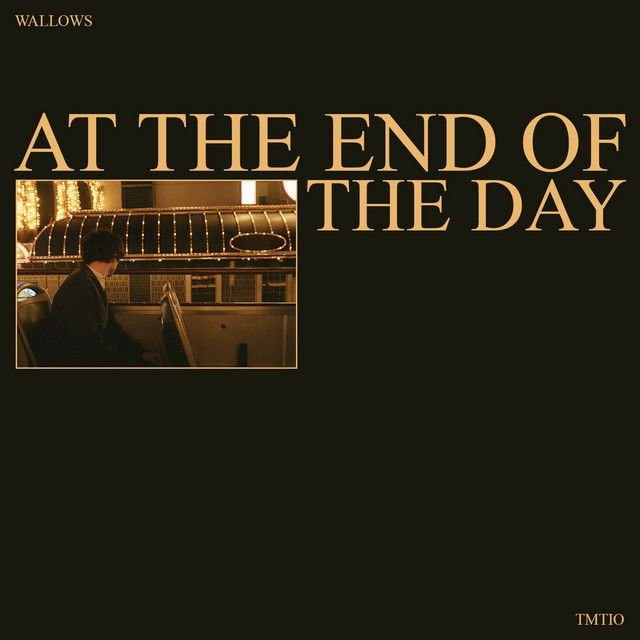
The meaning of At the End of the Day Wallows comes down to a simple but painful question: can love stay steady when doubt keeps creeping in? The song sounds warm and easy on the surface, yet its lyrics keep returning to fear, distance, and the possibility that a relationship may not survive its own uncertainty.
"At the End of the Day" - Wallows
The night is young, but we're still getting older
Can you see ourselves in love like this forever?
Loading lyrics...
Unable to load lyrics
We're unable to display the lyrics at this time. Please try again later.
Wallows often write songs that feel youthful but emotionally restless, blending catchy indie-pop with nervous inner thoughts. That makes this track a strong example of their style. It is sweet, but it is not fully calm.
A Love Song With a Crack Running Through It
At its core, the song is about someone trying to reassure a partner while also revealing their own anxiety. Early on, the singer offers comfort with lay your head here
, which sounds gentle and close. But that tenderness quickly meets a harder question: can this kind of love really last forever, or does that idea feel like too much pressure?
That tension drives the whole song. They want commitment, but they also know commitment can scare people. So the track lives in that uneasy space between devotion and hesitation.
Interpretation: The song is not only about romance. It is also about emotional timing. One person seems ready to stay, while the other may still be deciding what they can handle.

Watch the official At the End of the Day
music video
Why the Chorus Hits So Hard
The chorus is where Wallows compress the whole relationship into one emotional loop. On one hand, the narrator insists I'm staying
. On the other, they ask if the two of them are on their way to breaking
.
That contrast matters. The song does not present love as a fixed promise. Instead, it presents love as something tested by time, absence, and overthinking. Even the image of a face in the crowd
suggests fading connection. Someone who once felt central now risks becoming distant and hard to hold onto.
This is what gives the chorus its sting: they are loyal, but loyalty alone may not solve the deeper problem.
Memory, Distance, and the Fear of Drifting
In the second verse, the song looks back at a place the couple used to visit often. That memory is important because it shows how relationships change in quiet ways before anyone says it out loud. The narrator notices they do not think about that place much anymore, then wonders if that is normal or a warning sign.
That moment adds maturity to the writing. Instead of using one big dramatic event, the song focuses on smaller emotional shifts. Habits fade. Places lose their charge. Time slips by.
The line about time falling like sand is one of the song's clearest images. It suggests that love is not only threatened by conflict. It can also be worn down by passing days, uncertainty, and the inability to stop what is changing.
The Push-Pull in the Promise
One of the most revealing ideas in the song is the claim that if the other person wanted, the narrator would disappear: stop calling, stop thinking, stop holding on. Of course, that promise sounds loving on one level, because it respects the other person's wishes.
But it also sounds impossible. That is the point. The song shows how heartbreak often speaks in extremes. People say they can let go if needed, while making it obvious they do not want to.
Later, the singer insists you are not alone
. That line broadens the song beyond romance for a moment. It becomes emotional shelter. They are not just asking to be loved back; they are trying to make the other person feel safe enough to stay.
How the Sound Supports the Lyrics
Wallows released the song in 2022 as part of the album Tell Me That It’s Over, a record noted for its polished indie-rock and new-wave touches. Public credits for the track list Braeden Lemasters, Cole Preston, Dylan Minnette, Nate Mercereau, and Sarah Aarons as writers, with production connected to the album’s wider studio team around that era, including John Congleton on the album project.
Even without heavy musical jargon, listeners can hear why the song works. The rhythm moves with a clean, breezy pulse, and the melody feels bright enough to pass as carefree. But the vocal delivery keeps a trace of strain under that shine.
That contrast is crucial. The production creates forward motion, while the lyrics keep circling the same fear. In other words, the music sounds like a drive into the night, and the words sound like someone quietly wondering whether the person beside them is slipping away.
A Few Strongest Interpretations
Reading One: A relationship near its breaking point
This is the most direct reading. The song describes a couple who still care for each other, but whose future no longer feels secure. The repeated end-of-day question becomes a final emotional check: after everything said and done, are they still together in spirit?
Reading Two: Anxiety inside a loving bond
Interpretation: The relationship may not actually be collapsing. Instead, the narrator may be trapped in anxious thinking, reading distance into every silence and every changed routine. In this view, the song is about how love can feel fragile even when it is still real.
Why the Song Connects
Part of the meaning of At the End of the Day Wallows is its honesty about mixed feelings. It does not pretend love is either perfect or over. It captures the in-between stage, where people still care deeply but can sense that something has shifted.
That is why the song lingers. It understands that relationships often do not break all at once. Sometimes they blur, fade, and question themselves before anyone knows what to call the change.
In the end, Wallows turn that uncertainty into something catchy, tender, and sad at the same time.
Disclaimer: This interpretation is based on the released lyrics, songwriting credits, and publicly known artist context. Like most songs, it can support more than one valid reading.







