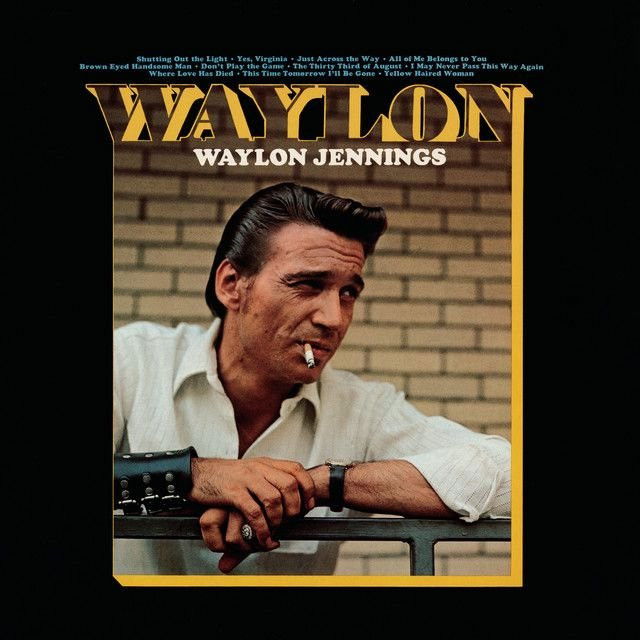
Brown Eyed Handsome Man by Waylon Jennings
A witty song with more going on underneath
The meaning of Brown Eyed Handsome Man Waylon Jennings starts with a simple idea: people are drawn to a certain kind of man so strongly that rules, logic, and even history seem to bend around him. But this is not just a playful attraction song.
"Brown Eyed Handsome Man" - Waylon Jennings
Saw a women walking
Cross the sand
Loading lyrics...
Unable to load lyrics
We're unable to display the lyrics at this time. Please try again later.
Waylon Jennings was covering a Chuck Berry classic, first released in 1956 by Chess Records and later included on Berry’s album After School Session (Wikipedia). That matters, because Berry’s original carried a sly social edge. Under the humor, the song comments on desire, power, celebrity, and race in America.
In Waylon’s hands, the song keeps that smart backbone while adding a tougher country feel. They do not sing it like a novelty tune. They lean into its swagger, making the central figure feel larger than life.

Watch the official Brown Eyed Handsome Man
music video
What the song is really saying
At the surface, each verse tells a quick story about people chasing, protecting, or admiring the title character. The repeated phrase brown eyed handsome man
becomes a symbol more than a literal description.
Interpretation: In Berry’s writing, that symbol points to masculine magnetism, but also to how society reacts to a desirable man who does not fit old power structures. Several critics have read the song as a clever look at racial tension. The song’s reputation partly comes from that double meaning: it sounds fun, yet it quietly pokes at social fears and fantasies.
Waylon’s version does not spell that out. Still, by preserving Berry’s words, they carry the same tension forward. The listener hears tall tales about romance and authority, but beneath them is a song about who gets celebrated, who gets judged, and who cannot be ignored.
Verse by verse, the pattern becomes clear
The opening image is cinematic. A traveler sees a woman crossing the desert, walking a huge distance to reach the man she wants. The point is not realism. It is exaggeration. Her effort shows desire as something almost mythic.
Later verses keep raising the stakes. One woman fights for him. Another is told to forget respectable options like a doctor or lawyer and find someone with this rarer appeal. Then the song jumps to a courtroom, where official power suddenly weakens in front of personal attraction.
Arrested on charges
of unemployment
Free that brown eyed man
This brief moment is funny, but it is also sharp. The law looks serious until private desire enters the room. The song keeps suggesting that institutions are not as strong as they pretend to be.
The hook turns one man into a legend
The chorus-like return to brown eyed handsome man
does more than repeat a title. It turns the character into folklore. He is not one person in one town. He becomes a figure who has existed, as the song says, through history itself.
That is why the line about women shedding tears
matters. The song is not only saying he is attractive. It is saying longing for him is ancient, constant, and disruptive.
Interpretation: This is where the song moves from comic storytelling into myth-making. The title character stands for desire that crosses borders: time, class, rules, and maybe race as well.
Why Waylon Jennings was a strong fit
Waylon Jennings released his version in 1970 as part of Waylon. By then, they already had the vocal presence to sell songs about rebels, outsiders, and magnetic men. Their style was less polished than Nashville pop-country of the era, which helps the song.
Instead of smoothing out Berry’s bounce, Waylon gives it grit. Their voice sounds relaxed but commanding, which makes the title figure feel believable. They sing as if this kind of man is familiar in American life: admired, envied, and impossible to control.
That choice matters for meaning. A lighter performance could make the song feel like a joke. Waylon’s steadier, rougher delivery keeps the humor but adds weight.
How the sound carries the message
Berry’s original lived in rock and roll, driven by rhythm and snap. Waylon shifts the frame toward country without losing the song’s motion. The beat still moves briskly, but the feel is more grounded.
Listeners hear a strong backbeat, clean band interplay, and the kind of plainspoken vocal that was central to Jennings’ identity. There is little sentimental softness here. The arrangement supports the song’s confident stride.
That matters because the words are full of big claims. If the music were too dramatic, the song might collapse under its own exaggeration. Instead, Waylon’s band plays it straight, which lets the absurd images land naturally.
Two useful ways to read it
Reading one: a celebration of irresistible charm
This is the easiest reading. The song presents a man so compelling that people chase him across distance, defend him in court, and measure others against him. In this view, it is a comic anthem of charisma.
Reading two: a coded social statement
This reading connects more directly to Chuck Berry’s context. According to background on the song, Berry was inspired in part by seeing a man stopped by police while a woman protested on his behalf. Scholars and critics have argued that Berry used humor to play with American racial anxieties and desire. Waylon does not rewrite that meaning away; they reframe it through country performance.
Both readings can be true at once. That layered quality is a big reason the song has lasted.
Why the song still works
The meaning of Brown Eyed Handsome Man Waylon Jennings lasts because it balances fun and subtext. On one level, it is full of bold characters and outrageous situations. On another, it shows how attraction can challenge status, respectability, and authority.
Waylon Jennings helps that idea endure by singing the song with earthy confidence rather than nostalgia. They treat the central figure not as a cartoon, but as an American type: desirable, disruptive, and hard to define.
That mix of humor, swagger, and hidden pressure is what keeps the song alive. Interpretation disclaimer: Song meaning is never fully fixed, and this reading combines documented context with interpretation of the lyrics, performance, and cultural setting.








