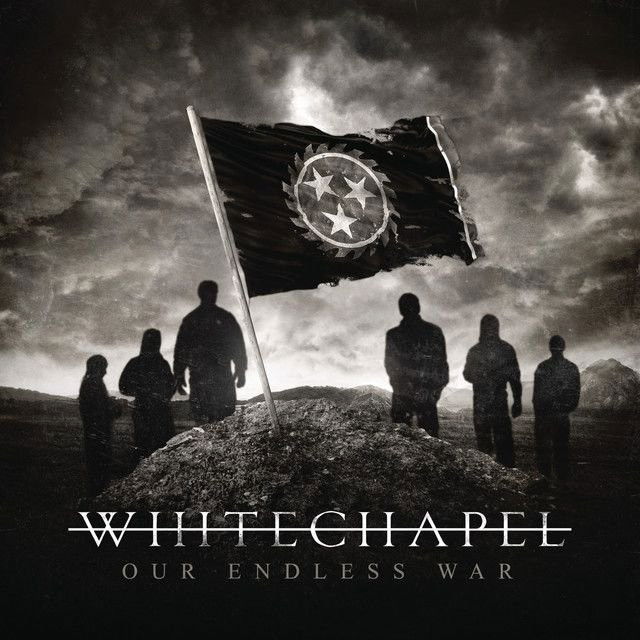
Why "The Saw Is the Law" Hits So Hard
The meaning of The Saw Is the Law Whitechapel starts with identity. More than a simple heavy anthem, the song sounds like a warning, a mission statement, and a regional flag planted in the ground at the same time. Whitechapel, a band formed in Knoxville, Tennessee, built its name in deathcore, and this track turns that Southern background into a source of menace and pride.
"The Saw Is the Law" - Whitechapel
And we sleep away our misery
In our blood soaked sheets
Loading lyrics...
Unable to load lyrics
We're unable to display the lyrics at this time. Please try again later.
On the surface, the lyrics talk about force, loyalty, and domination. Under that surface, the song is about a group defining itself against the outside world. They present their scene, their sound, and their home as something people can either resist or join. That tension gives the track its energy.
A Southern Banner, Not Just a Threat
The most obvious clue is the repeated focus on a shared way of living. When they say this is our way of life
, they are not describing one private feeling. They are claiming a culture. The references to the "Deep South" turn the song into a regional statement, almost like they are mythologizing where they came from.
That matters because Whitechapel have often carried a Tennessee identity into their music and branding. According to the band's official history and release materials, they formed in Knoxville in 2006 and became one of the defining names in American deathcore. The song appears on Our Endless War, released in 2014 through Metal Blade Records, a period when the band leaned into groove, chant-like hooks, and a broader live sound.
Interpretation: the song uses Southern imagery less as geography and more as a badge of toughness. "Deep South heat" is not just weather. It suggests pressure, aggression, and a style of survival.
Watch the official The Saw Is the Law
music video
The Chorus Turns a Motto Into Myth
The hook is what most listeners remember: the saw is the law
. It is a blunt, catchy slogan, and that is exactly why it works. The phrase feels larger than the literal image. It sounds like a rule for living in a brutal world.
In plain terms, a saw cuts. It tears through resistance. So when the song makes the saw into "the law," it replaces normal order with violent power. The group is saying their force sets the rules now.
Where we come fromthe saw is the lawwe still stand tall
This short section sums up the song's worldview. Their origin gives them their code, and that code helps them endure. Even when the lyrics mention hopelessness, they answer it with stubborn survival.
Us Against the World
Another key part of the meaning of The Saw Is the Law Whitechapel is the strong split between insiders and outsiders. The lyrics keep using collective words like "we" and "our," while the listener is pushed into the position of "you." That creates a battle line.
The most aggressive version of that appears in You are nothing
and We are everything
. The song is not subtle here. It speaks with the voice of a crowd, not an individual. This is one reason the track feels built for live shows: those lines are easy to shout back, and they turn the audience into part of the machine.
Interpretation: this does not have to be taken literally as a belief that others have no value. In metal, extreme language often dramatizes confidence, unity, and territorial pride. The song exaggerates to create impact.
Infection, Family, and Conversion
The verses add another layer by describing expansion. The band says they have left home to "infect" the world and pull others into their orbit. That choice of language matters. It frames their rise almost like a spreading force.
Then the lyrics shift from attack to recruitment. Phrases about becoming one with the family
and choosing a side suggest initiation. The song does not only want to crush opposition; it also wants to absorb new believers.
That makes the track feel half-threat, half-invitation. Either someone stands against them, or they join the movement. In that sense, the song behaves like a manifesto for a scene, a fanbase, or even the band itself as a growing institution.
How the Sound Sells the Message
Musically, the song reinforces every part of that reading. Whitechapel are known for down-tuned guitars, breakdown-heavy writing, and Phil Bozeman's deep, punishing vocals. Here, the riffs move with a stomping, groove-first force rather than pure speed. That choice makes the song feel communal and physical, like a march.
The drums hit with a steady, crushing pulse, while the guitars create a thick wall of sound. The chants in the chorus are especially important. Instead of sounding private or reflective, they sound public, almost ritualistic. A line like the saw is the law
lands because the arrangement leaves room for it to hit like a slogan.
Interpretation: the production makes the song feel less like inner confession and more like collective theater. The heaviness is part of the meaning, not just decoration.
Why Fans Connected With It
The track became one of Whitechapel's best-known songs because it balances extremity with clarity. Even listeners who do not catch every verse can understand the core message: stand together, come from somewhere real, and do not bend.
Its appeal also comes from its simplicity. The language is direct, the imagery is vivid, and the chorus is memorable. For longtime metal fans in the United States, especially in the South, that regional edge adds another point of connection.
The Big Takeaway
At its core, the meaning of The Saw Is the Law Whitechapel is about identity enforced through power. It turns Southern roots, scene loyalty, and aggressive self-belief into one blunt statement. The song imagines Whitechapel and their circle as a force that cannot be ignored.
That does not mean every line should be read as literal belief. Interpretation: the song works best as exaggerated mythmaking, where home, family, and sound become larger than life. That is why it still hits: it gives listeners a world to enter, then dares them to survive inside it.
Disclaimer: Song meanings are interpretive. This article offers a reading based on the lyrics, the band's context, and the song's musical presentation.








