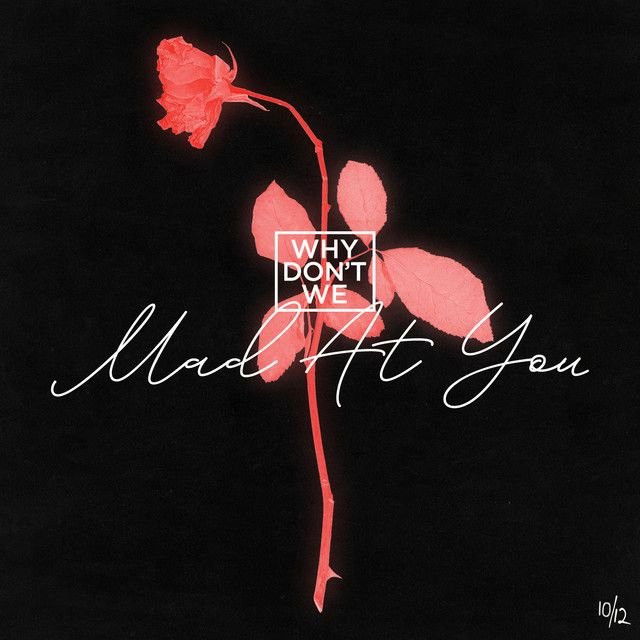
Mad at You by Why Don't We
The meaning of Mad at You Why Don't We comes down to one messy idea: some relationships burn hot, cool off, and pull people back in before either side can fully walk away. The song is not really about one single fight. It is about a pattern of arguments that keep repeating because the connection still feels stronger than the anger.
"Mad at You" - Why Don't We
Sitting on the stairs
You're standing by the front door
Loading lyrics...
Unable to load lyrics
We're unable to display the lyrics at this time. Please try again later.
Why Don't We released the track in 2021 as part of The Good Times and The Bad Ones, the band's second studio album, according to Atlantic Records and major music databases like AllMusic. That context matters. The album often circles around romance, frustration, and emotional whiplash, and this song fits that mood almost perfectly.
A Love Song Hiding Inside an Argument
At first, the scene is small and familiar. One person is on the stairs, the other is by the door, and neither seems fully ready to leave. That everyday setup makes the conflict feel real. Instead of dramatic imagery, the song uses a normal domestic moment to show how close the couple still is, even while they are upset.
The key emotional point arrives when the singer admits they can't stay mad at you
. That line turns the song from an argument anthem into a confession. They want distance, but they cannot hold onto it.
Interpretation: this is less about winning a fight than admitting emotional dependence. The narrator knows the relationship is exhausting, yet they are also honest about its pull.

Watch the official Mad at You
music video
The Push-Pull Pattern at the Center
One of the smartest parts of the lyric is how often the couple seems to repeat the same cycle. The song says they do not even remember the reason for the fight. That detail suggests the problem is no longer the topic itself. The real issue is the pattern.
A few short phrases show that tension clearly: take me to the edge
, pull me back again
, and messin' with my head
. None of those phrases describes a stable romance. They describe emotional motion.
In plain terms, the relationship keeps moving through three stages:
- A conflict starts.
- Both sides threaten to be done.
- Intimacy resets the bond.
That is why the chorus lands so well. It does not claim the relationship is healthy or easy. It simply admits that separation never lasts.
Why the Bedroom and Morning Matter
The second verse gives the song more depth by moving from the fight itself to what happens after it. The couple wakes up after another false breakup, and the morning brings perspective. They laugh, they cry, and they end up tangled together again.
That image matters because it shows that their relationship is not built only on conflict. There is affection here too. The fights are real, but so is the closeness.
another fake break up
laughingwith crying in between
This short moment captures the whole song. Their love is chaotic, but it is also lived-in. They know each other's patterns so well that even endings start to feel temporary.
What the Hook Really Means
The chorus repeats the title phrase so often that it starts to sound like both a complaint and a surrender. They keep saying they are mad, but the repetition actually proves the opposite. If they truly felt detached, they would not need to keep insisting on it.
Interpretation: the hook works because it exposes the gap between emotion and action. The narrator says they are finished, yet their behavior tells another story. In that sense, the song is about emotional honesty. They are not proud of being pulled back, but they are truthful about it.
For listeners, that honesty is the appeal. Many pop songs treat love as either perfect or doomed. This one lives in the middle, where real couples often do.
How Why Don't We's Sound Carries the Message
Why Don't We built their reputation on polished pop with strong vocal layering, a style well documented by outlets such as Billboard and Rolling Stone. Here, that smooth sound helps the meaning land.
The production feels sleek and warm, not harsh. That choice matters. If the song sounded jagged or angry, it might feel like a breakup track. Instead, the beat and harmonies keep it romantic, even when the lyrics describe conflict.
The vocals also sell the tension. The group delivery softens the frustration and makes the chorus feel communal rather than bitter. In other words, the music keeps reminding the listener that this is a love song wrapped in an argument.
Songwriting Clues in the Details
The credited writers include Corbyn Besson, Jonah Marais, Danny Klein, Imad Roy El-Amine, Ivy Adara, Matt Campfield, Max Wolfgang, and Roget Chahayed. That mix of band members and outside collaborators helps explain why the song feels both personal and polished.
Lines about doors, stairs, bed sheets, darkness, and whispered location all point to the same theme: nearness. Even when the couple is emotionally off balance, they are physically and emotionally close. The song never places them in separate worlds. It keeps them in the same room.
That is the heart of the meaning of Mad at You Why Don't We: love can survive anger, but it can also become trapped in a loop where anger loses its meaning because connection always returns first.
Final Take on the Song's Message
In the end, "Mad at You" is about the strange comfort of a relationship that never fully breaks, even when it probably should pause and breathe. It captures the feeling of being frustrated, attached, and emotionally honest all at once.
That mix is why the song connects. It understands that some of the hardest romances are not the ones that end, but the ones that keep restarting.
Disclaimer: This interpretation is based on the released lyrics, songwriting context, and the track's musical presentation. As with any song, listeners may hear different meanings in it.









