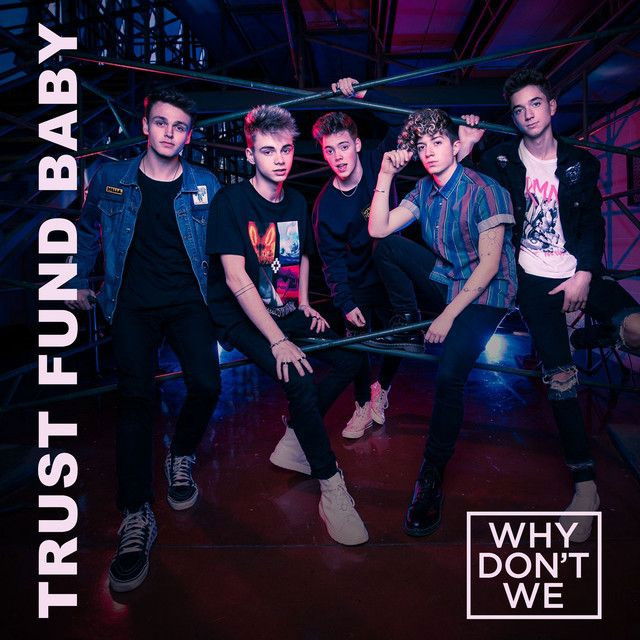
Why "Trust Fund Baby" Is Really About Values
For listeners searching for the meaning of Trust Fund Baby Why Don't We, the song is less about attacking wealthy people and more about defining what kind of relationship matters to them. The hook sounds blunt, but the bigger message is simple: they admire independence, self-respect, and authenticity more than status symbols.
"Trust Fund Baby" - Why Don't We
Or spends a stack of dollar bills on a limousine
I want a girl who takes the bus and who wears baggy jeans
Loading lyrics...
Unable to load lyrics
We're unable to display the lyrics at this time. Please try again later.
Released on February 1, 2018, the single later appeared on the deluxe edition of 8 Letters. It was written by Ed Sheeran, Fred Gibson, and Steve Mac, with Steve Mac and Yates producing. That team matters, because the song pairs a very direct pop lyric with a polished, radio-ready sound.
A Pop Song With a Class Question
At the center of the song is a contrast. The narrator lists images of money and image-making, then rejects them in favor of someone grounded. Early lines set up the target: expensive gifts, flashy transport, designer labels, and performative beauty. In plain terms, they are not impressed by privilege when it creates entitlement.
That is why the title phrase trust fund baby
works as shorthand, not biography. It describes a type: someone defined by inherited comfort and careless spending. Against that, the song praises a partner who is capable, practical, and emotionally real.
Interpretation: The song frames romance as a values test. They are not just choosing a girl; they are choosing a worldview. The ideal partner is someone who can stand on her own, not someone who needs wealth to create an identity.

Watch the official Trust Fund Baby
music video
The Verses Build an Ideal, Not Just a Complaint
The verses do more than criticize. They sketch an opposite image. Instead of luxury, the song celebrates ordinary movement and ordinary style, like taking the bus and wearing baggy jeans
. Instead of curated perfection, it prefers someone unbothered by trends.
There is also a strong streak of admiration in details such as common sense
and confidence. One telling line imagines someone who knows how to fix cars and maybe fix me
. That joke gives the song a little vulnerability. Beneath the swagger, they want stability and maturity.
This matters because the song could have been only a stereotype list. At its best, it is trying to say that real attraction comes from competence and character. The narrator wants someone who is strong enough to resist social pressure, someone who will laugh at trying to fit in.
The Chorus Turns Preference Into a Principle
The chorus sharpens the message. When they sing I like my women independent
, the song moves from taste to principle. This is not only about clothes, selfies, or money. It is about wanting a relationship between equals.
That idea continues in the line about proudly saying that's my lady
. In context, that phrase is not possessive as much as admiring. They want to be proud of a partner because of who she is, not because she reflects wealth or social rank.
I don't really want no trust fund baby
I like my women independent
And we don't need nothing else
Paraphrased, the chorus says that a healthy bond needs mutual respect more than luxury. The emotional center is not anti-richness. It is anti-fakeness.
The Hidden Tension: Dreaming of Money, Then Distrusting It
One of the smartest parts of the song is the pre-chorus. They admit that they once dreamed of getting rich and getting out
. They wanted the nicer part of town and the signs of having made it.
That confession adds depth. It shows they are not pretending to be above ambition. They understand the pull of wealth because they felt it themselves. But the song argues that success can become empty if it changes what they value in people.
Interpretation: This section suggests a coming-of-age shift. At first, money looks like freedom. Later, they realize character matters more than appearance, and partnership matters more than flexing success.
How the Sound Carries the Message
Musically, “Trust Fund Baby” is bright, quick, and catchy. Steve Mac’s pop production keeps the beat tight and clean, while Yates adds sleek programming and keyboards, according to the song’s credits on Wikipedia. The sound is upbeat enough that the criticism never turns bitter.
That contrast is important. The lyric draws lines between real and fake, but the track itself feels playful and youthful. The crisp drums, layered vocals, and chant-like chorus make the message feel communal, almost like a group statement of standards.
Why Don’t We also said the song marked their first time working in a major studio setting, with Jack Avery describing the process as exciting and fast, while Daniel Seavey praised Ed Sheeran’s passion for music. That context helps explain why the single sounds so polished and confident. It captures a group moving from internet-era beginnings toward mainstream pop scale.
Reception, Image, and a Few Caveats
The song performed solidly in pop spaces, reaching the US Pop Airplay chart and later earning Gold certification in the United States and Canada. That tells us the message connected beyond the band’s core fanbase.
Still, some listeners may hear parts of the song as oversimplified. Its contrast between “real” girls and “fake” girls can feel narrow, and some details lean on familiar pop stereotypes. That is a fair critique.
But the strongest reading is broader than gendered checklists. The meaning of Trust Fund Baby Why Don't We is about refusing a life built on image, excess, and borrowed identity. They are looking for someone solid in a culture that rewards display.
Why the Song Still Connects
The song lasts because its core idea is easy to recognize. Many people know the difference between being impressed by status and being moved by substance. Why Don’t We package that lesson in a glossy pop single, but the question underneath is serious: what actually makes a person valuable?
Their answer is clear. Not money, not labels, not performance. Independence, humor, resilience, and self-knowledge.
Disclaimer: This article offers an informed interpretation based on the song’s lyrics, credits, and public context. Meaning can vary from listener to listener.








