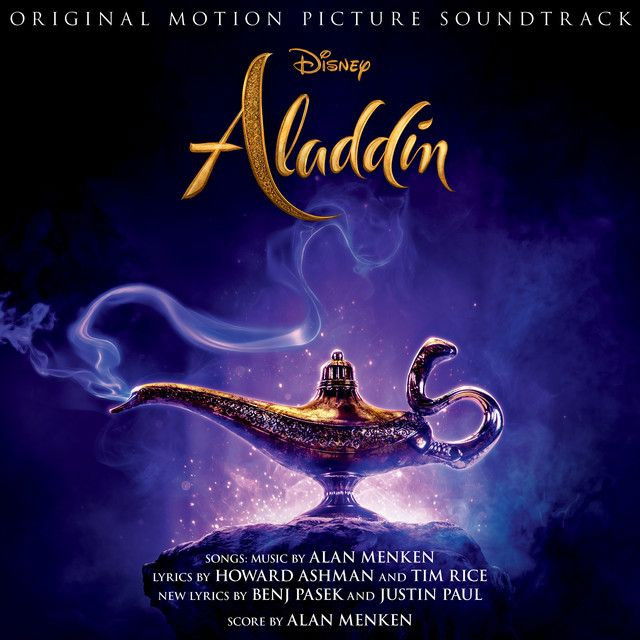
Why Will Smith's 'Prince Ali' Is All Show
The meaning of Prince Ali Will Smith starts with a joke the movie takes seriously: if they make the entrance big enough, people might believe anything. In Disney's 2019 Aladdin, Will Smith's Genie turns Aladdin's makeover into a public event, using noise, color, and confidence to sell a fantasy prince to Agrabah.
"Prince Ali" - Will Smith
Say hey! It's Prince Ali
Hey! Clear the way in the old bazaar
Loading lyrics...
Unable to load lyrics
We're unable to display the lyrics at this time. Please try again later.
The song is fun on the surface. But underneath the comedy, it is about image, status, and the pressure to become someone impressive enough to be loved.
The Real Point Behind the Parade
On the story level, the song introduces Aladdin's royal disguise. The Genie announces him as Prince Ali
and floods the city with claims about his power, wealth, and charm. The crowd is asked to admire first and question later.
That is why the song matters. It does not just present a character; it stages a public illusion. Interpretation: the number suggests that social rank often works like theater. If the costumes, music, and applause are convincing enough, status can look natural even when it is invented.
This idea fits the larger plot of Aladdin, where Aladdin believes he needs a royal identity to win Princess Jasmine. The song becomes the sound of that mistaken belief taking shape.
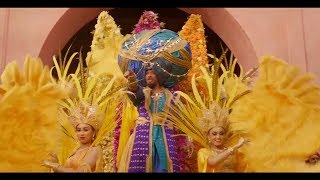
Watch the official Prince Ali
music video
How the Lyrics Sell a False Identity
The lyric writing uses exaggeration on purpose. The Genie orders people to make way
and praises Ali as fabulous he
, pushing the crowd to see greatness before they know anything real about him.
Then the song keeps raising the stakes with impossible-sounding numbers, rare animals, and endless attendants. These details are comedic, but they also reveal the point of the disguise: not inner worth, but outward proof. Wealth becomes evidence. Noise becomes authority.
A short section captures the whole strategy:
Ring bells! Bang the drums!
You're gonna love this guy!
Before anyone meets him, the song has already told them how to feel. Interpretation: that is the heart of the number. Public opinion is being managed in real time.
The Theme of Appearance Versus Truth
The strongest reading of the song is that it dramatizes the gap between appearance and identity. Aladdin is not evil or greedy; he is insecure. He thinks Jasmine and the palace will only value him if he looks powerful enough.
So when the Genie lists luxuries like seventy-five golden camels
or praises his spectacular coterie
, the movie is not only celebrating royal splendor. It is also showing how fake grandeur can cover a very human fear: that the real person is not enough.
This is why the song stays important after the parade ends. Its energy is joyful, but the story later exposes the weakness inside the performance. The prince image can attract attention, yet it cannot solve Aladdin's deeper problem of honesty.
Why Will Smith's Version Feels Different
Will Smith's take is shaped by the 2019 remake's broader style. Disney's live-action version casts Smith as the Genie, and his performance updates the number with more hip-hop bounce and spoken ad-libs while keeping Alan Menken and Howard Ashman's core song intact. The 2019 film version is widely noted for adding hip-hop elements and adjusting some lyrics for modern audiences.
That matters to the meaning of Prince Ali Will Smith because Smith plays the Genie less like a pure cartoon chaos machine and more like a master showman. They sound like a host, rapper, barker, and best friend all at once. Instead of only being magical, this Genie is also a branding expert.
The lyric changes are small but telling. According to documented notes on the song's 2019 update, one line became Friday salaam
to better reflect the Islamic holy day, and an older reference to slaves was replaced with servants and flunkies. Those revisions make the song feel more culturally aware and more acceptable to current audiences while preserving the comic excess of the original.
Production: Why the Music Means So Much
Musically, "Prince Ali" is built like a procession. Brass, percussion, big ensemble vocals, and stop-start accents make the song feel like a moving parade. That arrangement tells the story before the words do: someone important is arriving, and the city must respond.
In the 1992 animated film, the song was performed by Robin Williams and became one of the soundtrack's best-known highlights. The original Aladdin soundtrack was released in 1992, and the song was later reprised in the film's plot. In the remake, Smith keeps the giant-production spirit but adds a more rhythmic vocal style that fits his screen persona.
Interpretation: the music does what Aladdin cannot do by himself. It gives him borrowed confidence. Every drum hit and shouted response builds a larger-than-life identity around a young man who still does not believe in his unadorned self.
A Celebration That Also Hides a Warning
There are two ways to hear the song at once:
- as a genuinely exciting entrance number
- as a satire of status and public worship
Both readings work. The crowd is dazzled, and viewers are meant to be dazzled too. But the scale is so extreme that the song also pokes fun at how easily people are impressed by spectacle.
That double meaning helps explain why the number has lasted. The original song from Aladdin was a major showcase piece, and the Will Smith version introduced it to a new audience. The remake's recording even earned chart placements and later certifications in markets including the United States.
The Lasting Meaning of Prince Ali Will Smith
In the end, the meaning of Prince Ali Will Smith is not simply that a prince has arrived. It is that a public image has been manufactured so perfectly that everyone wants to believe it. The song is about how glamour can create temporary power, and how insecurity can hide beneath gold, animals, servants, and applause.
That is why the number is more than comic relief. It turns Aladdin's wish into a spectacle, then quietly sets up the lesson he still has to learn: being seen is not the same as being known.
Disclaimer: This interpretation separates confirmed production facts from critical reading. Meanings in songs and musicals can vary by listener and context.








