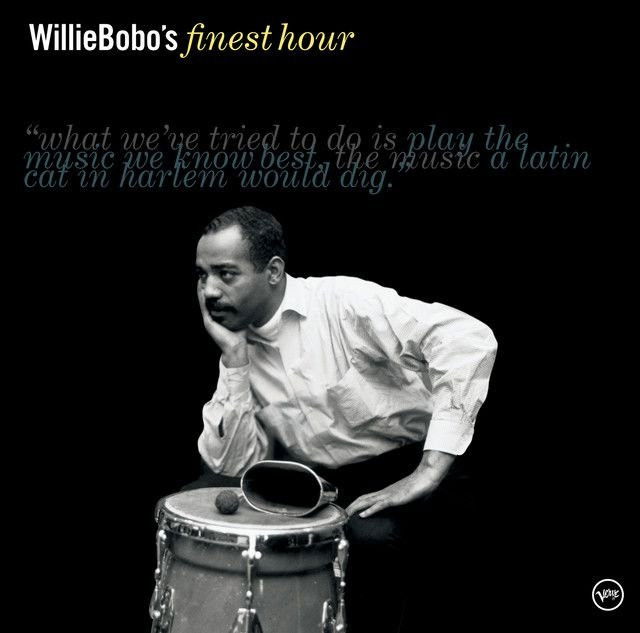
Evil Ways by Willie Bobo
A jealous warning at the song's center
The meaning of Evil Ways Willie Bobo starts with a simple idea: someone in a relationship feels ignored, embarrassed, and pushed to the edge. The singer is not speaking in riddles. They are giving a warning to a partner whose behavior feels careless and hurtful.
"Evil Ways" - Willie Bobo
Before I stop loving you.
You've go to change... baby
Loading lyrics...
Unable to load lyrics
We're unable to display the lyrics at this time. Please try again later.
The title phrase sounds dramatic, but the song is not really about pure villainy. It is about betrayal in everyday life. The partner is out with other people, not coming home, and leaving the singer feeling like a fool. When the chorus says change your evil ways
, it frames the whole song as a final demand before the relationship breaks.
Watch the official Evil Ways
music video
Who is speaking, and what do they want?
The narrator speaks in first person, but the emotional setup is easy to follow. They are talking directly to a lover and setting terms. If the partner keeps acting this way, love will end.
This gives the song its tension. The singer still cares, which is why they say before I stop loving you
. That line matters because it shows the relationship is not over yet. They are angry, but they are also hoping for change.
The emotional timeline in the verses
The lyrics move through a clear pattern:
- The singer accuses the partner of bad behavior.
- They describe how that behavior affects their daily life.
- They say the situation cannot continue.
- They threaten to leave and find someone better.
That sequence makes the song feel direct and dramatic. Instead of abstract heartbreak, it presents scenes of neglect and suspicion.
How specific lines build the theme
Several short phrases sharpen the song's meaning. When the singer says running and hiding
, they sound exhausted and ashamed. It suggests a relationship that has become socially painful, not just privately upsetting.
The line about sneaking and peeping
adds another layer. Paraphrased, the singer has been reduced to checking up on the partner and chasing answers around town. That is not healthy love. It is love turning into anxiety.
The second verse makes the humiliation even more concrete. The singer comes home to an empty, cold house while the partner is elsewhere with friends or strangers. The domestic image is simple but effective: darkness and cold stand in for neglect.
My house is dark
and my pots are cold
This is the article's clearest emotional snapshot. The home should feel stable and warm, but here it feels abandoned. The song's conflict is not only jealousy. It is also a broken idea of home and loyalty.
Willie Bobo's context matters
Willie Bobo was a major Latin jazz percussionist, and that background shapes how the song lands. He originally recorded "Evil Ways" on Bobo Motion, the 1967 album often cited as the song's first release, while the composition is credited to Clarence "Sonny" Henry. That history is noted in the Wikipedia entry on the song and in summaries of its later fame.
This context helps explain why the song feels different from a straight pop breakup track. Bobo's version lives in a groove-first world. The rhythm does not simply support the complaint; it gives the complaint swagger. The singer may feel hurt, but the band does not collapse into sadness.
Sound as meaning
The production and arrangement are key to understanding the song. The percussion-led Latin jazz feel creates motion, while the organ adds heat and attitude. That combination keeps the warning danceable.
This matters because the song's message could sound bitter on paper. In performance, though, it becomes cool, sharp, and almost streetwise. The groove says the singer has been rattled, but not defeated. They are drawing a line.
Why the song feels bigger than its simple words
Lyrically, "Evil Ways" is plainspoken. There are no dense symbols and no hidden story world. That simplicity is a strength. The song captures a common relationship crisis in language almost anyone can understand.
Interpretation: the word "evil" may be less about moral evil and more about repeated selfishness. The partner's actions are "evil" because they damage trust and dignity. In that sense, the song is about disrespect more than sin.
The repeated statement that this can't go on
turns the chorus into a boundary. That line is the real emotional core. The singer is no longer only complaining; they are deciding.
The Santana connection and broader reception
Many listeners know the song through Santana, whose 1969 version became a hit and reached No. 9 on the Billboard Hot 100 after Santana's breakthrough period around Woodstock, as summarized by Songfacts. That later success helped turn the composition into a standard of Latin-rock crossover.
Still, Bobo's connection remains important. Carlos Santana once said Bobo was one of the first musicians to merge Latin music and blues on record, a brief quote often repeated in coverage of the song's history. That makes "Evil Ways" part of a bigger musical story: not just romantic conflict, but the growth of a sound that blended Afro-Cuban rhythm, jazz, soul, and rock energy.
A lasting meaning in one sharp demand
In the end, the meaning of Evil Ways Willie Bobo is about a person reaching their limit. They still love their partner, but they refuse to keep living with disrespect, doubt, and embarrassment.
The song lasts because it pairs that emotional boundary with irresistible rhythm. It is a warning song, but it moves. It is hurt, turned into groove.
Interpretation disclaimer: This reading is based on the lyrics, recording context, and documented history of the song. As with any song, listeners may hear different shades of meaning in its words and performance.







