Why “Open Arms” Sounds Like Survival, Not Welcome
The core message behind the threat
The meaning of Open Arms YoungBoy Never Broke Again, Birdman starts with a bitter twist on the title. “Open arms” usually suggests comfort, safety, or love. Here, the song flips that image. The hook says there is no warm welcome, only danger, mistrust, and pressure.
"Open Arms" - YoungBoy Never Broke Again, Birdman
This is real, I got a real meanin' to these tat's on my sleeve
(Buddah Bless this beat)
Loading lyrics...
Unable to load lyrics
We're unable to display the lyrics at this time. Please try again later.
YoungBoy uses the chorus to describe a place and mindset where kindness is missing. When he repeats ideas like ain't no love
and you can die
, he is not just trying to shock the listener. He is building a worldview: this is an environment where survival comes before softness.
Interpretation: The title may be ironic. Instead of embracing people, the world around the narrator forces him to keep distance. In that sense, “open arms” becomes the exact thing he cannot afford.
Watch the official Open Arms
music video
Bayou context, label history, and who leads the track
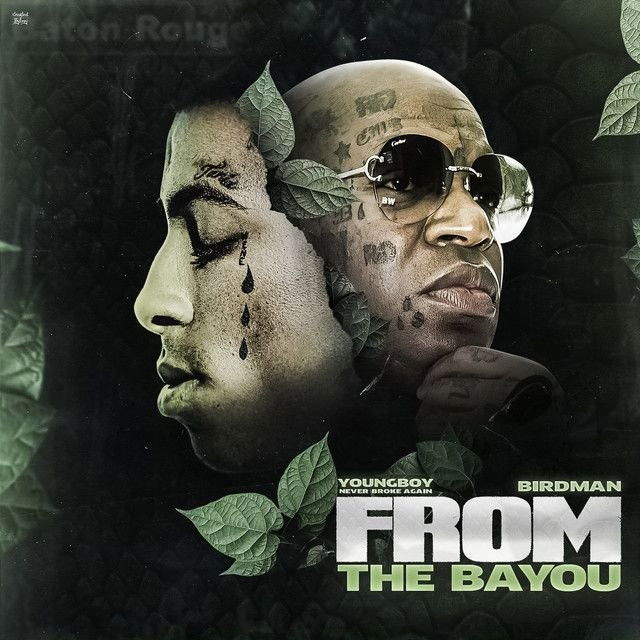
“Open Arms” appears on From the Bayou, the 2021 collaborative mixtape by YoungBoy Never Broke Again and Birdman, released December 10, 2021. The project connects Baton Rouge and New Orleans roots, and the song was written by Kentrell Gaulden and Bryan Williams, with production by Buddah Bless.
Even though Birdman is credited, this track feels mostly like a YoungBoy performance. That fits the larger reception of the tape. AllMusic noted that the project often plays like a YoungBoy release, while Pitchfork said his intensity is what keeps it alive. That matters here, because “Open Arms” is built around his voice, his pacing, and his sense of danger.
Birdman’s short outro still matters. His presence frames the song inside a mentor-and-success narrative: younger artists are supposed to do it bigger than the older generation. That last speech turns the song from a personal warning into a broader statement about power, legacy, and street hierarchy.
How the verses build a hostile world
A neighborhood with no trust
The first verse lays out the rules. The narrator says this is a place where strangers risk getting hurt, and where carrying weapons is treated as necessary, not dramatic. The line it's a must
shows that the song sees violence as routine, not exceptional.
That is important to the song’s meaning. YoungBoy is not describing chaos as a one-time event. He presents it as normal life. Money, status, and danger all exist together, so success does not remove fear. It may even attract more of it.
Wealth does not equal peace
One of the sharpest details is the image of money causing harm. He mentions counting so much cash it gives him “paper cuts,” which turns wealth into something physical and painful. That image fits a larger YoungBoy theme: winning comes with pressure, enemies, and emotional wear.
So when he boasts, the brag is never simple. The success story is tangled up with paranoia. In this song, money is proof of rise, but not proof of safety.
The chorus is the song’s real thesis
The hook is short, but it carries the whole record. It keeps returning to the same point: there is no safe welcome here. The phrase Open arms
sounds almost tender on paper, but in the song it lands like a warning sign.
Open arms ain't on my side
Might get robbed if you come here
That two-line moment sums up the song’s emotional logic. The world is closed off. Hospitality has been replaced by suspicion.
Interpretation: The chorus may also reflect emotional isolation, not just street danger. YoungBoy often mixes outside threats with inner damage. Here, the lack of “open arms” can mean nobody truly protects him, understands him, or offers peace.
Blood, loyalty, and the song’s hardest contradiction
One of the more interesting parts of the second verse is how it talks about loyalty. YoungBoy moves between gang ties, childhood bonds, and chosen family. He suggests that official labels like “blood” do not always decide who matters most.
That gives the song more depth than a basic threat record. Beneath the aggression is a map of fractured relationships. Some people are close because of history, some because of survival, and some because they proved themselves under pressure.
The song also points to the damage done when children and neighbors are caught inside this world. Those details are brief, but they widen the picture. This is not only about toughness. It is about a setting where violence spills outward and touches everyone nearby.
Why Buddah Bless’s beat matters so much
Buddah Bless gives the track a cold, spare beat that leaves room for YoungBoy’s voice to feel exposed and sharp. The production does not sound warm or lush. It sounds tense. That stripped-down approach supports the meaning of Open Arms YoungBoy Never Broke Again, Birdman because the song needs space for dread.
YoungBoy’s delivery does the rest. He jumps between clipped threats, exhausted realism, and sudden melodic pulls. That mix is central to why his music connects. He can sound dangerous and worn down at the same time.
Critics often describe his style as intense and volatile, and this track is a good example. The beat does not comfort him. It corners him, which makes the lyrics feel less like fiction and more like testimony.
A final reading of what “Open Arms” means
At its deepest level, “Open Arms” is about living in a state of permanent defense. The song treats danger as daily weather. Trust is scarce, success is painful, and loyalty is always being tested.
For casual listeners, that is the key takeaway: this is not a song celebrating peace lost long ago. It is a song saying peace may never have been available in the first place. The title sounds gentle, but the song argues that gentleness is a luxury.
That tension is what makes the track memorable. It is hard, direct, and bleak, but it also reveals a person shaped by an environment where affection and threat can never be fully separated.
Disclaimer: This interpretation is based on the lyrics, performance, and release context. As with any song, listeners may hear different meanings.







