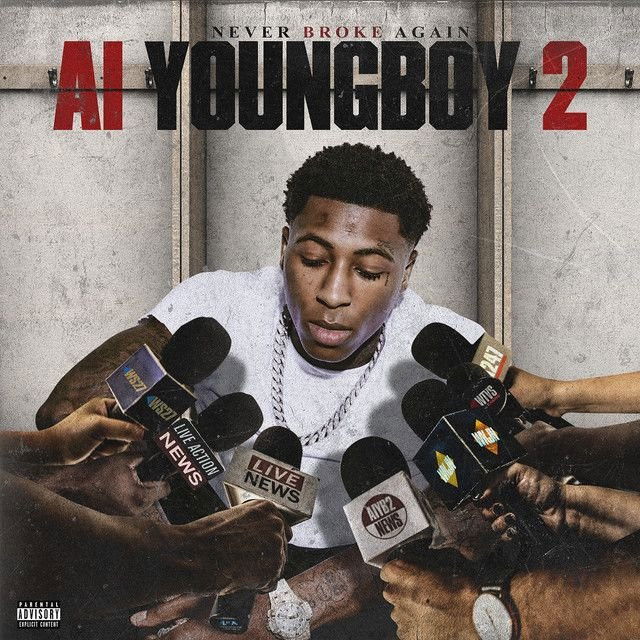
Gang Shit by YoungBoy Never Broke Again
A Hard-Edged Look at the meaning of Gang Shit YoungBoy Never Broke Again
The meaning of Gang Shit YoungBoy Never Broke Again is direct, aggressive, and intentionally unsettling. The song is built as a threat record: it centers on gang identity, retaliation, and the need to project danger before anyone can challenge them.
"Gang Shit" - YoungBoy Never Broke Again
Ayy, 4KTrey
Bitch ass nigga, ayy, ain't nobody, ain't nobody safe
Loading lyrics...
Unable to load lyrics
We're unable to display the lyrics at this time. Please try again later.
YoungBoy Never Broke Again, born Kentrell DeSean Gaulden in Baton Rouge, built much of his career on intensely personal Southern rap that often mixes pain with menace. Facts about his background, commercial rise, and genre placement are widely documented by sources like Wikipedia and Billboard coverage summarized there, including his Baton Rouge roots and prolific chart history (Wikipedia).
In this song, though, the emotional side is mostly buried. Instead, they lean into intimidation, crew loyalty, and the idea that survival depends on being feared.

Watch the official Gang Shit
music video
The Core Message: Fear as Power
At its simplest, the song argues that respect comes from making others believe there will be immediate consequences. The repeated hook does not invite debate. When they use phrases like ain't nobody safe
and who gon' die today?
, the point is not subtle storytelling. It is dominance.
That matters because the song does not present violence as accidental. It presents it as strategy. The narrator keeps framing silence, speed, and action as signs of realness, while talking is treated as fake. In interpretation, this is a worldview where reputation is protected through preemptive force.
Baton Rouge Codes and Crew Identity
Local references make the threats feel personal
The song opens with crew and location markers, including 4KTrey
and Northside 38
. Those references matter because they root the record in YoungBoy’s Baton Rouge identity. They are not just saying they are dangerous in general. They are naming the set, the side, and the social circle that give the threats weight.
That kind of naming is common in gangsta rap and Southern trap, both genres strongly associated with YoungBoy’s work (Wikipedia). It also fits a career-long pattern where local loyalty and neighborhood identity are tied to credibility.
How the Verses Build the Song’s World
The verses do not move through a big plot. Instead, they stack scenes and images that all serve one idea: they are ready for conflict at all times.
A few patterns stand out:
- Weapons replace conversation. They stress that arguments are pointless once violence enters the picture.
- Loyalty is active, not emotional. Associates and romantic partners are valued for what they will do in a crisis.
- Paranoia shapes behavior. The narrator keeps anticipating threats, challenges, and betrayal.
- Drug use blurs the mood. Intoxication appears not as pleasure alone, but as part of a reckless, numbed state.
When they say do no talkin'
, the song reduces conflict resolution to action. Later, phrases like I ain't hidin'
frame visibility itself as courage. In interpretation, the song treats public fearlessness as a shield.
The Hook Turns Threats Into Identity
The chorus is the reason the track feels so relentless. It repeats the same warning until it stops sounding like a moment and starts sounding like a code of life.
Gang shit, blow your brain
who you playin' with?
That short refrain sums up the whole record. First comes group identity, then punishment, then challenge. The sequence matters. The song suggests that personal ego and gang allegiance are fused together. Disrespecting one means provoking the other.
Women, Loyalty, and the Song’s Narrow Moral Frame
One striking part of the lyrics is how loyalty is measured. A woman in the song is praised not for emotional support, but for willingness to help with crime or violence. That tells listeners a lot about the moral frame of the track.
In this world, almost every relationship is judged by usefulness under pressure. Love, friendship, and affiliation all get filtered through the same test: who will act when things escalate? That makes the song feel cold. Even the closest bonds are described through risk and weaponry.
How the Sound Carries the Message
Even without full production credits in the provided material, the song clearly sits in YoungBoy’s trap lane: hard drums, dark momentum, and a repetitive hook designed to hit like a warning siren. That approach matches the broader sound associated with his catalog, which spans Southern hip-hop, trap, and gangsta rap (Wikipedia).
The likely effect of that production is simple: it strips away softness. There is little room for reflection. The beat’s job is to keep pressure high while the vocal delivery stays sharp, nasal, and confrontational.
Critics have often described YoungBoy’s music as tied to violence, power, and the emotional damage around both. Pitchfork once called his debut album “packed with allegories on power” and focused on how violence shapes his perspective (Pitchfork). That broader context helps explain why a song like this lands as more than random threats. It fits an established artistic mode.
A Reasonable Interpretation of What Sits Underneath
Interpretation: Beneath the obvious aggression, the song may also be about insecurity. Not soft insecurity, but survival insecurity. The need to sound untouchable usually appears when vulnerability is dangerous.
That does not excuse the content. It just helps explain it. The constant warnings, the obsession with who is fake, and the repeated readiness to attack all suggest a mind that expects danger from every side.
Final Take on the Song’s Meaning
The meaning of Gang Shit YoungBoy Never Broke Again is a portrait of life lived through retaliation, loyalty tests, and fear-based power. It is less confession than performance of control.
For listeners, that makes the song intense but narrow on purpose. It wants to overwhelm, not comfort. Interpretation disclaimer: this reading is an informed analysis of themes, tone, and context, not a statement of the artist’s private intent beyond the available lyrics and public sources.








