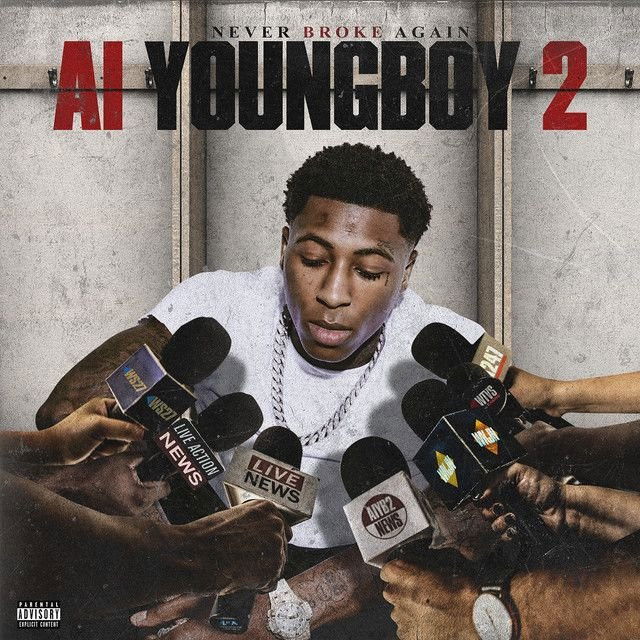
Rebel's Kick It by YoungBoy Never Broke Again
YoungBoy Never Broke Again’s “Rebel’s Kick It” feels like a life report delivered in real time. The meaning of Rebel's Kick It YoungBoy Never Broke Again centers on how survival changes a person: it can make them guarded, loyal, flashy, restless, and still hungry for peace. The song is not just about money or threats. It is about how someone from a violent environment learns to move through success without ever fully escaping the mindset that built it.
"Rebel's Kick It" - YoungBoy Never Broke Again
Ain't no goin' back, my nigga Wheezy on the track
Yeah
Loading lyrics...
Unable to load lyrics
We're unable to display the lyrics at this time. Please try again later.
A Life Story Told Like Proof
From the start, the song frames itself as testimony. When YoungBoy says tell you how I'm living
, they present the track as a first-hand account rather than a clean moral lesson. Right after that, they reject outside judgment and suggest actions matter more than commentary.
That is a key to the song’s meaning. They are not asking listeners to approve of every choice. They are saying this is what life looked like, what it demanded, and what it turned them into. The repeated idea of a motion picture from the trenches
makes that point even sharper. Their life is described as cinematic, but not glamorous in a simple way. It feels intense, unstable, and always in motion.
Watch the official Rebel's Kick It
music video
The Real Conflict: Escape Versus Conditioning
One of the strongest parts of the song is how it balances ambition with damage. On one side, there are luxury images, big spending, and the confidence of someone who made it. On the other, there is constant danger, suspicion, and old behavior that never fully disappears.
Interpretation: The song suggests that success does not erase survival instincts. It only changes the setting. A Bentley replaces the block, but the fear, pride, and readiness for conflict stay close.
That tension shows up when YoungBoy talks about trying to leave out the killing
. This line matters because it admits effort, not perfection. They do not claim to be healed. They claim to be trying. That small difference gives the song some of its depth.
A Young Person Watching Two Futures
The middle section widens the story. Instead of only talking about themselves, YoungBoy describes a younger person from the slums who is pulled between goals and the pressure of the street. That character studies, avoids carrying a gun, and tries to keep direction while police, neighborhood politics, and romantic distractions close in.
This part is important because it shows the song is not only autobiographical. It is also observational. YoungBoy seems to recognize a cycle: a talented kid can grow, or the environment can harden them before they get the chance.
What the Young Figure Represents
The young figure stands for possibility. They are someone who has not fully chosen violence, even if violence surrounds them. When the song says he keeps his head in them books
, it paints education as both hope and vulnerability.
Interpretation: This is one of the song’s clearest warnings. In YoungBoy’s world, doing the right thing does not automatically make someone safe. It may actually force them to become more careful and hidden.
Loyalty Is the Song’s Emotional Center
If the first half is about environment, the later verse is about allegiance. YoungBoy turns toward a close friend or brother figure and recalls who stayed present at the lowest point. That shift changes the song from a personal memoir into a vow.
The core message is simple: loyalty is more valuable than fame, money, or status. The direct spoken section near the end reinforces that idea by putting relationships above diamonds, cash, and women. In a song filled with danger, this is the clearest statement of what they trust.
My day one, you my brother
And I love you to death
Those lines are brief, but they change the emotional temperature. Instead of performing toughness alone, YoungBoy shows dependence, gratitude, and memory. That makes the threats elsewhere in the song easier to understand. They are tied to protection and shared history, not only ego.
How the Sound Carries the Meaning
The production credit goes to Wheezy, and the beat tag appears in the song. According to published songwriting details, the writers are Kentrell DeSean Gaulden and Wesley Tyler Glass, the producer known as Wheezy. The production fits the writing well: spacious trap drums, a dark melodic bed, and enough room for YoungBoy’s voice to swing between talking, rapping, and near-confession.
The beat does two things at once:
- It sounds expensive and polished, matching the luxury imagery.
- It stays tense and shadowy, matching the paranoia and violent memory.
That contrast supports the meaning of Rebel's Kick It YoungBoy Never Broke Again. The song sounds like success sitting on top of unresolved pain. Even when the flow gets more aggressive, the instrumental never feels carefree.
Why the Hook Keeps Hitting
The chorus repeats the same central idea: do not judge the life from a distance; watch how it unfolds. In plain terms, YoungBoy is saying they would rather demonstrate their reality than debate it. That is why the hook feels memorable. It is not just catchy. It is a thesis.
Interpretation: “Kick it” can mean the way they move through life, handle pressure, and present themselves after surviving chaos. The phrase turns lifestyle into evidence.
Final Take on the Song’s Message
The meaning of Rebel's Kick It YoungBoy Never Broke Again is rooted in contradiction. The song is about making it out while still carrying the habits, grief, and loyalties of where they came from. It is also about how love for one’s people can be both a source of strength and a reason conflict never fully ends.
That mix of pride, fear, gratitude, and exhaustion is what gives the track its weight. It plays like a flex record on the surface, but underneath, it sounds more like a survival diary.
Disclaimer: This interpretation is based on the lyrics, performance, and publicly available credits, and it remains an informed reading rather than a confirmed statement of artist intent.








