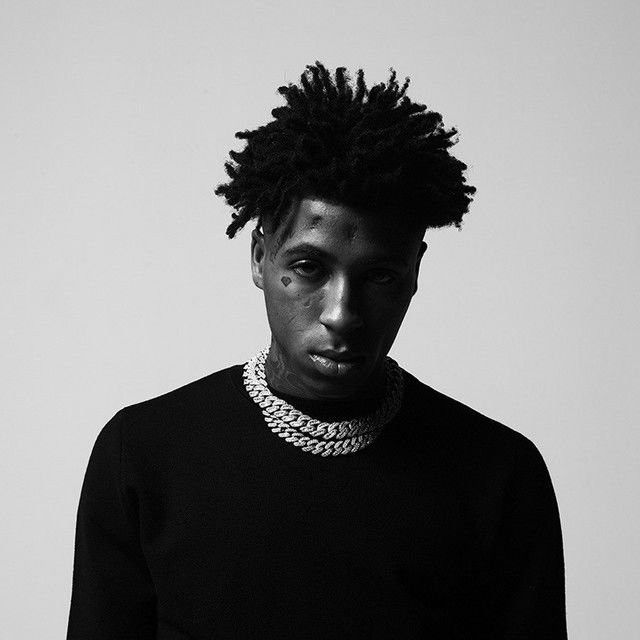
The Last Backyard... by YoungBoy Never Broke Again
Why does this song turn a backyard into breaking news? The meaning of The Last Backyard... YoungBoy Never Broke Again lies in how he recasts home turf as a battleground—and a stage. Across two terse verses and a sticky hook, he ties bravado to survival, insisting that any threat ends loudly, even publicly. Fame didn’t pull him out of danger; it only raised the volume on consequences.
"The Last Backyard..." - YoungBoy Never Broke Again
(TayTayMadeTheBeat)
XO, yeah
Loading lyrics...
Unable to load lyrics
We're unable to display the lyrics at this time. Please try again later.
Turf, headlines, and a code of retaliation
At its core, the track is about enforcement of reputation. When he repeats straight on the news
, he’s not just flexing reach; he’s warning that street disputes will be made visible. That visibility is a power move—he decides what becomes a headline.
The phrase choppers screamin'
doubles the meaning: rapid-fire flows and automatic weapons are both “loud.” This blurs music with menace, suggesting that his voice and his arsenal serve the same purpose—deterrence.
Watch the official The Last Backyard...
music video
Who’s talking, and to whom?
The narrator speaks in first person but often widens to “we,” as in we don't ever lose
. That shift signals a crew ethic: loyalty and collective response. The “you” in his lines is fluid—rival crews, online critics, even law enforcement. He frames himself as targeted by haters and the police, but also as the one who sets terms.
In lines like In my Rolls-Royce ridin' with no tint
, he performs fearlessness. Riding without tint—fully visible—telegraphs he’s unbothered by surveillance and unafraid of retaliation. It’s wealth as armor and as dare.
What actually happens: a quick timeline
- He rejects sneak disses and demands in-person action, vowing outcomes will hit the news.
- He paints mobility and reach—big rims, fast driving—and mixes it with weaponry.
- He contrasts luxury with violence, flaunting chains and cars while promising decisive response.
- The hook returns to the same image: conflict doesn’t stay in the backyard; it spills into public view.
Each beat reinforces the core idea: private threats have public endings.
Symbols and motifs decoded
- News: Turning incidents into “news” means control over narrative. He positions himself as the editor of conflict—able to broadcast results.
- Choppers: As sound and as weapon,
choppers screamin'
links music’s volume to street volume. The pun ties art and retaliation together. - Backyard: The title’s “Backyardigans” flips a children’s show into territorial slang. Interpretation: he’s claiming a playful word to underline a hard truth—this “backyard” is not safe.
- Sticks/trees:
Got them sticks on us like tree limbs
extends the backyard image. The comparison makes weapons feel as common—and as natural—as branches in his environment. - Cars and chains: Status symbols signal arrival. But the lack of tint and constant motion imply the cost of success: he’s always exposed, always moving.
How the production sells the threat
The tag “TayTayMadeTheBeat” leads into a dark, mid-tempo trap backdrop with sliding 808s, sharp hi-hats, and a tight, minor-key loop. The mix leaves room for his voice to punch through; the hook is almost chant-like, designed for instant recall. That minimalism lets the refrain hammer the message without clutter—every return to straight on the news
lands like a headline stinger.
Vocally, he toggles between a cold, clipped delivery and heated bursts, mirroring the switch from watchfulness to eruption. The contrast is the song’s engine: tension, then release.
Context that shapes the listen
The track appears on his 2020 album Top, which debuted at No. 1 on the Billboard 200. That chart success matters here: the hook’s media imagery reads differently when the artist is a mainstream fixture. He’s not just speaking to a block; he’s addressing a national audience that already watches him.
Real-world scrutiny also hangs over the song. In a high-profile firearms case, a judge later excluded his lyrics as evidence. That ruling fed the ongoing debate about whether rap lyrics should be treated as autobiography. Against that backdrop, listeners can hear this record as performance, persona, and coded memory at once.
Alternate readings and what sticks
- Interpretation: A fame parable. The “news” and no-tint Rolls suggest a life lived without cover. Violence is the metaphor for hyper-visibility—every move becomes content.
- Interpretation: A territory memo. “Backyard” is Baton Rouge home ground; “Backyardigans” is a smirk at outsiders who confuse play with permission.
Either way, the emotional center is control. He decides what gets seen, who gets named, and when a rumor turns into a report.
Final takeaway
The meaning of The Last Backyard... YoungBoy Never Broke Again is a study in power made public. The beat is spare, the hook is blunt, and the images are designed to travel—from the backyard to the broadcast. Whether heard as persona or lived experience, the message is the same: attention is a weapon, and he knows how to use it.
Disclaimer: Song interpretations are subjective; this analysis reflects one informed reading of lyrics, context, and production choices.
Sources
- https://en.wikipedia.org/wiki/Top_(YoungBoy_Never_Broke_Again_album)
- https://www.billboard.com/articles/business/chart-beat/9450016/youngboy-never-broke-again-top-billboard-200-number-one/
- https://genius.com/Youngboy-never-broke-again-the-last-backyard-lyrics
- https://www.rollingstone.com/music/music-news/nba-youngboy-trial-judge-excludes-rap-lyrics-as-evidence-1381658








