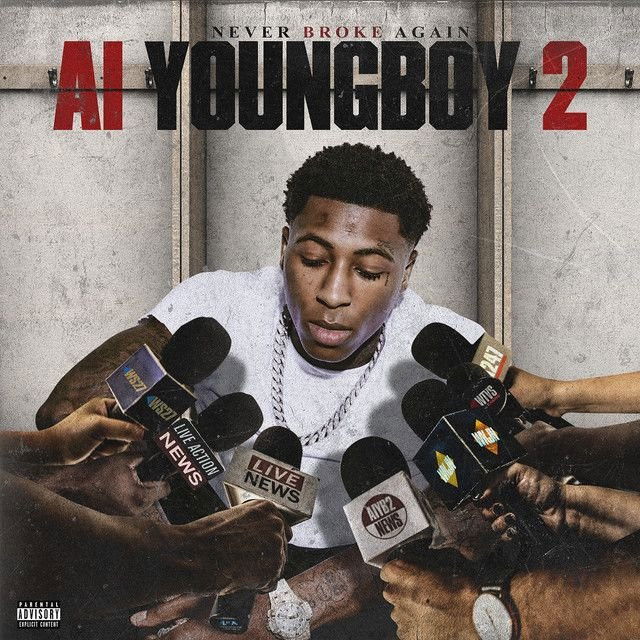
Where the Love At by YoungBoy Never Broke Again
YoungBoy Never Broke Again often makes songs that sound hard on the surface but carry fear, grief, and need underneath. That is the key to the meaning of Where the Love At YoungBoy Never Broke Again. The song is not just about money, enemies, or getting out of jail. It is about someone who has lived in survival mode for so long that they barely know what peace looks like anymore.
"Where the Love At" - YoungBoy Never Broke Again
Fresh up out a cell, where that bag at?
I was flying, but now I need somewhere to land at
Loading lyrics...
Unable to load lyrics
We're unable to display the lyrics at this time. Please try again later.
A Tough Record With a Wounded Center
From the opening bars, they set up instability. They are fresh out, looking for money, and trying to find solid ground. A short line like fresh up out a cell
does more than describe a situation. It creates the song’s emotional starting point: release does not feel free, because the outside world still comes with danger, pressure, and old habits.
That tension drives the whole track. They talk like a boss, someone who can still provide and help others, but they also sound exhausted. The central idea arrives in the hook, where they admit tired of thuggin'
and start asking where the love at
. In plain terms, the song says that toughness has not solved the deeper problem. They do not only want protection. They want tenderness.

Watch the official Where the Love At
music video
The Hook Turns Violence Into a Cry for Peace
The chorus is what makes the record hit harder than a simple street anthem. Before and after the violent talk, they confess that they wish they were somewhere without violence and need someone beside them at night.
I wish I was somewhere
where it ain't no violence
At night I need someone
on side me just to hold me
This is the song’s emotional core. The speaker does not deny the life around them. They still carry weapons, still expect threats, still talk in a defensive posture. But the chorus reveals that this behavior comes from fear and habit, not pride alone. Interpretation: the song suggests that violence has become both armor and prison.
Family Gives the Song Its Moral Weight
A big reason this track feels more reflective than boastful is the family detail. They mention their son, the child’s mother, their father, and their grandfather. Those references widen the song beyond the self.
When they describe caring for a son or saying they do not want to be a problem for a baby mother, the song becomes about responsibility. They are not only asking what happens to them. They are asking what kind of man they are becoming around the people who depend on them.
The line about praying not to become like their father is especially important. It points to inherited pain and repeating cycles. Then the mention of a grandfather who taught useful skills adds a counterweight: not every legacy is destructive. Interpretation: the song frames love as something learned, missed, and urgently needed across generations.
Baton Rouge Reality Stays in the Background
YoungBoy, born Kentrell Gaulden in Baton Rouge, built a career on emotionally direct rap that mixes melody with vivid street detail, and their rise has long been shaped by both huge commercial success and repeated legal trouble, as widely documented by sources such as Wikipedia’s career overview. They have also released major projects during incarceration, including Sincerely, Kentrell, which debuted at No. 1 on the Billboard 200 according to public chart reporting summarized there.
That context matters here, but carefully. The song should not be treated as a literal court document. Still, when they rap about being out of a cell and trying to land after a loss, listeners hear a familiar YoungBoy theme: success does not erase instability. In their catalog, fame and confinement often sit side by side.
Sound Design: Melodic Pain Over Heavy Drums
The production tag points to Drum Dummie, and the beat matches the subject well. It is not lush or comforting. The instrumental uses a dark trap frame, with firm drums and enough open space for YoungBoy’s voice to crack through with urgency.
That space matters. On a denser beat, the confessional parts might get buried. Here, the contrast stands out: aggressive lines sit next to lonely ones, and the vocal delivery shifts between threat and pleading. The result is a song that feels restless rather than triumphant.
How the Lyrics Move From Street Talk to Need
The verses follow a clear pattern:
- They start with release, money pressure, and trying to recover.
- They shift into violent self-defense and gang loyalty.
- They pause to ask for closeness and love.
- They return to family, regret, and the wish to do better.
That pattern is the point. The song does not show a clean transformation. It shows someone stuck between identities. A phrase like somewhere to land at
sounds practical, but it also hints at emotional homelessness. They are not only looking for a place. They are looking for stability.
The Best Way to Read the Song
The strongest reading of the meaning of Where the Love At YoungBoy Never Broke Again is that it portrays emotional burnout inside a violent lifestyle. They know the rules of that world, and they still speak that language. But the repeated question about love shows that they no longer believe survival alone is enough.
A second valid reading is that the song is about reentry after confinement. Jail may end, but the mindset does not. They come out still scanning for threats, still chasing money, still carrying old pain. Love becomes the missing thing that could interrupt that cycle.
Final Take
“What the song means” comes down to this: YoungBoy uses hard details to describe a soft need. Beneath the threats, flexes, and street memories, they sound lonely, worn down, and hungry for peace.
That is why the hook lingers. The song is asking whether a person shaped by violence can still find care without losing the instincts that kept them alive.
Disclaimer: This interpretation is based on the lyrics, performance, and public career context. Like most songs, it can support more than one meaning, and not every line should be read as a literal statement of fact.








