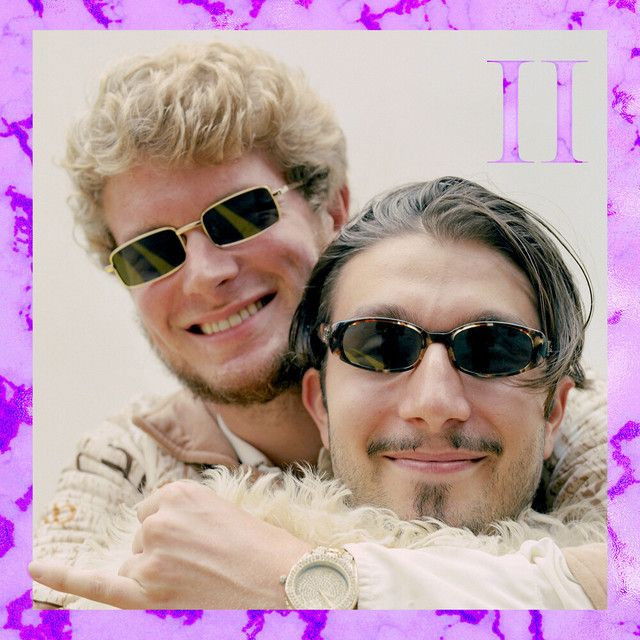
Why BABY GRAVY Turn Chaos Into a Party
The meaning of Myrtle Beach Summer 1974 BABY GRAVY, Yung Gravy, bbno$ is less about memory than mood. Even with a title that sounds nostalgic and sun-faded, the lyrics themselves live inside a loud club night. They focus on movement, flirtation, and performance, turning a simple party track into a joke-filled snapshot of swagger.
"Myrtle Beach Summer 1974" - BABY GRAVY, Yung Gravy, bbno$
Just recently hit ten thousand followers on Instagram
I'm very proud to present to you Baby Gravy Two
Loading lyrics...
Unable to load lyrics
We're unable to display the lyrics at this time. Please try again later.
BABY GRAVY is the duo project from Yung Gravy and bbno$, two internet-era rappers known for humorous bars and offbeat charisma. The writer credits provided for this song—Alexander Gumuchian, Ari Starace, and Matthew Hauri—match the artists involved: bbno$, Y2K, and Yung Gravy. That matters because the song sounds exactly like their shared brand: self-aware, silly, and built to entertain rather than confess.
A Retro Title, a Very Modern Flex
One of the most interesting things here is the mismatch between title and content. "Myrtle Beach Summer 1974" sounds like a sepia-toned story about vacation, family photos, or teenage freedom. But the lyrics jump straight into a modern club setting, beginning with a producer-style intro and then moving into a loop of dancing, drinking, and sexual bravado.
Interpretation: that contrast seems intentional. The title may act like a fake postcard—something vintage and cinematic—while the song itself is chaotic and current. That gap creates part of the joke. Yung Gravy and bbno$ often use retro imagery, old-school references, and exaggerated smoothness to make their songs feel both slick and unserious.
Watch the official Myrtle Beach Summer 1974
music video
What the Lyrics Actually Show
At the line-by-line level, the song is simple on purpose. The speaker arrives at the club, shows off, connects with someone, drinks, and keeps the energy high. Phrases like pull up in the club
and I got the moves
establish instant confidence.
The song does not build a deep plot. Instead, it repeats a few key ideas:
- arrival as spectacle
- dancing as social power
- flirtation as a game
- partying as a shared performance
That is why the repeated hook matters. When the lyrics return to the same images, they make the night feel endless, almost like a GIF. The repetition suggests that this is not a unique romance but a familiar BABY GRAVY fantasy: a club scene where everything bends toward charm, rhythm, and absurd confidence.
The Hook Is About Persona
The most revealing parts of the song are not the sexual jokes by themselves, but how casually they are delivered. A phrase like dance all night
tells listeners the real goal: not intimacy, but sustained energy.
Even a line like she gettin' loose
is less about character detail than atmosphere. The people in the song are lightly sketched because the focus is on vibe. They are figures in a party world, where the main event is the mood itself.
Interpretation: this makes the narrator feel less like a real person and more like a cartoon host. They are there to keep the room moving, not to reveal anything vulnerable.
Comedy Hides Inside the Bragging
Like many Yung Gravy and bbno$ tracks, this one uses boastful rap language while gently parodying it. The hook sounds triumphant, but there is also a wink in the wording. The train image in Gravy Train
and hit the caboose
turns sexual bragging into a goofy visual pun.
That matters for meaning. On the surface, the song is about attraction and status. Underneath, it is also about how ridiculous those poses can be. They exaggerate macho confidence until it becomes part of the entertainment.
This is where BABY GRAVY's appeal often sits: they can sound cool and unserious at the same time. Listeners are invited to enjoy the flex while also laughing at how oversized it is.
How the Sound Sells the Joke
Production is crucial here. The intro from Y2K frames the song like an online event, almost like a skit before the beat drops. That gives the track a homemade-internet feel before the club energy takes over.
Once the main section starts, the rhythm feels bouncy and repetitive, which supports the lyrical loop. The beat does not need emotional depth because the song is engineered for momentum. Short phrases, punchy delivery, and chant-like repetition keep everything easy to remember.
The vocal style also carries meaning. Instead of sounding intense or dramatic, the performances feel breezy and amused. That lightness keeps the song from becoming threatening or heavy. Even when the lyrics get explicit, the tone says they are playing characters inside a party universe.
A Good-Time Song With No Hidden Heartbreak
Some party songs hide sadness underneath. This one mostly does not. Its goal is immediate fun. A phrase like feeling like celebrity
points to a fantasy of visibility, where being watched is part of the thrill.
Still, there is a small layer of commentary in that. The song treats nightlife like a performance space, and the opening social-media mention reinforces that idea. Attention, clout, dancing, and flirting all blend together. They are not separate experiences here; they are one show.
Interpretation: that makes the song a tiny portrait of online-era cool. The club is real, but it also feels like content.
Final Take on the Meaning
The meaning of Myrtle Beach Summer 1974 BABY GRAVY, Yung Gravy, bbno$ is a mix of party fantasy, comic exaggeration, and internet-age self-display. It is about entering a room, becoming the center of motion, and turning flirtation into spectacle.
More than anything, the song succeeds by refusing to be heavier than it needs to be. It is catchy, ridiculous, and knowingly shallow in a way that suits BABY GRAVY's style.
Disclaimer: This interpretation is based on the lyrics provided and publicly known artist context. As with any song, meaning can vary by listener and may differ from the artists' private intent.









