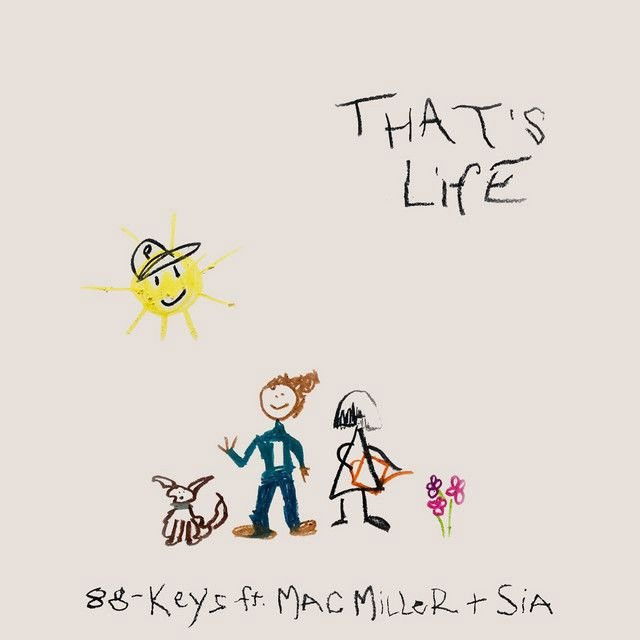
Why “That’s Life” Feels So Heavy
The meaning of That's Life 88-Keys, Mac Miller, Sia comes from a sharp contrast: the song sounds loose and melodic, but its story is full of guilt, numbness, and fear. It presents a person trying to laugh off self-destruction, then ends by showing the pain that attitude can hide.
"That's Life" - 88-Keys ft. Mac Miller, Sia
All the drugs in your system, you can't sleep
How many times you had to buy a Plan B
Loading lyrics...
Unable to load lyrics
We're unable to display the lyrics at this time. Please try again later.
Released by 88-Keys after Mac Miller’s death, the track took on a very different emotional weight than a typical rap single. What might have sounded like dark humor in another context now feels like a record of someone wrestling with habits, fame, and emptiness.
A shrug that hides a crisis
At the surface, the hook seems simple. Life is strange, people live and die, and they have to keep going. But the repeated that's life
does more than sum up a philosophy. It sounds like a coping phrase used when things feel too messy to fix.
Interpretation: The song is less about acceptance than emotional avoidance. Instead of solving pain, the speaker keeps naming chaos, then waving it away as normal. That gives the chorus a double meaning: it is both wisdom and surrender.
This is what makes the track hit so hard. The verses do not describe a stable person who has made peace with life. They describe someone surrounded by indulgence, shame, and drifting purpose.
Watch the official That's Life
music video
Mac Miller’s verses: pleasure, regret, and self-judgment
Mac’s writing moves quickly between flexes, confessions, and ugly self-awareness. He mentions drugs, sex, money, family tension, and sleeplessness, making his world feel crowded but not comforting.
Early on, he reflects on reckless behavior and domestic conflict, then tries to balance the scale by saying he paid back what he owed. That matters because it shows a mind keeping score, looking for proof that they are not beyond repair. Even when he jokes, there is pressure underneath.
A key line is the idea that he cannot sleep. That detail turns the verse away from pure swagger. Sleeplessness suggests anxiety and a body pushed too far. When he admits my morals disappeared
, the song drops any pretense that success has made things better.
The voice is honest, but not stable
Mac’s narrator is not asking for sympathy in a direct way. Instead, they mix humor with self-criticism. Phrases like last show
and lease on life
give the verse a haunted edge, especially in hindsight.
Interpretation: Those lines do not have to be read as literal predictions. But they clearly show exhaustion. The speaker feels trapped in a cycle where bad choices bring brief relief, then deeper regret.
That is why the song’s coarse jokes do not land as simple bravado. They sound like distraction. He keeps talking so he does not have to sit with what hurts.
The chorus changes the whole frame
The hook says everybody lives a little and everybody dies. In plain language, it argues that risk, pleasure, and loss are universal. But because the verses are so troubled, the chorus starts to feel less comforting.
Rather than healing the song, it exposes its core tension. If life is random and death is certain, what should they do with that truth? The track never gives a clean answer. It keeps circling the same question: when does “living” become self-erasure?
That tension is central to the meaning of That's Life 88-Keys, Mac Miller, Sia. The song knows how people justify harmful patterns. They call it freedom, adulthood, or realism. But underneath, they may be deeply unhappy.
Sia’s ending turns confession into elegy
Sia’s section is the emotional key that unlocks the whole song. She stops the rush of Mac’s verses and speaks from the outside, almost like someone reaching for a person who could not be reached.
She centers fame as a poison, saying in essence that public success cannot fill an inner hole. Her repeated wish to be “home” for that person makes the ending intimate and tragic.
Wish you picked up the phoneKnew that you weren't alone
Those short lines matter because they replace deflection with grief. The song is no longer only about someone acting reckless. It becomes about the people around them, too—the ones who saw pain and wished they could interrupt it.
How the production carries the message
88-Keys is a veteran producer known for soulful, sample-friendly hip-hop textures, and that style shapes the song’s meaning. The beat is warm and smooth rather than chaotic, which creates an important mismatch with the lyrics.
That mismatch works beautifully. The music glides while the words stumble. It feels like a polished exterior covering inner damage, much like celebrity itself.
Sia’s vocal also changes the soundscape. Her voice lifts the hook into something more aching and hymn-like, especially near the end. What begins as a worldly shrug starts to resemble a memorial.
Artist context matters here
Factually, “That’s Life” was released in 2019 by 88-Keys and features Mac Miller and Sia. It followed Mac Miller’s death in 2018 and was presented as a posthumous release. That context strongly shaped how listeners heard the song.
Even without relying on hindsight, the lyrics point to burnout and detachment. With hindsight, those same lines feel painfully exposed. Still, the strongest reading is not that the song predicts one event. It is that it captures a larger emotional pattern: using excess to outrun emptiness.
What the song finally says
The meaning of That's Life 88-Keys, Mac Miller, Sia is not just that life is hard. It is that people often hide their hardest truths behind jokes, habits, and slogans. Mac’s verses show the performance of being okay. Sia’s ending shows what that performance may be covering.
In the end, the song asks listeners to hear the difference between acceptance and resignation. They can sound almost the same, but one leads toward peace, while the other leaves a person alone inside their pain.
Disclaimer: This interpretation is based on the song’s lyrics, performance, and release context. As with any art, other readings are possible.








