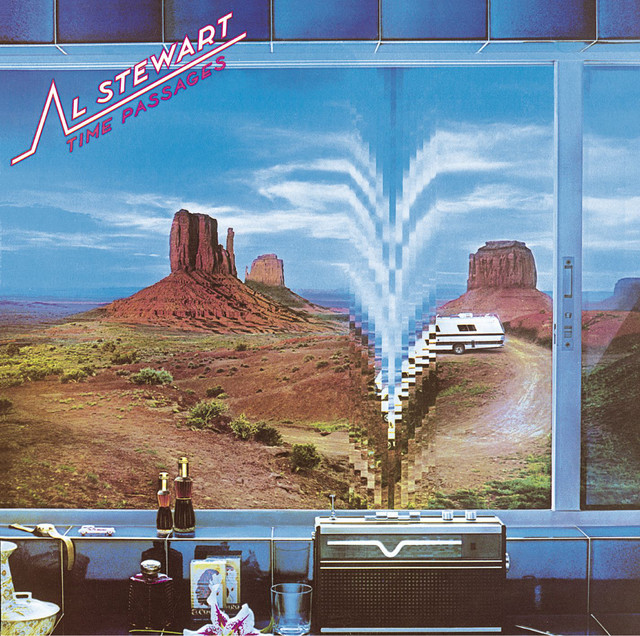
Time Passages by Al Stewart
The meaning of Time Passages Al Stewart comes down to a simple but powerful feeling: time moves on, but memory does not move in a straight line. The song begins in a real place—a snowy December evening—and then slips into the strange inner world where old faces, missed chances, and earlier versions of the self start to return.
"Time Passages" - Al Stewart
All round the day was going down slow
Night like a river beginning to flow
Loading lyrics...
Unable to load lyrics
We're unable to display the lyrics at this time. Please try again later.
Released in 1978 as the title track of Stewart’s album, the song became one of his biggest U.S. hits, reaching No. 7 on the Billboard Hot 100 and spending ten weeks at No. 1 on the Adult Contemporary chart, according to Wikipedia. That popularity matters because the song’s theme is not flashy. It is reflective, even quiet. Yet listeners heard themselves in it.
A Song About Memory Sneaking Up
On the surface, the narrator is traveling or preparing to travel. The setting is winter, the day is ending, and the mind starts drifting. Instead of staying in the present, they are pulled into what the chorus calls time passages
. That phrase suggests more than time passing. It sounds like hallways, tunnels, or doors into the past.
The key emotional idea is that the narrator does not want to live in memory full-time. They even insist they are not someone who lives in the past. But that claim is exactly what makes the song feel human. People often say they have moved on, only to find that one season, one sound, or one late-night mood brings everything back.
The refrain about the last train home
gives those feelings a destination. Literally, it sounds like a trip back. Interpretation: emotionally, it suggests a wish to return to safety, youth, or a lost center of identity.

Watch the official Time Passages
music video
How the Verses Build the Theme
The first verse starts with weather and fading light. Those details are important because they turn ordinary evening into a trigger for reflection. The mind starts drifting into time passages
, which shows how memory in the song is not controlled. It overtakes the speaker.
In the second verse, the message becomes clearer. Stewart links time to impermanence: the things people depend on do not always last. That is the song’s hardest truth. Love, certainty, and even self-image can fade.
Then the song shifts into something more dreamlike. The narrator hears echoes, feels a turn beginning, and senses there might be a lesson hidden in the past. But Stewart undercuts that idea too. He suggests people may only be playing mental games with themselves, trying to force meaning onto memories.
That skepticism makes the song stronger. It is not a neat life-lesson anthem. It admits that looking back may not teach anything clear at all.
The Most Haunting Scene
The final verse gives the song its most vivid image. In a crowd, someone from the past seems to appear. The narrator reaches out, but the encounter dissolves.
a girl comes towards you
you once used to know
you reach out your hand
but you're all alone
This moment captures the whole song. The past looks close enough to touch, but it is not physically there. It lives inside memory, not in the present world. That is why the song feels both warm and sad at once.
Artist Context Shapes the Meaning
Context helps explain why the song sounds so polished and immediate. Stewart wrote it with Peter White, while Alan Parsons produced it. Parsons had also worked on Stewart’s “Year of the Cat,” and the two songs share a sleek, cinematic quality. According to American Songwriter, Stewart later said he never fully loved “Time Passages,” feeling it lacked the spark of “Year of the Cat.”
That tension is interesting. A song written partly with hit potential still ended up connecting because its emotional center is real. Even if the structure is cleaner and more commercial than some Stewart songs, the feeling of being ambushed by memory rings true.
Some critics and listeners hear it as a thematic companion to “Year of the Cat.” That is an interpretation, not a confirmed fact. But the link makes sense: both songs move through atmosphere, longing, and uncertain identity. If “Year of the Cat” is about getting lost in an intense moment, “Time Passages” is about looking back after that moment is gone.
How the Sound Carries the Message
The production matters a lot here. The arrangement blends soft rock, folk-pop smoothness, keyboards, saxophone, and a gentle but steady rhythm. Nothing rushes. The song glides.
That glide mirrors the lyric’s mental motion. The drums and keyboards feel calm, but the sax and layered textures add distance and ache. The sound is polished in a late-1970s way, yet it never feels cold. Instead, it creates a dream state where memory can float in and out.
Stewart’s vocal also helps. He sings with clarity rather than drama. That restraint keeps the song believable. The narrator is not collapsing under regret. They are simply caught in one of those moments when life suddenly feels long, short, and unfinished at the same time.
Final Take on Its Lasting Appeal
So, the meaning of Time Passages Al Stewart is not just nostalgia. It is about the uneasy gap between then and now. The song shows how people can know the past is gone and still feel it standing just out of sight.
Its lasting power comes from that balance: specific images, open emotion, and music that feels like falling into thought. For many listeners, it is less a story than a mental experience.
Disclaimer: This article offers a literary interpretation based on the lyrics, recording context, and published sources. Songs can support more than one valid reading.







