Why This Hallelujah Feels So Intimate
The meaning of Hallelujah Arthur Hanlon, Evaluna Montaner starts with a familiar truth: this is not a simple song about joy. Leonard Cohen’s classic has always lived in the space between faith and heartbreak, and Hanlon with Evaluna Montaner bring that tension into a softer, more intimate setting.
"Hallelujah" - Arthur Hanlon, Evaluna Montaner
That David played and it pleased the lord
But you don't really care for music, do you?
Loading lyrics...
Unable to load lyrics
We're unable to display the lyrics at this time. Please try again later.
Their version turns the song into a quiet conversation. Instead of sounding grand or overly dramatic, it feels reflective. That matters, because the song itself is about how praise can survive even when life feels broken.
A Famous Song About Broken Praise
Factually, Hallelujah
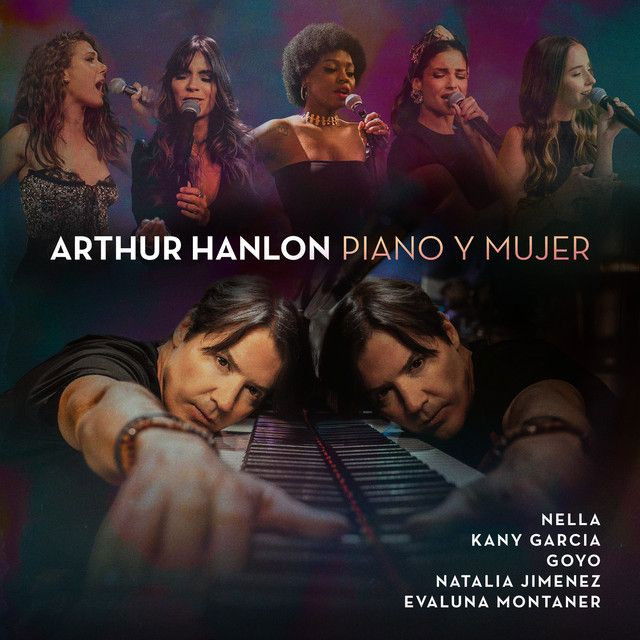
was written by Leonard Cohen and became one of his most discussed songs, known for blending biblical imagery with romantic and emotional struggle. Arthur Hanlon released his duet version with Evaluna Montaner in 2021 as part of Piano y Mujer, a project that paired him with major female Latin artists. Hanlon’s career and the project’s context are well documented in public biographies and discographies, including his 2020 Piano y Mujer album and special, with the Evaluna collaboration arriving as a later single in 2021.
At its core, the song says that praise is not always pure or triumphant. Sometimes it comes from confusion, desire, loss, or defeat. The opening image of a secret chord
frames music as something mystical, but the next ideas undercut that mystery with human distance and doubt.
Interpretation: this version keeps that contradiction front and center. It suggests that “hallelujah” is not just a holy exclamation. It can also be the sound a person makes when they have no neat answer left.

Watch the official Hallelujah
music video
Where Sacred and Human Feelings Meet
One reason the lyric endures is its mix of religious symbols and very human weakness. The song references King David and Samson, but it does not retell those stories in a clean, church-like way. Instead, it uses them to show how desire, beauty, and power can shake a person’s certainty.
When the song mentions your faith was strong
, it quickly complicates that confidence. Faith is present, but so is the need for proof. In other words, belief is not shown as stable. It is shown as something tested by the body, by love, and by disappointment.
That is why the repeated chorus hits so hard. The word Hallelujah
sounds like praise, but in context it also carries exhaustion. The singer is not floating above pain. They are singing through it.
How the Story Moves From Wonder to Surrender
The song’s emotional path becomes clearer when its images are placed in order:
- It begins with music and mystery, suggesting divine order.
- It moves into doubt, with the listener or partner seeming unmoved.
- It turns toward seduction and collapse, where beauty overwhelms certainty.
- It ends in a kind of stripped-down surrender.
That shape matters for the meaning of Hallelujah Arthur Hanlon, Evaluna Montaner. Their performance does not rush these shifts. Hanlon’s piano gives each stage room to breathe, so the listener can hear how awe slowly becomes ache.
the fourth, the fifth
minor fall, major lift
Those famous lines describe music in simple terms, but they also mirror the song’s emotional rise and fall. Even without technical training, listeners can feel the point: beauty and sorrow are built into the same structure.
Why Arthur Hanlon and Evaluna Fit the Song So Well
Hanlon is known for piano-led Latin crossover work and high-profile collaborations with vocalists across genres. His background includes classical piano training and a long recording career, with chart success in Latin music and projects built around guest singers. Evaluna Montaner, meanwhile, brings warmth and restraint rather than overpowering force.
That pairing changes the song’s atmosphere. Many versions of Hallelujah
aim for grandeur. This one chooses closeness.
The Piano as the Emotional Guide
Hanlon’s arrangement matters because the song is already partly about music itself. When the lyric references musical movement, the piano becomes more than accompaniment. It acts like a second narrator.
The measured pacing and soft dynamics make the song feel less like a declaration and more like a confession. That supports the lyric’s central idea: true praise may come from vulnerability, not certainty.
Evaluna’s Voice Softens the Edges
Evaluna does not treat the lyric like a showcase piece. She sings it with delicacy, which helps the listener notice the song’s sadness and tenderness at the same time.
Interpretation: her delivery makes the song feel less about spectacle and more about acceptance. Instead of fighting the pain in the lyric, the performance seems to sit with it.
The Chorus Means More Than It First Appears
A casual listener may hear the chorus as uplifting because the word itself sounds spiritual and bright. But the verses change that meaning. By the time the refrain returns, it no longer sounds simple.
It becomes a layered response:
- praise in the middle of loss
- awe mixed with disappointment
- acceptance without full understanding
That complexity is the reason the song has lasted so long. It gives listeners a word for moments when life feels both beautiful and broken.
Final Take on This Version’s Meaning
The meaning of Hallelujah Arthur Hanlon, Evaluna Montaner is about broken praise made personal. Cohen’s writing holds together faith, desire, defeat, and wonder, and this version highlights those tensions through gentle piano and a tender vocal performance.
Rather than trying to solve the song, Hanlon and Evaluna let it remain ambiguous. That is part of its power. Their recording suggests that sometimes “hallelujah” is not the sound of perfect belief. It is the sound of someone still singing after certainty has fallen away.
Disclaimer: This interpretation blends documented context with critical reading. Because “Hallelujah” is famously open-ended, different listeners may hear its meaning differently.








