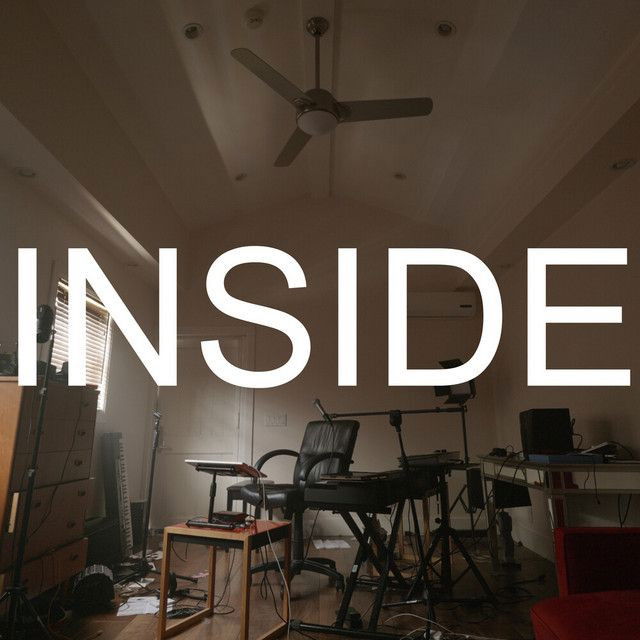
Why Bo Burnham Keeps Going Back Inside
The meaning of Look Who’s Inside Again Bo Burnham comes down to a painful loop: they leave isolation, search for purpose, and somehow end up hiding again. In a very short song, Bo Burnham turns that loop into a portrait of comedy, anxiety, and the strange comfort of being alone.
"Look Who’s Inside Again" - Bo Burnham
There isn't much more to say about it
Can one be funny when stuck in a room?
Loading lyrics...
Unable to load lyrics
We're unable to display the lyrics at this time. Please try again later.
The song appears in Inside, Burnham’s 2021 Netflix special, a project he wrote, filmed, edited, and performed by himself during the COVID-19 period, as documented by Netflix and Burnham’s own release materials for the special and album on Spotify. That context matters, but the song reaches beyond lockdown. It sounds like they are describing a lifelong habit, not just a temporary situation.
The Core Idea Hiding in Plain Sight
On the surface, Burnham describes a person in a room trying to be entertaining. They ask whether someone can be funny while trapped, then answer the question by showing the small tools of performance: trying to be funny
, making faces
, and telling jokes
. The song presents comedy as something born from confinement.
That is the key emotional move. The room is not just a room. Interpretation: it stands for isolation, depression, social fear, creative pressure, or all of them at once. Instead of dramatizing that feeling with big language, Burnham makes it sound plain and repetitive. That simplicity gives the song its sting.

Watch the official Look Who’s Inside Again
music video
From Childhood Bedroom to Adult Isolation
The most revealing shift comes when the song connects the present to childhood. Burnham moves from an adult performer stuck indoors to a child who learned to entertain himself in private. The point is not only that they were lonely as a kid. It is that performance may have started as an escape route.
When the song mentions a kid stuck in his room
, it reframes the earlier lines. Jokes, voices, and little bits are no longer just comic habits. They become early coping mechanisms. The child tries anything to get out of the feeling of being trapped, and those experiments eventually grow into a career.
That makes the song unusually sad. It suggests that the entertainer and the isolated child are not opposites. They may be the same person at different ages.
Why the Chorus Hits So Hard
The chorus is the song’s sharpest turn. After the gentle verses, Burnham delivers a mock confrontation: look who’s inside again
. The line sounds playful at first, almost like an old friend teasing someone. Then it gets more severe, as if the speaker has been caught returning to a familiar hiding place.
Went out to lookfor a reason to hide again
Buddy, you found it
This is the song’s central paradox. They go outside searching for meaning or connection, but instead discover another excuse to withdraw. Interpretation: Burnham may be describing anxiety’s self-fulfilling cycle. A person enters the world hoping to feel better, gets overwhelmed, and retreats, which then reinforces the fear of going back out.
The dark joke in we've got you surrounded
deepens that idea. It sounds like an arrest, but the arresting force is really their own mind, habits, and history.
How the Sound Carries the Message
A big part of the meaning of Look Who’s Inside Again Bo Burnham lies in how soft it sounds. The arrangement is delicate and controlled, with a light melodic feel rather than a big comic payoff. In Inside, Burnham often uses lighting, framing, and sparse production to turn small songs into emotional scenes, a style widely noted in coverage of the special by outlets like The New York Times and NPR.
Here, the restrained music matters. If the song were louder or broader, it might feel like a sketch. Instead, the hush makes it intimate. Their voice sounds close, almost private, which supports the idea that this is less a punchline than a confession.
More Than a Quarantine Song
Because Inside was made in isolation, many listeners hear this as a lockdown song first. That reading is fair. The image of being indoors and trying to create under pressure clearly fits 2020 and 2021.
But the lyrics also resist being pinned only to that moment. The childhood verse stretches the timeline backward, showing that the pattern existed long before quarantine. Interpretation: the pandemic did not create the problem; it exposed and intensified something older.
That is why the song still lands after the immediate lockdown era. It speaks to anyone who has turned inward for safety, then realized that safety can become its own trap.
The Lasting Meaning
What makes this song memorable is its honesty about performance. It does not pretend comedy heals everything. Instead, it shows humor as both a gift and a defense. The same impulse that helps someone create can also keep them hidden.
In the end, Burnham turns a tiny scene into a larger truth: some people learn to survive by making a room feel bigger, funnier, and more manageable. But when they finally step outside, the old room may still be waiting in their head.
That is why the song feels so personal and so widely relatable at the same time.
Disclaimer: This article offers interpretation based on the lyrics, the presentation of Inside, and publicly available context. Song meaning can remain open to multiple valid readings.








