Tapestry by Carole King
Carole King’s Tapestry is one of the defining albums of the singer-songwriter era, released on February 10, 1971, and produced by Lou Adler. It spent 15 straight weeks at No. 1 on the Billboard 200 and later entered the National Recording Registry, which helps explain why even its deeper cuts still invite close reading today (Grammy, Library of Congress). Within that classic album, the song “Tapestry” stands out as one of King’s most poetic pieces.
"Tapestry" - Carole King
An everlasting vision of the ever-changing view
A wondrous woven magic in bits of blue and gold
Loading lyrics...
Unable to load lyrics
We're unable to display the lyrics at this time. Please try again later.
For listeners searching for the meaning of Tapestry Carole King, the short answer is this: the song turns a human life into a woven artwork. It suggests that memory, love, loss, fate, and mortality all become part of one larger design.
The Life Story Hidden in the Weave
The song opens by comparing life to a fabric of color and texture. When the narrator calls life a rich and royal hue
, the image does more than sound pretty. It frames experience as something layered, handmade, and full of value.
Just as important, that woven life is described as beautiful but untouchable. The idea behind impossible to hold
is that a person can feel life deeply, but can never fully control it. That tension drives the whole song.
Interpretation: King seems to present life as both meaningful and unstable. A tapestry looks complete when seen from a distance, yet it is made from many loose threads. The song lives inside that contrast.
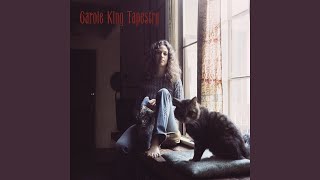
Watch the official Tapestry
music video
A Drifter, a Spell, and a Sudden Change
After the opening, the lyric shifts into a strange story. A traveler appears, a mysterious figure who seems lost before he even acts. He reaches toward something precious, but comes away with nothing. In plain terms, the song shows a person chasing promise and meeting disappointment.
Then the narrative turns even more dreamlike. Along the road inside the narrator’s inner world, the man changes shape and suffers under what sounds like a curse. The phrase someone's wicked spell
suggests forces beyond reason: bad luck, emotional damage, or the cruel twists that enter any life story.
This is why the song feels like a fable instead of a diary entry. King does not explain every event in literal terms. They use symbols so the listener can feel confusion and sadness without needing a fixed plot.
A brief key passage
The song’s most revealing moment comes late, when fear shifts from the drifter to the narrator:
my tapestry's unraveling
he's come to take me back
These lines turn the song toward mortality. The woven self is no longer being admired; it is coming apart.
Symbols That Carry the Meaning
Several recurring images help explain the meaning of Tapestry Carole King.
The tapestry itself
The tapestry is life as a whole. It includes joy, grief, beauty, and change, all woven together. It also implies that meaning may only become visible when a person steps back and sees the full pattern.
Gold, blue, and many colors
The song keeps returning to color. Blue can suggest sorrow, while gold points to hope, memory, or something spiritually precious. The many shades support the idea that no life is one emotion only.
The drifter
The wandering man may represent desire, lost love, youth, or even a version of the self passing through time. Interpretation: because he is uncertain and then transformed, he works less like a realistic character and more like a symbol of vulnerability.
The gray figure
Near the end, a ghostly elder appears. This figure can be heard as death, fate, memory, or an authority from beyond everyday life. The song does not pin him down, and that ambiguity is part of its power.
Why the Music Feels So Intimate
The production matters here. Tapestry was recorded at A&M Studios in early 1971 with players including James Taylor, while King handled piano and vocals across the album (Wikipedia, AllMusic). That context helps explain the song’s emotional effect.
King’s style on the album is usually warm, grounded, and close to the listener rather than theatrical. On “Tapestry,” that plainspoken delivery makes the surreal imagery feel believable. Instead of oversinging the mystery, they let the melody carry it gently.
The piano-centered arrangement also fits the theme. The song does not race. It moves with the calm pace of reflection, as if the narrator is studying an old scene and slowly understanding what it meant.
Where the Song Fits in Carole King’s World
By the time Tapestry arrived, King had already spent years writing hits for others before becoming a major recording artist in her own voice (Rock & Roll Hall of Fame, Grammy). Critics and later artists often praised the album for its intimacy; Taylor Swift said King’s persona on it felt like a close friend sharing truths of life (Variety).
That description fits “Tapestry,” even though it is more symbolic than songs like “So Far Away” or “It’s Too Late.” It still carries the album’s larger gift: honest feeling without flashy disguise.
The Last Thread
In the end, the song is about how a life can feel beautiful, haunted, and fragile at the same time. Its images of weaving, wandering, transformation, and unraveling point toward a hard truth: people live inside change, not above it.
For most listeners, the meaning of Tapestry Carole King comes down to this. Life may form a pattern, but people rarely get to hold it still long enough to fully understand it.
Disclaimer: This interpretation is based on the lyrics, performance, and historical context, but song meanings can stay open, and different listeners may hear something different.
Sources
- https://www.grammy.com/news/carole-king-tapestry-anniversary-record
- https://www.loc.gov/rr/record/nrpb/nrpb-2003reg.html
- https://www.allmusic.com/album/tapestry-mw0000194478
- https://rockhall.com/inductees/gerry-goffin-and-carole-king/
- https://variety.com/2021/music/news/taylor-swift-carole-king-full-speech-rock-roll-hall-fame-1235101292/
- https://en.wikipedia.org/wiki/Tapestry_(Carole_King_album)








