
Why "Spanish Lady" Still Glows in Celtic Woman
The meaning of Spanish Lady Celtic Woman begins with a simple idea: someone sees a striking woman in passing, then turns those brief sightings into something almost magical. Celtic Woman’s version leans into that wonder. Rather than treating the song as a joke or a rowdy pub tune, they present it as a polished folk portrait filled with charm, distance, and old-world mystery.
"Spanish Lady" - Celtic Woman
At the hour of twelve at night
Who should I see but the Spanish Lady
Loading lyrics...
Unable to load lyrics
We're unable to display the lyrics at this time. Please try again later.
Factually, “Spanish Lady” is a traditional Irish folk song with many lyric variants, and it is listed in the Roud Folk Song Index as No. 542. Sources also trace related versions back centuries, including broadside traditions in Britain. That long history matters because it explains why the song feels both familiar and flexible: each performer can tilt it toward romance, humor, or folklore.
A Folk Snapshot, Not a Full Love Story
At its core, the song is about repeated glimpses. The narrator moves through Dublin and keeps spotting the woman during small daily acts. She appears by candlelight
, later in daylight, and then again near sunset. Each scene makes her seem more vivid, but she never becomes fully known.
That is important to the song’s meaning. It is not really a conversation or a relationship. It is admiration from afar. The woman stays just outside the narrator’s reach, which gives the song its tension.
Interpretation: In Celtic Woman’s hands, that distance feels less like frustration and more like enchantment. The song becomes a study in how quickly a stranger can seem larger than life.
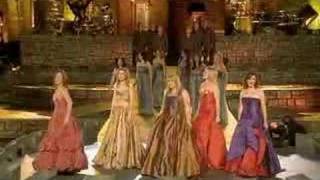
Watch the official Spanish Lady
music video
How the Scenes Build the Song’s Meaning
The verses are built like little visual frames. First, the narrator sees the woman washing and drying her feet near a fire. Then they see her brushing her hair with a silver comb
. Finally, they spot her again as she moves away.
These are ordinary actions, but the lyrics make them shine. Details like amber coal, candlelight, and silver objects turn domestic life into something theatrical. Even the line about Dublin City
matters because it places this dreamlike figure in a real urban setting. The mix of the everyday and the idealized is part of what gives the song its folk power.
A quick timeline of what happens
- The narrator walks through the city at night and notices the woman.
- They see her again later, now in daylight, tending to her hair.
- At sunset, they catch another glimpse before she slips away.
- Each sight deepens admiration, but no true meeting happens.
That repeating structure mirrors obsession in a gentle, old-fashioned way. Every return makes the Spanish Lady feel more symbolic.
The Woman as Image, Ideal, and Mystery
One reason the meaning of Spanish Lady Celtic Woman invites discussion is that the title character is hard to pin down. In many traditional versions, she is less a developed person than a figure of beauty and mystery. Some folklore notes even connect “Spanish Lady” to an older term for a fairy-like female figure.
That does not prove this version is literally about the supernatural. Still, it helps explain why she often feels more like an apparition than a neighbor. She is seen doing small tasks, yet the language around her makes her seem almost unreal.
Interpretation: There are two strong ways to hear the song:
- Romantic reading: The narrator is simply captivated by a woman they find unforgettable.
- Folkloric reading: The woman stands for an elusive, fairy-like beauty that appears and vanishes.
Both readings fit the lyric pattern. The final image, where she sees the narrator and quickly pulls away, keeps that mystery alive.
When she saw me
then she fled me
Those two brief lines matter because they break the dreamy mood. Suddenly, the song is not just about watching; it is also about separation.
Why the Chorus Sounds So Joyful
The famous refrain, with its nonsense syllables like toora loora
, does not explain the plot. Instead, it gives the song lift. In folk music, these kinds of choruses often help with memory, group singing, and rhythm.
For listeners, that creates a useful contrast. The verses are detailed and observant, while the chorus is open and communal. It keeps the song from becoming too solemn. Celtic Woman uses that balance well: the mystery remains, but the performance still feels welcoming and bright.
How Celtic Woman’s Sound Shapes the Meaning
Celtic Woman is known for blending Irish traditional material with polished ensemble vocals and theatrical presentation. In a song like this, that style matters. A rougher arrangement could make “Spanish Lady” sound earthy or cheeky. Their smoother version emphasizes grace.
The arrangement credited here to Downes supports that approach. The likely focus is on clean harmonies, a lilting pulse, and instrumental color associated with Celtic crossover music. That kind of production makes the woman in the song feel less like a comic street encounter and more like a glowing memory.
This also fits the group’s broader appeal in the United States. They often present Irish repertoire in a way that is accessible, elegant, and emotionally direct. So the song’s old folk bones remain, but the emotional framing shifts toward beauty and nostalgia.
Why the Song Endures
“Spanish Lady” has lasted because it leaves room for the listener. The plot is simple, but the imagery is strong. The woman can be read as a crush, a memory, a symbol of unreachable beauty, or even a trace of folklore moving through a city street.
That openness is exactly why the meaning of Spanish Lady Celtic Woman still resonates. Their version does not solve the mystery. It preserves it, then wraps it in musical warmth.
Final Take
In the end, “Spanish Lady” is about the power of seeing without possessing, admiring without fully knowing. Celtic Woman’s interpretation highlights the song’s tenderness, turning a traditional street-side encounter into something luminous and timeless.
Disclaimer: This interpretation mixes established folk context with informed reading of the lyrics and performance. As with many traditional songs, meanings can vary across versions and listeners.








