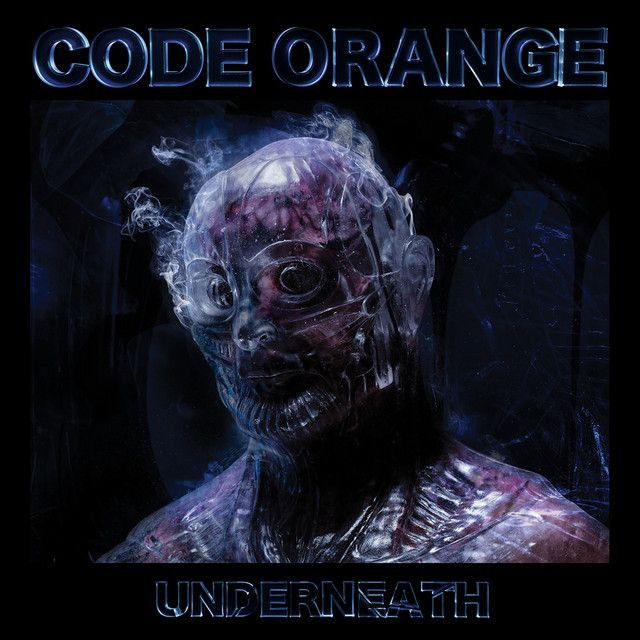
Why Code Orange's Rabbit Feels So Dangerous
The meaning of Swallowing the Rabbit Whole Code Orange starts with a fall. This is not a song about curiosity in the playful, fantasy-book sense. It is about what happens when curiosity becomes surrender, when pressure turns into panic, and when modern life feels like a machine that eats back.
"Swallowing the Rabbit Whole" - Code Orange
Only one way down
Nowhere to go
Loading lyrics...
Unable to load lyrics
We're unable to display the lyrics at this time. Please try again later.
Released as a single ahead of Underneath in 2020, the song was framed by the band as a key entry point into that album's darker world. In a press statement reported by Consequence, Jami Morgan called it a “passageway” into the album's “deep descent” and stressed that “duality is key” to both the themes and the sound. That context matters because the track constantly moves between control and collapse.
A Descent, Not a Journey
At its core, the song describes a person or voice that feels trapped. Early lines paint a closed system: Nowhere to run
and Only one way down
. The idea is simple but powerful. There is no open road here, only a forced drop.
That makes the song feel less like an adventure and more like a funnel. The speaker is being pushed deeper into a broken reality, one where normal rules no longer help. When the lyric mentions the hole swallowing “us,” the song briefly widens from one person to a group experience. This is not just private pain; it sounds like collective suffocation.
Interpretation: Code Orange may be describing the emotional logic of living in a hyper-stimulated, hostile culture. People think they are choosing their path, but the song suggests the path has already been chosen for them.
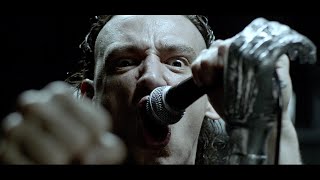
Watch the official Swallowing the Rabbit Whole
music video
The Real Enemy Is Distortion
One of the song's strongest ideas is that the threat is not only violence. It is distortion—of truth, of love, of self. A striking line says what they love gets stretched until it breaks. That image turns emotional strain into something physical and ugly.
The lyric the prey are in control
also flips expected roles. Predators and victims are mixed up. Power has become unstable and confusing. In that world, nobody seems safe, and even the usual language of strength stops making sense.
Another vivid phrase, synesthesia filled needle
, blends sensation in a way that feels invasive. Instead of clear perception, the song offers overload. Touch, sound, fear, and color blur together. That helps explain why the band's industrial textures matter so much: the music does not simply accompany the words; it recreates their sensory attack.
What the Chorus Really Means
The chorus gives the song its most memorable image: new god's soul
and swallowing the rabbit whole
. Paraphrased, the speaker seems to stare into a new object of worship while fully consuming the symbol that led them there.
This is where the song gets especially rich. The rabbit image recalls stories about entering hidden worlds, but Code Orange make that idea more violent. They do not follow the rabbit. They devour it. That shift changes the meaning from exploration to total absorption.
Interpretation: The chorus can be heard as a warning about modern idols—technology, fame, ideology, youth, even nihilism. The “new god” may be whatever people hand their attention to when older certainties fail.
Like birds of prey spitting out the bone
Like watching my dreams come and go
You're staring into your new god's soul
I'm swallowing the rabbit whole
This is the song's clearest emotional summary. Dreams pass. Consumption remains. Worship becomes predatory.
Fear of Aging, Selling Out, and Being Used
Midway through, the song becomes more direct and human. The speaker wonders what happens with age, disconnection, bodily decline, and money. They ask what remains when noise ruins the senses and time demands payment.
These lines ground the song's abstract terror in everyday fear. It is not just about apocalypse. It is also about burnout, irrelevance, and being trapped inside systems of commerce and expectation. The reference to people who “sign the checks” points toward power structures that profit while others wear down.
Interpretation: This part reads like an artist's fear of being commodified or left behind. But it can also speak to anyone who worries that the world rewards emptiness and punishes sincerity.
How the Sound Carries the Meaning
According to coverage from Consequence, the track was praised as one of Code Orange's most extreme and compositionally ambitious songs, while also pulling together many sides of their style. That description fits what listeners hear.
The production moves between crushing hardcore force, industrial abrasion, and sudden changes in texture. Harsh vocals feel cornered and desperate. The electronics sound mechanical and diseased. Even the groove sections never feel comfortable; they feel like a trap tightening.
This is where Morgan's comment about duality helps. The song keeps asking whether chaos and control are really opposites—or whether they now feed each other. The answer seems grim: in this world, order itself can feel violent.
Why the Song Still Hits
The meaning of Swallowing the Rabbit Whole Code Orange lasts because it captures a very current kind of dread. It is the dread of living inside systems that shape belief, attention, identity, and fear all at once. The song does not offer escape. It offers recognition.
That is why the rabbit image lands so hard. It is not about wonder. It is about crossing a line so fully that turning back no longer seems possible.
Final Take From the Edge
Code Orange turn descent into a full-body metaphor. The lyrics suggest entrapment, sensory overload, false worship, and anxiety about time, power, and survival. The music makes those ideas feel immediate and physical.
As with many heavy songs, some meanings remain open. Interpretation disclaimer: this article offers a close reading based on the lyrics, band context, and reported comments, but listeners may hear different layers in the song.








