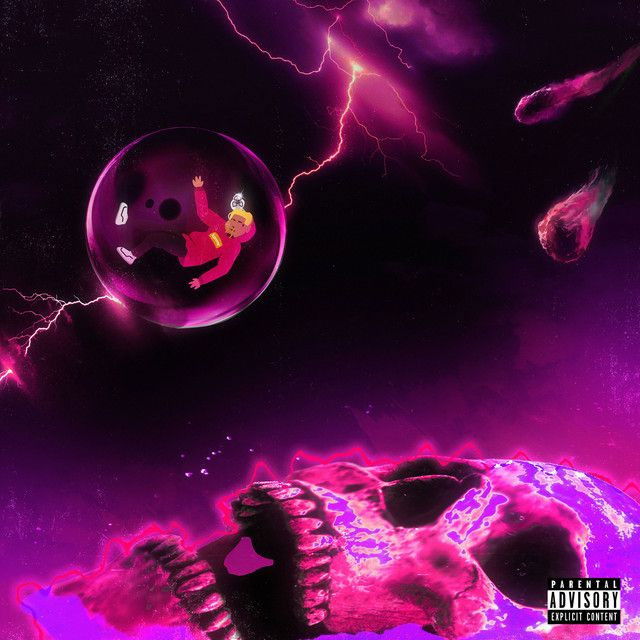
Let It Eat by Comethazine, Ugly God
The Fast Answer Behind the Chaos
For listeners searching for the meaning of Let It Eat Comethazine, Ugly God, the song is less a story than a performance of threat, status, and survival. It uses blunt images of guns, sex, and jewelry to build a hard-edged persona. The point is not subtle confession. The point is intimidation.
"Let It Eat" - Comethazine ft. Ugly God
Choppa on the seat (seat)
AK with a beam, let it eat (yeah)
Loading lyrics...
Unable to load lyrics
We're unable to display the lyrics at this time. Please try again later.
That matters because both artists came up in internet-heavy rap spaces where image, repeatable hooks, and quotable aggression helped songs spread fast. Comethazine, in particular, became known for short, high-energy tracks built around menace and flexing, as covered by outlets like The Fader and XXL. Ugly God, meanwhile, often balanced parody and brash confidence in his breakout era, noted by Billboard. Together, they turn this song into a compact display of rap bravado.

Watch the official Let It Eat
music video
A Hook Built to Threaten
The chorus does most of the heavy lifting. When they repeat cruisin' down the street
, they frame movement as power. This is not a carefree drive. It is a mobile show of force.
The next images make that plain: choppa on the seat
and let it eat
. Paraphrased, they are saying violence is close at hand and ready to be used. The hook keeps circling back to that idea, so the song feels trapped in a loop of pressure, retaliation, and display.
Interpretation: the repetition is important because it makes aggression sound normal, almost routine. They are not describing one shocking event. They are acting as if this is their default setting.
What the Verses Add to the Meaning
Violence, then wealth
The verses widen the picture. They mix weapon talk with luxury talk, especially when the lyrics shift toward VVS on my teeth
. In simple terms, the song connects danger and success. The same voice that threatens rivals also brags about diamonds and social rise.
That pairing is common in trap music: survival and reward sit side by side. The underlying message is that status did not arrive softly. It was earned in a hostile world, or at least presented that way.
Respect is treated as fragile
Another recurring idea is that public disrespect must be answered. When they mock people who talk too much, the song suggests that reputation is always on the line. Every insult becomes a challenge.
Interpretation: this makes the track feel like a social survival manual exaggerated into rap form. The speakers act like any weakness invites attack, so they answer words with extreme posturing.
Persona Over Plot
There is no deep narrative arc here. Instead, the song works through snapshots:
- They ride through the city with weapons nearby.
- They warn rivals not to test them.
- They celebrate money, sex, and new attention.
- They repeat the threat until it becomes the song's identity.
That structure explains why the track feels so immediate. It is not trying to reveal inner conflict. It is trying to freeze a mood.
Had to up my heat
I just wanna bust down my neck
Even in this short two-line contrast, the song jumps from self-defense imagery to material desire. That jump is the whole worldview: danger first, reward next.
How the Sound Sells the Message
Production is crucial to the meaning of "Let It Eat." The beat is sparse, hard, and repetitive, leaving room for the vocals to hit like commands. The drums feel clipped and forceful rather than lush. That minimalism keeps the focus on attitude.
Comethazine often raps with a blunt, almost barked delivery. Here, that style makes every line sound like an order or warning. Ugly God's presence adds a slightly different energy, but he stays inside the same world of shock lines and crude confidence.
Interpretation: because the instrumental does not distract with melody, the listener sits inside the tension. The beat does what the lyrics do: it strips the mood down to impact, repetition, and force.
The Song's Place in Their Careers
Factually, the song is credited to Frank Childress, Ronald Spence Jr., and Royce Davison, the writers provided in the song credits. It fits a period when Comethazine was building a reputation for compact, aggressive tracks and internet-ready hooks. Ugly God's feature also makes sense in that lane, since his rise was tied to memorable one-liners and a larger-than-life rap character.
This context helps explain the song's reception. Fans who enjoy it usually respond to energy, not emotional depth. It is designed to hit fast in the car, at a party, or online in short clips. That does not make it meaningless; it means the meaning lives in style and stance.
A Useful Way to Read the Controversial Lines
Some lyrics use insults and crude sexual boasting to show dominance. Those moments are part of the song's macho performance, but they can also narrow it. Instead of making the track more complex, they often make it more predictable.
Interpretation: the strongest parts of the song are not the shock-value details. They are the parts where fear, ambition, and status merge into one voice. That is where the track says something larger about drill- and trap-adjacent masculinity: being seen as powerful matters as much as actually being powerful.
Why "Let It Eat" Still Lands for Some Listeners
At its core, the meaning of Let It Eat Comethazine, Ugly God is about turning threat into identity. The song presents a world where violence is always near, success must be displayed, and confidence has to be loud enough to drown out vulnerability.
For some listeners, that reads as raw adrenaline. For others, it sounds empty or toxic. Both responses make sense. The track is intentionally one-note, but that one note is delivered with force.
In the end, they are not asking to be understood as complicated people here. They are presenting themselves as untouchable. That is the song's engine, its image, and its meaning.
Disclaimer: This interpretation is based on the released song, its lyrics, and publicly available artist context. Meaning in rap can be performative, exaggerated, and open to multiple readings.








