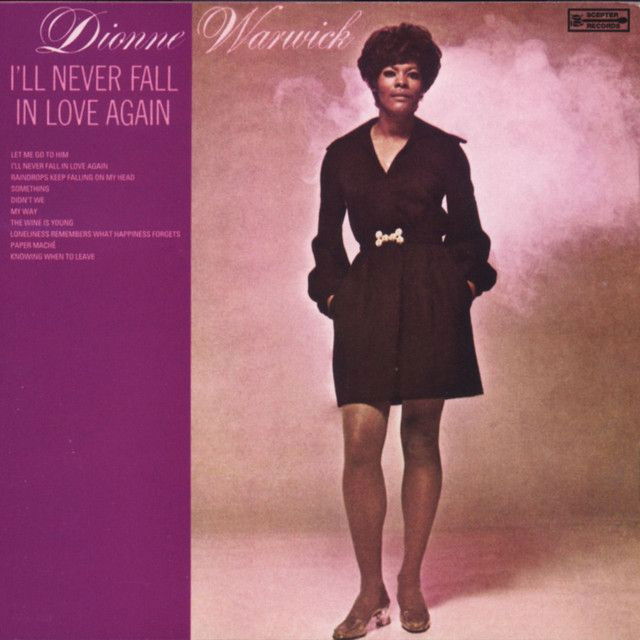
Why ‘I’ll Never Fall in Love Again’ Still Cuts
The meaning of I'll Never Fall in Love Again Dionne Warwick starts with a joke and ends with a bruise. On the surface, the song sounds light, even playful. It asks teasing questions about romance and answers them with punch lines. But under that smile is a person who feels used, disappointed, and tired of hoping.
"I'll Never Fall In Love Again" - Dionne Warwick
A guy with a pin to burst your bubble
That's what you get for all your trouble
Loading lyrics...
Unable to load lyrics
We're unable to display the lyrics at this time. Please try again later.
Dionne Warwick turns that mix of charm and pain into something memorable. Their performance does not sound wild or bitter. Instead, it sounds controlled, polished, and knowing. That calm delivery is a big reason the song still lands: heartbreak is presented not as a meltdown, but as a lesson learned the hard way.
A Broken Heart Hidden Inside a Clever Hook
At its core, the song is about romantic disillusionment. The narrator has been hurt enough that they now reject love altogether. When the lyric asks what someone gets from falling in love, the answers are not comfort or joy. They get disappointment, embarrassment, and emotional fallout.
The key twist is that the song says all this with humor. Phrases like burst your bubble
and catch pneumonia
turn hurt into comedy. That matters because the narrator is not simply crying over a breakup. They are protecting themself by making love sound ridiculous.
Interpretation: the humor acts like armor. If love can be mocked, then maybe it can no longer wound them. That makes the famous title line feel less like a grand philosophy and more like a defensive vow made right after pain.

Watch the official I'll Never Fall In Love Again
music video
Who Is Speaking, and Why They Sound So Sure
The narrator speaks from experience. They tell others not to explain romance because they have already lived through it. When they say they are glad I'm out
, the song frames love like a trap they escaped rather than a dream they lost.
That idea becomes even stronger with the image of those chains that bind you
. This is one of the song's most revealing moments. Love is not described as freedom, growth, or intimacy. It is described as something restrictive, something that keeps a person stuck.
You only get lies and pain
So far at least until tomorrow
This brief passage captures the song's double mood. One line is flatly cynical. The next leaves a tiny crack in that certainty. Even while the narrator swears off love, the phrase about tomorrow suggests feelings can change.
Verse by Verse, the Meaning Sharpens
The first part of the song presents romance as a bad bargain. Fall in love, and a partner may hurt you. Kiss someone, and they may disappear. The playful wording keeps it catchy, but the emotional point is simple: intimacy has brought more trouble than reward.
Then the song shifts from wisecracks to warning. The narrator speaks directly to others, almost like a friend giving hard advice after a breakup. They have seen the pattern already, and they want listeners to avoid the same pain.
By the end, the repeated promise I'll never fall in love again
works like self-hypnosis. Repetition makes the line sound stronger, but it also hints at fragility. People often repeat a sentence when they need to convince themselves it is true.
Why Dionne Warwick’s Version Feels So Elegant
The song was written by Burt Bacharach and Hal David for the 1968 Broadway musical Promises, Promises. According to accounts tied to the show's development, producer David Merrick wanted a song audiences could leave whistling, and Bacharach later said he wrote the melody unusually fast. The lyric's pneumonia joke came from his real hospitalization, a detail often repeated in coverage of the song's origin.
That background matters because it explains the song's unusual balance. It had to be smart, catchy, and emotionally immediate. Warwick, one of the defining voices of Bacharach-David material, was the ideal artist to carry that balance. Her 1969 single reached No. 6 on the Billboard Hot 100 and topped Billboard's Easy Listening chart for three weeks, as summarized by Songfacts.
Musically, the track sounds bright enough to soften the sting. Bacharach's writing often uses graceful melodic leaps and polished phrasing, and that smoothness is crucial here. The arrangement does not wallow. It moves with a breezy pop feel, which creates tension with the lyric's sour view of love.
That contrast is the whole point. The music says sophistication; the words say emotional exhaustion. Warwick's poised vocal sits right between them. They make the narrator sound witty, wounded, and believable at once.
A Song About Cynicism, With One Door Left Open
One reason the song lasts is that it is not purely hopeless. Even in its sharpest lines, it feels like a temporary reaction to hurt, not a final truth about human connection. The phrase about tomorrow quietly introduces uncertainty. Someone this wounded may swear off love today and still feel differently later.
Interpretation: that hidden uncertainty keeps the song human. If it were only bitterness, it might feel small. Because it leaves room for reversal, it captures the emotional drama of a breakup more honestly. People often speak in absolutes when they are hurting most.
Why the Song Still Connects
Listeners still return to this song because it captures a familiar moment: the point when heartbreak makes a person sound funniest and harshest at the same time. It turns private disappointment into a polished pop statement. That mix of wit, melody, and emotional self-defense is the real meaning of "I'll Never Fall in Love Again."
Warwick's version endures because they do not oversell the pain. They glide through it. That restraint makes the sadness feel mature and real.
Disclaimer: This interpretation separates documented facts about the song's writing and release from critical reading of its lyrics and tone. Meaning can vary from listener to listener.









