Why “Here Again” Feels So Personal
The Heart of the Song
The meaning of Here Again Elevation Worship centers on meeting God in uncertainty. The song does not speak from a place of victory first. Instead, it starts in the middle of life, where the future is unclear and control feels impossible. That is why its emotional pull is so strong for many listeners in the United States and beyond.
"Here Again" - Elevation Worship
Can't control what tomorrow will bring
But I know here in the middle
Loading lyrics...
Unable to load lyrics
We're unable to display the lyrics at this time. Please try again later.
The opening idea is simple: they cannot return to the past, and they cannot manage what comes next. In that fragile space, the song reaches for God’s presence now. When the lyric mentions being here in the middle
, it frames faith as something lived in the tense, unfinished parts of life.

Watch the official Here Again
music video
A Prayer, Not a Performance
Rather than sounding like a bold declaration, the song sounds like a humble prayer. The repeated question meet me here again
carries the whole message. They are not asking for success, answers, or comfort alone. They are asking for presence.
That matters because the chorus ties spiritual need to honesty. When the singer says I'm not enough
, the line is not about self-hate. It points to dependence. In worship language, that means human strength has limits, especially in pain, fear, and waiting.
Interpretation: The song suggests that spiritual maturity is not pretending to be strong. It is admitting weakness and still turning toward God.
Where the Lyrics Move Emotionally
The verses and chorus follow a clear emotional path:
- They admit they cannot control life.
- They ask God to stay close in the present moment.
- They move through fear and weakness.
- They end in reassurance that they were never abandoned.
That last turn is the song’s release point. After so much asking, the bridge answers the fear underneath the prayer.
Not for a minute
was I forsaken
Those brief lines shift the song from request to assurance. The person singing begins by wondering if God will show up, then ends by realizing God was already there.
The Images That Carry the Meaning
Valleys, shadows, and dry bones
The song uses familiar biblical images to make private pain feel larger and more universal. The valley points to hardship. Shadows suggest fear, confusion, and the parts of life that seem dim or threatening. The phrase dry bones awaken
evokes spiritual renewal, drawing on imagery many Christian listeners connect with Ezekiel’s vision of life returning where hope looked dead.
These are not random worship phrases. They build a movement from emptiness to renewal. Even the sun and shadow image suggests that God does not always remove darkness instantly, but can reshape how it falls.
Presence over answers
Another key point in the meaning of Here Again Elevation Worship is that the song values presence more than explanation. They do not get a reason for suffering. They ask not to be left alone in it. That is a major reason the song resonates in grief, anxiety, and transition.
The Story Behind the Song Adds Weight
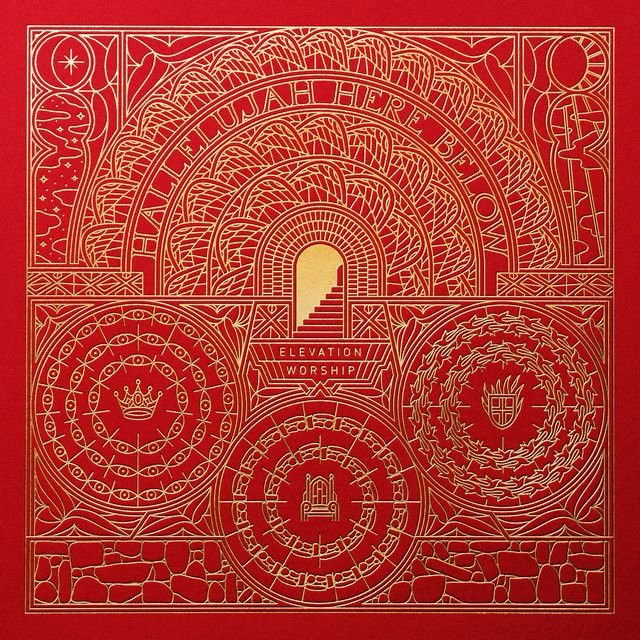
According to reporting summarized by Wikipedia and originally drawn from a NewReleaseToday interview, “Here Again” was released by Elevation Worship on August 17, 2018, as a single from the live album Hallelujah Here Below. It was written by Amy Corbett, Chris Brown, and Steven Furtick, and produced by Chris Brown and Aaron Robertson. Chris Brown described it as one of the group’s most personal songs, saying it came from being “caught in the middle” during painful seasons of life and loss. He also connected the finished song to Jacob’s realization in Genesis 28 that God had been present all along.
That background sharpens the lyric’s message. The song was not built as a generic comfort anthem. It grew out of real tension, grief, and uncertainty. That makes the refrain feel earned rather than decorative.
How the Sound Supports the Message
“Here Again” was recorded live at Elevation Ballantyne in Charlotte, and the live setting matters. The arrangement begins gently, leaving room for vulnerability. As it builds, the rhythm stays steady rather than aggressive. Research notes the song is in D major, set in 4/4 time, and moves at about 81 beats per minute. That moderate pace helps it feel grounded, reflective, and prayerful rather than dramatic for its own sake.
The instrumentation also mirrors the lyric arc. Soft keys and ambient textures create openness early on. As the song rises, drums and fuller harmonies enter, giving emotional lift without losing intimacy. The vocal delivery is crucial too: they sing with restraint at first, then with more force in the bridge, as if certainty is arriving in real time.
Interpretation: The production makes listeners feel the journey from doubt to reassurance. The music does not just accompany the words; it enacts them.
Why the Bridge Hits So Hard
The bridge is where many listeners connect most deeply. After repeated asking, the song lands on the conviction that The Lord is in this place
. In plain terms, that line says God’s presence is not delayed until life improves. It is available in the room, in the pain, and in the waiting.
That is also where the song’s communal power shows up. In a church setting, a crowd singing that line together turns an individual struggle into shared hope. It becomes less about one person’s fear and more about a community reminding itself what it believes.
A Lasting Worship Song
Commercially, the song also found a wide audience, reaching No. 20 on Billboard’s Hot Christian Songs chart, according to the research data. But its staying power comes less from chart success than from usefulness. People return to it in hospital rooms, during ministry burnout, after loss, and in seasons where faith feels thin.
In that sense, the meaning of Here Again Elevation Worship is both specific and broad: it is a worship song about needing God in the unresolved middle of life, then discovering that divine presence was never absent.
Final Thought
Their song offers comfort without denying pain. It allows fear, weakness, and uncertainty to speak, then answers them with presence instead of easy fixes.
Disclaimer: This interpretation is based on the lyrics, artist commentary, and publicly available release information. As with any song, listeners may hear personal meanings that go beyond this reading.









