
Why EMELINE's 'Say No' Hits So Hard
The meaning of this is how i learn to say no EMELINE comes down to one clear idea: healing can make a person less convenient for others. EMELINE turns that tension into a sharp pop statement about boundaries, self-respect, and the backlash that often follows personal growth.
"this is how i learn to say no" - EMELINE
Done being sorry for wanting the things that I want
I broke my back carrying baggage
Loading lyrics...
Unable to load lyrics
We're unable to display the lyrics at this time. Please try again later.
This is not a soft song about recovery. It sounds like someone realizing that being kind, available, and forgiving too often became a trap. By the end, saying no is not framed as selfish. It is framed as survival.
A Break From People-Pleasing
At its core, the song describes someone who is done apologizing for their needs. Early lines reject the habit of shrinking for others, especially people who caused harm and still expected care in return. When the speaker references carrying other people's weight, the image suggests emotional labor that was never returned.
A key phrase is Done being sorry
. That short line matters because it flips the usual script. Instead of asking whether they were too harsh, the speaker asks why they were taught to feel guilty for wanting basic respect.
Interpretation: The song is less about one argument and more about a pattern. It speaks to the moment when a person sees that their "niceness" was being rewarded only as long as it came with silence.
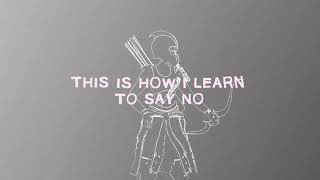
Watch the official this is how i learn to say no
music video
The Real Conflict: Healing Changes Relationships
One of the song's strongest ideas appears when the speaker asks, in effect, whether becoming healthier made someone resent them. That is a brutal thought, but it feels true to many strained relationships. Growth often exposes who benefited from weak boundaries.
The song underlines that point with phrases like just pleasing
and on my knees
. EMELINE is not praising devotion there. They are criticizing a dynamic where approval depended on submission.
That is why the song feels bigger than a standard breakup track. It can include romance, but it also points toward friendships, family roles, and social pressure. The line about telling a parent to leave a bad relationship widens the frame. It suggests the speaker has watched destructive patterns up close and no longer believes endurance is always noble.
Why the Chorus Lands Like a Door Slamming
The chorus is simple, but that simplicity is the point. learn to say no
turns boundary-setting into a process. The speaker is not presented as naturally fearless. They are practicing a skill that may have once felt impossible.
Another short phrase, pretty words
, shows distrust of polished apologies and empty promises. The song argues that language can be manipulative when it is used to delay change. The speaker has heard enough talk and is no longer willing to wait around for improvement that never comes.
A quick map of the chorus
- They reject charm without action.
- They admit patience has limits.
- They choose refusal over self-erasure.
That structure gives the hook its power. Each repeat sounds less like anger for anger's sake and more like a boundary being reinforced in real time.
A Story Told Through Sharp Images
The verses use a few strong images instead of heavy detail. Butterflies becoming lies takes a symbol of hope and turns it sour. What once felt exciting now reads as manipulation. That shift captures the song's emotional arc: innocence replaced by clear-eyed judgment.
There is also a recurring sense of bodily strain. The speaker describes carrying baggage and holding breath. Both images suggest a life lived under pressure, where peace depends on managing everyone else's emotions.
I hold my breathI can't hold it forever
This is the article's only longer lyric quote, and it captures the breaking point. The idea is simple: endurance has an end. The body itself becomes proof that constant accommodation cannot last.
How the Production Supports the Meaning
Even without a full technical breakdown, the songwriting points toward a modern pop approach built for emotional release. The repeated hook, blunt wording, and punchy phrasing suggest a track that likely leans on strong rhythm and vocal emphasis rather than subtle storytelling.
That matters because the song's message needs force. A gentler arrangement might have made the words sound reflective. Instead, the likely pop-rock edge or dark-pop pulse helps the refusal feel active. The vocal attitude is central too: the song works because it sounds like someone pushing the words out after holding them in for too long.
Factual credits available from the provided information show the song was written by Emeline Easton, Orion Meshorer, Ana Yanez, and David Schaeman. Those multiple writers fit a song that feels tightly built around a memorable hook and a clear emotional pivot.
More Than Anger: What the Ending Adds
The closing spoken moment about family adds a surprising note. After a song full of severed ties and refusal, that ending hints that not every bond is disposable. Some relationships survive conflict because they are rooted in truth rather than control.
Interpretation: This ending may be there to separate healthy loyalty from toxic obligation. The song is not saying to leave everyone. It is saying to leave what keeps hurting them.
That distinction deepens the meaning of this is how i learn to say no EMELINE. Saying no is not the death of love. Sometimes it is the first honest form of love a person can offer themselves.
Final Take on EMELINE's Message
EMELINE's song resonates because it names an uncomfortable reality: some people prefer a version of someone who never pushes back. This track rejects that role with heat, clarity, and a hook that turns self-protection into an anthem.
For listeners in the middle of their own boundary-setting era, that is why the song hits. It does not romanticize the process. It shows that learning to say no can be messy, loud, and completely necessary.
Disclaimer: This interpretation is based on the lyrics provided and general song analysis. Without direct artist commentary or official production notes, some readings remain informed interpretation rather than confirmed fact.









