Rap God by Eminem
Meta focus: the meaning of Rap God Eminem comes down to skill, legacy, and provocation. The song is not just a victory lap. It is also a challenge, a résumé, and a warning shot.
"Rap God" - Eminem
But I'm only going to get this one chance (six minutes, six minutes)
Something's wrong, I can feel it (six minutes, six minutes, Slim Shady, you're on)
Loading lyrics...
Unable to load lyrics
We're unable to display the lyrics at this time. Please try again later.
A Crown, a Test, and a Mission Statement
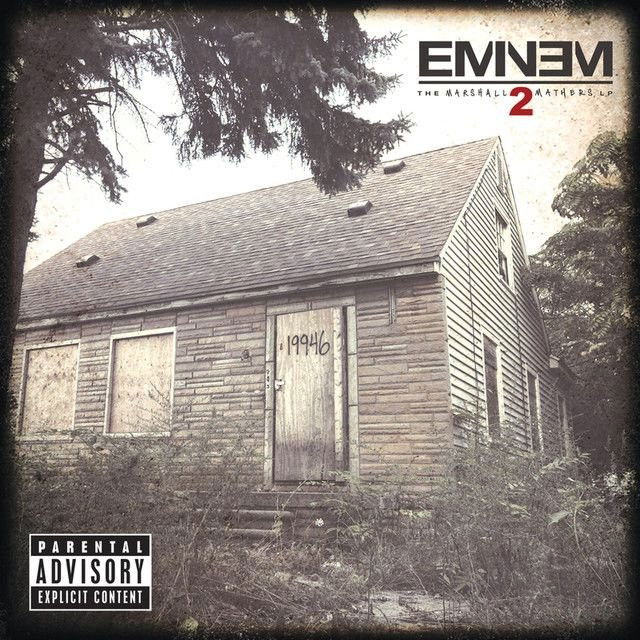
Released in October 2013 as a single from The Marshall Mathers LP 2, “Rap God” arrived as a major statement in Eminem’s comeback era. It premiered online on October 14 and was released in the U.S. on October 15, later becoming a top-10 hit and a multi-platinum single, according to publicly available chart and certification records.
At its core, the song presents Eminem as someone trying to prove they still belong at the highest level. When they repeat Rap God
, the phrase is larger than simple ego. It turns their rap ability into a mythic image. The song argues that technical mastery can feel almost superhuman.
Interpretation: the title is intentionally exaggerated. Eminem is not claiming literal divinity. They are dramatizing what supreme control over rhythm, rhyme, and breath can look like in hip-hop.

Watch the official Rap God
music video
What the Song Is Really Saying
The meaning of Rap God Eminem has three main layers:
- Technical proof — they show they can still outrap nearly anyone.
- Career defense — they answer critics who thought their peak had passed.
- Self-mythology — they turn their persona into something huge, comic-book-like, and unforgettable.
The chorus frames the whole track as a public event. When the crowd goes front to the back nod
, the song becomes bigger than one rapper talking. It becomes a test of whether listeners still believe.
That matters because many verses are built as demonstrations, not storytelling in the usual sense. Eminem stacks jokes, references, internal rhymes, insults, and flow changes to make the performance itself the message.
How the Verses Build the Argument
Early on, the song sets up a return-of-the-monster feeling. The opening suggests danger before the main beat fully locks in. Then Eminem shifts into bragging about long-term success, saying rap skill has been profitable and durable for decades.
From there, the verses widen out. They trace a path from student to master by naming influences like Rakim, 2Pac, N.W.A, and Run-D.M.C. Those references matter because they show that even while claiming greatness, Eminem places themselves inside a lineage.
Interpretation: this is one reason the song feels less shallow than pure boasting. They are not only saying “I’m the best.” They are saying, “I studied the best, survived the industry, and now I’m part of that history.”
The song also looks back at old controversies and censorship. Eminem reuses a previously censored idea from earlier in their career to test whether the culture would react the same way now. That move turns the track into a commentary on fame, memory, and how shock value changes over time.
The Fast Part Is the Point
The most famous moment is the burst billed as supersonic speed
. That section is not just a stunt. It is the song’s core argument made audible.
Publicly reported metrics note that the song contains about 1,560 words and later earned a Guinness World Records entry for most words in a hit single. The rapid section itself has often been measured at roughly 6.1 words per second. Whether a listener counts syllables or not, the effect is obvious: Eminem wants the audience to hear impossible control.
Interpretation: the speed section works like courtroom evidence. Instead of only claiming to be elite, they submit proof.
Production: Why the Beat Stays Out of the Way
Produced by DVLP and co-produced by Filthy, “Rap God” uses a steady hip-hop beat, dramatic vocal effects, and a relatively uncluttered arrangement. Reports on the song’s composition place it around 148 BPM, though parts can feel half-time because of the groove.
That simplicity is important. The instrumental does not try to overpower the vocal. It creates a runway for the rapping. The beat is there to support articulation, not distract from it.
There is also a theatrical quality in the production. The intro voice cues, the small drops, and the sudden bursts of speed all help frame Eminem as performer and character. The song feels like a stage where they keep changing masks.
Power, Persona, and the Ugly Parts
A full reading of the song has to admit something uncomfortable: some lines use slurs and insults that drew real criticism, especially from LGBTQ+ listeners and advocacy groups. That response is part of the song’s history, not a side note.
Eminem has often defended parts of this language as persona-driven or tongue in cheek
, but that does not erase the impact. Readers can understand the artistic strategy and still find the words harmful.
Interpretation: provocation is part of the design of “Rap God.” The song wants to shock as well as impress. For some listeners, that edge proves Eminem’s refusal to soften. For others, it weakens the song by confusing technical brilliance with unnecessary offense.
Why “Rap God” Still Matters
What keeps “Rap God” alive is not just speed. It is the way Eminem turns rap into spectacle, argument, and autobiography all at once. They present themselves as a veteran, a student of hip-hop, and a chaotic showman in one body.
The best short summary of the meaning of Rap God Eminem is this: it is a technical manifesto about earning immortality through skill. Even the comic-book boasts like Why be a king
push that idea. A king rules for a time. A god, in the song’s logic, stands outside ordinary limits.
That does not mean every line lands equally well. But the song’s ambition is huge, and its execution remains hard to ignore.
Why be a king
when you can be a God?
Those closing words capture the track’s entire philosophy: don’t just compete in rap. Rewrite the scale.
Disclaimer: This article offers informed interpretation based on the song, public facts, and its reception. Meaning can vary from listener to listener.