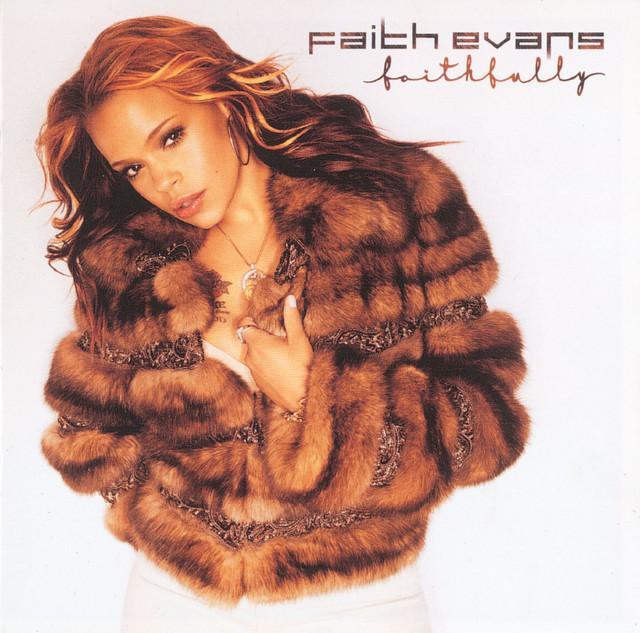
Why ‘I Love You’ by Faith Evans Still Hits
The meaning of I Love You Faith Evans comes down to a simple but powerful tension: one person is completely sure of their feelings, while the other person has not fully answered back. That imbalance gives the song its ache. Faith Evans sings not like someone testing the waters, but like someone already emotionally committed.
"I Love You" - Faith Evans
So what could I do
To make you feel I'm down with
Loading lyrics...
Unable to load lyrics
We're unable to display the lyrics at this time. Please try again later.
Released as a single from Faithfully, the song became one of Evans’s biggest hits, reaching No. 14 on the Billboard Hot 100 and No. 2 on the Hot R&B/Hip-Hop Songs chart. It was issued on February 19, 2002, through Bad Boy and Arista, and it stands as the highest-charting single from Faithfully. Those facts help explain why the song still matters: it paired a classic R&B confession with mainstream crossover appeal.
A Love Song About Certainty, Not Confusion
At its core, this is a song about emotional clarity. The narrator is not unsure of what they feel. They know this person has become central to their life, and that certainty is what drives every verse and chorus.
Early on, the song frames love as both devotion and frustration. The idea behind my heart belongs to you
is not just romance. It suggests surrender. The singer is saying their feelings are already decided, even if the relationship itself is not.
That makes the song less about seduction and more about recognition. They want the other person to finally see what has been obvious to them for a while. The recurring question is not “Do I love you?” It is closer to, “How do I make you understand?”

Watch the official I Love You
music video
Where the Emotional Story Moves
The song follows a clear path:
- They admit total devotion.
- They describe how this person changed their emotional world.
- They repeat their feelings until repetition itself becomes the message.
- They imagine a future that has not arrived yet.
In the verses, Evans presents love as an everyday mental loop. The lines about thinking all day and dreaming all night show how constant this feeling has become. When the song uses a phrase like each and every day
, it underlines persistence. This is not a passing crush.
Then the second verse adds an origin point. Seeing this person made past relationships disappear from view. That idea gives the song a before-and-after structure: there was life before this person, and there is emotional life after them.
Why the Chorus Feels So Big
The chorus is direct to the point of vulnerability. Phrases like I love you
and I need you
are common in pop and R&B, but here they work because of the build-up around them. Evans does not sing them as casual slogans. She sings them as if repetition might finally break through the other person’s silence.
Interpretation: the hook is powerful because it mixes strength and helplessness. They are strong enough to confess everything, yet helpless because love alone cannot force a response.
That tension peaks in the question about what they can do to be seen clearly. The song never turns bitter. Instead, it stays hopeful, even when the emotion becomes hard to contain.
What can I doto make you seeyou’re the only onefor me
These lines capture the whole emotional conflict: complete devotion meeting incomplete acknowledgment.
The Sound Makes the Meaning Softer
Part of what makes the song memorable is how gentle it sounds, even when the words are intense. According to available credits, the track was produced by Buckwild, Mario Winans, and Sean “P. Diddy” Combs, and it samples Isaac Hayes’s 1976 recording “Make a Little Love to Me.” That sample link matters because it gives the song a warm, soulful base.
Instead of pushing drama through hard percussion or sharp edges, the production wraps the confession in smooth keyboards, steady rhythm, and layered harmonies. That softness changes the message. The singer is desperate, but not chaotic. They are longing, but still dignified.
This matches a common strength in Evans’s catalog. Her voice often carries hurt and control at the same time. On this track, they sound patient even while admitting they can’t take it anymore
. That contrast gives the song maturity.
Artist Context Gives the Song Extra Weight
There is also interesting background around the writing. The song was credited to Anthony Best, Bobby Springsteen, Faith Evans, Isaac Hayes, Michael Jamison, and Jennifer Lopez. Reports around the release noted that the song had originally been intended for Lopez before landing with Evans.
That history does not change the lyrics, but it does highlight how performance shapes meaning. Evans makes the song feel deeply lived-in. In her hands, it becomes less like a polished industry ballad and more like a personal confession.
The music video, directed by Matthew Rolston, adds to that mood with winter imagery, intimate interior scenes, and a luxurious but lonely visual setting. That atmosphere supports the song’s emotional position: love is fully present, but fulfillment is still out of reach.
A Straightforward Song With More Than One Reading
The most obvious reading is simple: this is a declaration of romantic love to someone who has not fully responded.
Interpretation: another reading is that the song is about preserving dignity while being emotionally exposed. Even at its most pleading, it never loses self-respect. They are not begging to be chosen by anyone. They are asking one specific person to recognize a bond they believe is real.
That balance is why the song has lasted. It is tender, but not weak. Openhearted, but not naïve.
Why It Still Connects
The meaning of I Love You Faith Evans lasts because it captures a familiar emotional gap: knowing exactly what they feel while waiting for someone else to catch up. The writing is simple, but the feeling is not. Evans turns repetition into emotional proof, and the production gives that proof a rich, soulful frame.
For many listeners, that is the song’s lasting power. It understands that love can be certain even when the future is not.
Disclaimer: This interpretation is based on the lyrics, recording context, and public release information. As with most songs, individual listeners may hear different meanings in it.








