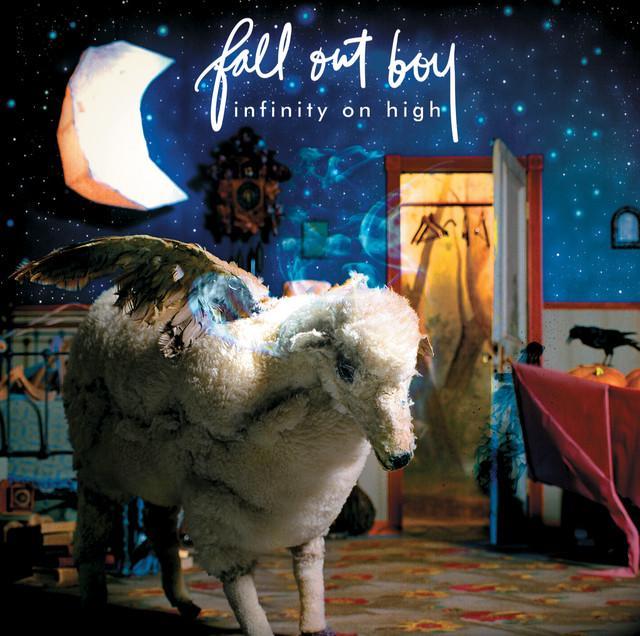
Fall Out Boy Turn Hype Into a War Metaphor
The meaning of This Ain't A Scene, It's An Arms Race Fall Out Boy comes down to one sharp idea: what looks like a fun music community can also become a competition for attention, image, and power. Fall Out Boy frame that idea with war language, but the target is not literal violence. They are talking about fame, scenes, media pressure, and the way art can turn into a crowded marketplace.
"This Ain't A Scene, It's An Arms Race" - Fall Out Boy
Fitting you with weapons in the form of words
And don't really care which side wins
Loading lyrics...
Unable to load lyrics
We're unable to display the lyrics at this time. Please try again later.
Released as the lead single from Infinity on High in late 2006 and early 2007, the song became one of the band’s biggest crossover hits, reaching No. 2 on the Billboard Hot 100 and No. 1 on the Pop 100. That success matters because the song is partly about the exact system it succeeded in.
What the Chorus Is Really Attacking
At the center of the song is the repeated line arms race
. In plain terms, the band are saying the “scene” is no longer just a shared culture. It has become a contest where everyone is trying to be louder, cooler, and more visible than everyone else.
That reading matches Pete Wentz’s own explanation. He described the song as a tongue-in-cheek look at how people get obsessed with new art, culture, and love until it becomes oversaturated. So the chorus is less about one enemy than a whole environment shaped by trend-chasing.
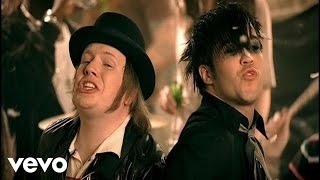
Watch the official This Ain't A Scene, It's An Arms Race
music video
The Narrator Knows He Is Part of It
One reason the song still works is that it does not pretend the speaker is innocent. Early on, they use the phrase arms dealer
and describe words as weapons. That turns songwriting, branding, and public persona into tools used in a struggle for influence.
This is where the song gets more self-aware than a simple rant. The narrator seems to admit that they benefit from the same machine they criticize. When they say that's just the business I'm in
, the point is cynical but honest: pop culture often rewards whoever can package emotion best.
A Satire of Fame, Scenes, and Performance
Another key line is I'm a leading man
. It suggests performance, image, and role-playing. The singer is not just making music; they are acting inside a public story.
Interpretation: this can be heard as Fall Out Boy mocking the pressure on bands to become characters in a media drama. In that reading, the song is about celebrity as much as subculture. The words about lies being intricate push that idea further, showing how carefully built these public identities can be.
That layer fits the music video too, which parodies tabloids, paparazzi, parties, and celebrity absurdity. The video, directed by Alan Ferguson, leans into exaggeration to show how ridiculous fame can look once it becomes nonstop theater.
The Sharpest Verse Turns Trash Into Gold
The most revealing section may be the verse about polishing garbage into something valuable:
At night we're painting your trash gold
while the audience sleeps through the trick.
That image captures the song’s harshest idea. The culture industry can dress up shallow things until they look important. Hype can make weak art seem essential.
Interpretation: this is not only an attack on other bands or fans. It may also be a confession about the entire publicity system around modern rock: labels, press, internet buzz, and artist branding all help turn noise into value.
Why the Sound Feels So Different
Part of what makes the song memorable is its contrast. According to reporting on the track, Patrick Stump called it the band’s funkiest song, and Wentz described it as a mix of 1970s funk and early Fall Out Boy energy. That matters because the groove is smoother and more danceable than many listeners expected from them at the time.
The production by Neal Avron gives the verses a tight, clipped motion, then opens into a huge chorus. That structure supports the theme. The verses feel tense and strategic, while the chorus explodes like a public slogan.
The closing sing-along, influenced by Justin Timberlake’s Señorita
, adds another twist. It invites the crowd into the song even as the lyrics question crowd behavior. That irony is part of the design: the band criticize mass participation while writing a hook built for mass participation.
More Than an Emo Diss
Some listeners reduce the song to a complaint about the emo scene. That is partly true, but it is too small. Reports around the song say Wentz was frustrated with how scene culture had become oversaturated and trend-driven. Still, the song reaches beyond one label.
It is really about any cultural moment where identity becomes a product. Bands, fans, magazines, and industries all start competing to define what is cool. In that world, sincerity gets harder to trust.
A Call to Arms, but Inward
Wentz also suggested the song was a kind of call to arms, though not in a literal sense. He framed it more like talking to oneself in the mirror. That idea changes the mood of the song.
Instead of just sneering at everyone else, the track can be heard as a warning to stay awake inside the machine. They are asking whether they can keep any honesty while surviving a system built on spectacle.
Why the Song Still Lands
The meaning of This Ain't A Scene, It's An Arms Race Fall Out Boy still feels relevant because today’s culture runs on visibility even more than it did in 2007. Algorithms, branding, and online scenes often reward performance over substance. The song saw that logic early and turned it into a clever pop anthem.
Its genius is the tension at its core: Fall Out Boy made a huge, catchy hit about how hits get made. That contradiction is not a flaw. It is the point.
Disclaimer: This interpretation mixes documented artist comments with critical reading of the lyrics and sound. Like most songs, it can support more than one meaning.









