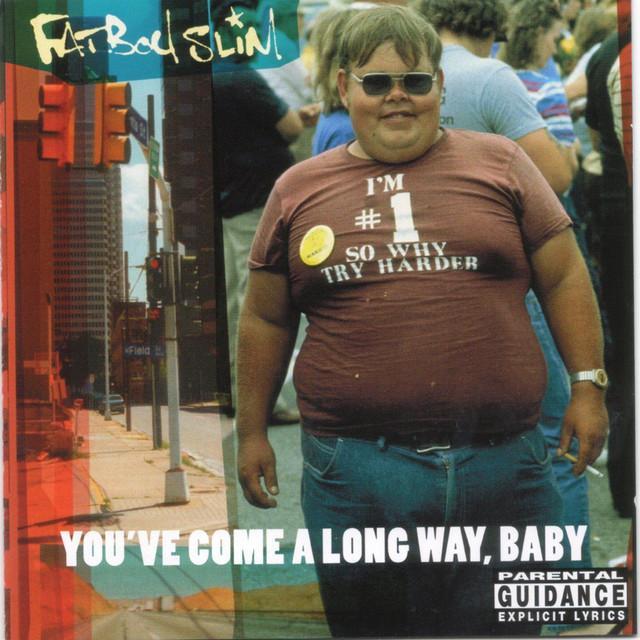
Love Island by Fatboy Slim
Sometimes a song means less through sentences than through pressure, repetition, and pure movement.
"Love Island" - Fatboy Slim
Provided by LyricFindt-t-t-a-a-a-house!
(repeat)
-=by Jossse=-Loading...Loading lyrics...
Unable to load lyrics
We're unable to display the lyrics at this time. Please try again later.
Why This Track Means More Than It Says
The meaning of Love Island Fatboy Slim is unusual because there is barely any lyric to decode. In the provided text, the main vocal idea is a stuttering chant of house
, repeated until it stops sounding like a word and starts acting like a trigger. That matters.
Instead of telling a clear story, the track seems built to create a feeling: excitement, absurdity, and surrender to the dance floor. Interpretation: they can hear it as a song about entering a shared party space where romance, ego, and identity all get simplified into rhythm. The title points toward fantasy. The vocal points toward genre. Put together, the song feels like a tiny portal into club culture.
In that sense, its meaning lines up with a basic idea from linguistics and semiotics: repetition can shift language from literal definition into pure sign and sensation, where sound itself starts carrying the message (Wikipedia). That is exactly the kind of trick this track seems to play.

Watch the official Love Island
music video
A Tiny Lyric, A Big Signal
There is almost no narrative voice here in the normal sense. No one confesses love, tells a story, or describes a scene. The repeated phrase acts more like a slogan than a verse.
t-t-t-a-a-a-house!
Paraphrased, the song keeps pointing listeners back to the idea of house music and the physical space around it. Interpretation: they may hear this as a celebration of club belonging. The stutter is important too. It makes the word feel chopped, sampled, and mechanical, which matches Fatboy Slim's long-standing style.
That minimalism changes how the song communicates. Meaning is not hidden in detailed lines. It is carried by insistence. Every repeat says, in effect: stop overthinking, the point is the rush.
Norman Cook’s Style Helps Explain It
Fatboy Slim is the best-known alias of Norman Cook, the English producer whose sample-heavy, high-energy work helped define late-1990s big beat culture (Britannica, The Recording Academy). The provided context also identifies Cook as the writer.
That background matters when reading this song. Cook has often favored tracks that use fragments, loops, chants, and exaggerated hooks rather than dense songwriting. His music regularly turns short vocal pieces into giant crowd cues. So with "Love Island," the lack of lyrical detail does not feel like absence. It feels like method.
Factual context: Fatboy Slim is associated with dance, electronic, and big beat production. The user-provided context labels this track "Alternative," which still fits the broader sense of genre-blending club music. Interpretation: the song can be heard as a bridge between house’s communal pulse and big beat’s cartoonish swagger.
What the Title Adds to the Meaning
Without the title, listeners might just hear a fun loop. With the title, they get a setting. "Love Island" suggests escape, fantasy, heat, and social chemistry. It sounds like a place where attraction is amplified and everyday rules feel suspended.
That makes the repeated house
phrase work on two levels:
- It points to house music.
- It hints at a party "house" or enclosed social zone.
Interpretation: they might hear the title as ironic too. Fatboy Slim often leaves room for humor, and "Love Island" can sound knowingly over-the-top, as if the song is both selling and parodying a pleasure fantasy at once. That double feeling is part of the fun.
How the Sound Carries the Message
When lyrics are this limited, production analysis becomes central. Even from the short text, listeners can infer a lot about how the song works. The stuttered vocal suggests sample editing, rhythmic chopping, and loop-driven structure. That kind of production turns one word into percussion.
This is key to the meaning of Love Island Fatboy Slim. The music likely communicates through:
- repetition that creates hypnosis
- a beat built for bodily response
- a vocal treated as texture, not confession
- a playful, slightly exaggerated party tone
Interpretation: they can read the song as saying that dance music does not need complex language to create connection. A crowd can unite around one sound if the groove is persuasive enough.
This also fits a broader truth about club tracks: sometimes the emotional content is not in what a singer says, but in how a producer controls tension, release, and anticipation.
Two Strong Readings of the Song
Reading One: A Celebration of Dance Culture
The most direct reading is that the song celebrates house-rooted club energy. The repeated chant functions like an invitation into a space where movement matters more than explanation. In that reading, "Love Island" is a fantasy destination built from rhythm.
Reading Two: A Joke About Pop Pleasure
A second reading is more satirical. Because the lyric is so stripped down, the song may be poking fun at how easily desire can be packaged. One catchy title, one repeated cue, one huge beat—and listeners are in. If so, the track is both party fuel and commentary on party culture.
Both readings can live together. Fatboy Slim has long worked well in that overlap between sincerity and cheekiness.
The Last Word on Its Meaning
So, what is this song about? The simplest answer is that it is about atmosphere. The meaning of Love Island Fatboy Slim comes from turning a tiny vocal fragment into a whole world of flirtation, motion, and club release.
Rather than offering a detailed lyric narrative, the track seems designed to make listeners feel dropped into a bright, silly, high-energy social dream. That is why the repetition matters so much: it empties the word of ordinary use and refills it with momentum.
Disclaimer: This interpretation is based on the available lyrics, title, artist context, and production style. Because the song uses very little text, some meaning remains necessarily interpretive rather than confirmed by a direct artist statement.







