Why FFDP Turned 'Rising Sun' Into Sin City
Five Finger Death Punch did not just cover a classic. They recast it as a modern warning about addiction, fate, and the pull of self-destruction.
"House of the Rising Sun" - Five Finger Death Punch
Provided by LyricFindThere is a house in Sin City
They call the Rising Sun
And it's been the ruin of many a poor boyLoading...Loading lyrics...
Unable to load lyrics
We're unable to display the lyrics at this time. Please try again later.
The Core Meaning Hiding in Plain Sight
The meaning of House of the Rising Sun Five Finger Death Punch centers on ruin. Their version keeps the old song’s basic idea: a narrator looks back on a life damaged by vice and admits they are caught in it. But by moving the setting to Las Vegas, they make the message feel even more direct.
In this telling, the “house” is not just a real place. Interpretation: it works like a symbol for any system that feeds weakness, whether that is gambling, drinking, or a lifestyle that keeps pulling someone back. When the narrator says they have been ruined, the song is not celebrating danger. It is confessing the cost.
That fits the song’s long history. “House of the Rising Sun” is a traditional American folk song that has appeared in many versions, often as a warning about a life gone wrong. The Animals’ 1964 recording became the most famous version and helped turn the song into a rock standard. Five Finger Death Punch later built their cover from that lineage while changing the location and feel to match their own identity.

Watch the official House of the Rising Sun
music video
A Confession Told From the Edge
The narrator speaks in first person, but the emotional effect reaches outward. They sound like someone who already knows how the story ends. Early lines connect family background to personal collapse: the mother represents ordinary labor, while the father is described as a gamblin' man
. That contrast matters because it suggests two paths in life, and the narrator follows the destructive one.
Later, the song shows how vice becomes routine. The idea behind on a drunk
is not just drinking for fun. It points to a person who only feels relief while escaping reality. That makes the song about dependency as much as gambling.
The warning becomes explicit when the narrator tells a mother to warn her children. In plain language, they are saying: do not copy this life. That is why the song hits so hard. It mixes guilt, advice, and resignation in the same breath.
The Story Moves in a Grim Circle
The plot is simple, but strong:
- The narrator names the place of ruin.
- They connect their family history to bad habits.
- They describe the gambler’s empty needs.
- They return to the place that traps them.
- They warn others not to follow.
One of the sharpest images is one foot on the platform
. It suggests a moment between escape and surrender. But the next idea undercuts hope, because they are going back to “Sin City” to wear a metaphorical burden. Interpretation: the song treats fate less like destiny and more like repeated choice. The narrator may know better, yet still goes back.
That circular motion is crucial. The song starts with the house, circles through memory and regret, and lands on the same place again. The trap is not just physical. It is psychological.
Why “Sin City” Changes the Meaning
Five Finger Death Punch’s biggest lyrical change is replacing New Orleans with Las Vegas-themed language. According to background on the band’s 2014 single release, the cover intentionally shifts the song to Sin City
as a nod to Las Vegas and its ties to gambling culture. That is a smart update because modern American listeners instantly connect Vegas with excess, risk, and losing control.
This change also makes the song feel more personal to the band’s image. Rather than performing the song like a museum piece, they translate it into their own world. The result keeps the old warning intact while making it sound current and harder-edged.
How the Music Makes the Warning Heavier
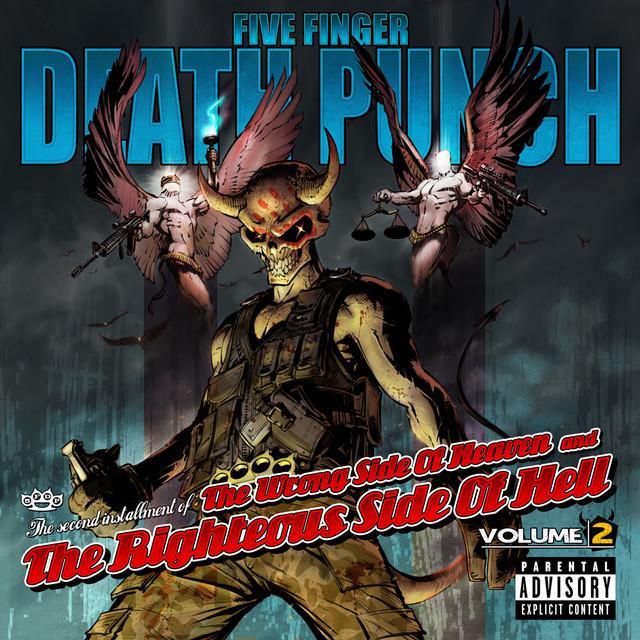
The production is a huge part of the song’s meaning. Five Finger Death Punch released the track in 2014 on The Wrong Side of Heaven and the Righteous Side of Hell, Volume 2, produced by Kevin Churko. Their version runs on thick guitars, pounding drums, and a stern vocal delivery that pushes the song away from folk tragedy and toward metal confession.
A key fact helps explain why it feels different. Guitarist Zoltan Bathory said the original Animals arrangement was in 6/8, a waltz-like pulse, and the challenge was making it work in a rock structure. Reports on the cover note that FFDP shifted it into 4/4, which gives it a straighter, more forceful drive. That rhythmic change matters because it removes some of the haunted sway and replaces it with march-like inevitability.
Interpretation: in The Animals’ version, the narrator sounds doomed. In FFDP’s version, they sound cornered and angry. Same story, different emotional color.
A Few Symbols That Carry the Song
Several images do a lot of work:
suitcase and a trunk
suggests a rootless life.ball and chain
points to punishment, guilt, or addiction.- The “house” symbolizes a place of repeated ruin.
- Trains and platforms suggest movement without freedom.
These symbols keep the song universal. Even if the setting is a casino city, the real subject is entrapment.
Why This Cover Still Connects
Part of the song’s staying power comes from its history. The traditional song has been covered hundreds of times, and The Animals’ version is often cited as a landmark folk-rock hit. Five Finger Death Punch succeed because they do not fight that legacy. They use it.
Their cover respects the warning built into the old song while reframing it for a modern hard-rock audience. That is the heart of the meaning of House of the Rising Sun Five Finger Death Punch: they turn a classic tale of downfall into a heavier statement about how people recognize the trap, hate the trap, and still walk back into it.
Final takeaway
Their version is about regret with momentum. The narrator sees the damage clearly, but clarity alone is not enough to save them.
Disclaimer: This interpretation combines widely known facts about the song’s history with critical reading of the lyrics and sound. Meanings can vary from listener to listener.









