
What “Learn to Fly” Really Means
The meaning of Learn to Fly Foo Fighters comes down to one powerful tension: they want out of a stuck, exhausting state, but they are still figuring out how to get there. The song sounds bright and radio-ready, yet underneath that lift is a person asking for change, relief, and a path back to themselves.
"Learn to Fly" - Foo Fighters
This could take all night
Think I need a devil to help me
Loading lyrics...
Unable to load lyrics
We're unable to display the lyrics at this time. Please try again later.
Released in 1999 on There Is Nothing Left to Lose, “Learn to Fly” helped push Foo Fighters further into mainstream rock. It was written by Dave Grohl, Taylor Hawkins, and Nate Mendel, and the album was produced by Adam Kasper with the band. Those facts matter because the song sits at an important point in their career: lighter on its feet than earlier material, but still emotionally restless.
A Restless Song About Escape and Return
At the simplest level, the narrator feels trapped. They are tired of passivity, tired of false starts, and tired of waiting for life to fix itself. Early lines suggest chaos and disappointment, with images of angels, devils, and failed revolutions. Instead of sounding grand for the sake of it, that imagery gives the song a spiritual and emotional scale.
The key desire is not just escape. It is escape with direction. When the song reaches for the sky and asks for a sign of life
, it is really asking for proof that change is possible. Later, the dream becomes even clearer: they want to make my way back home
. That “home” may not be a literal place. Interpretation: it sounds more like peace, truth, or a version of themselves they have lost.
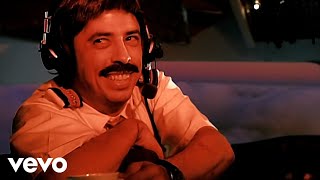
Watch the official Learn to Fly
music video
Why “Flying” Means More Than Freedom
The title image is simple, but it carries a lot. To “learn to fly” is not the same as already being free. Learning suggests effort, failure, and practice. That makes the song more human than a basic victory anthem.
The chorus captures that mix of longing and incompleteness. The narrator believes movement is possible, but they have not arrived yet. Even the repeated learn to fly
sounds less like bragging and more like a promise to keep trying.
That is why the song connects so widely. It speaks to anyone who feels in-between: no longer willing to stay stuck, but not fully changed either.
The Verses Show Burnout, Not Defeat
Much of the song’s emotional power comes from how frustrated the verses feel. The narrator seems done with patience and done with pretending. One phrase, tired of trying
, reveals the emotional center. This is not laziness. It is exhaustion.
Another striking line points to false systems and broken hopes. When the song calls a revolution a lie, it suggests disappointment with easy answers. Interpretation: the narrator may be rejecting fake solutions, whether in love, personal habits, or public ideals.
Still, the song never collapses into hopelessness. Instead, it turns that frustration into motion. The repeated search for rescue becomes a search for transformation.
A Voice That Needs Help
One of the most revealing moments comes near the end, when the song admits I can't quite make it alone
. That changes the emotional frame. Up to that point, the narrator sounds driven and urgent. Here, they sound vulnerable.
This matters because it keeps the song from becoming a simple self-help message. They do want strength, but they also need connection. The plea to fly along with me
suggests that healing may require support, not just willpower.
In that sense, “Learn to Fly” is both individual and communal. It is about wanting to save yourself while also needing someone beside you.
How the Sound Carries the Meaning
Musically, the song is one of Foo Fighters’ cleanest and most open rock singles. The guitars are crisp rather than heavy, the drums push forward without feeling aggressive, and the melody rises in a way that mirrors the title image. That lift is crucial.
If the arrangement were darker or more cluttered, the song might feel defeated. Instead, the production creates air around the vocals, making the hook feel like upward motion. Grohl’s performance also helps sell the message. He does not sing the chorus like someone who has already escaped. He sings it like someone reaching.
That balance between polish and urgency helps explain the song’s staying power. It feels easy to sing along with, but the emotion inside it is more complicated than it first appears.
Artist Context Makes the Message Stronger
By the late 1990s, Foo Fighters were moving from post-Nirvana curiosity to a fully established band. There Is Nothing Left to Lose is often seen as a melodic turning point in their catalog, and “Learn to Fly” became one of its defining songs. In that context, the track can also be heard as a statement of creative renewal.
Interpretation: some listeners hear the song as Grohl pushing toward a new phase of life and art—less about darkness for its own sake, more about surviving it and moving past it. That reading fits the album’s lighter textures and clearer hooks.
The Lasting Meaning of “Learn to Fly”
The meaning of Learn to Fly Foo Fighters is not just about freedom. It is about the hard middle ground between burnout and breakthrough. The narrator wants rescue, honesty, motion, and home all at once.
That is why the song still lands. It understands that change is not instant. Sometimes they do not soar right away. Sometimes they first have to admit they are lost, ask for help, and begin to learn.
Disclaimer: This interpretation is based on the lyrics, recording context, and public information about the song. As with most songs, listeners may hear different meanings in it.








