
Why 'Kiss Me When I'm Down' Hurts So Much
The meaning of Kiss Me When I'm Down Gary Allan comes down to one painful idea: sometimes a breakup is over, but the need for comfort is not. This song does not sound like a plan to rebuild a relationship. Instead, it sounds like a late-night plea for temporary relief from loneliness.
"Kiss Me When I'm Down" - Gary Allan
Carried out our future box by box
Stack of mail a tube of toothpaste
Loading lyrics...
Unable to load lyrics
We're unable to display the lyrics at this time. Please try again later.
Gary Allan recorded the song for Get Off on the Pain, released in 2010 on MCA Nashville. That album often circles regret, damage, and the strange ways people hold onto hurt. In that setting, “Kiss Me When I’m Down” fits perfectly. It is intimate, worn-in, and emotionally risky.
A breakup song about comfort, not repair
At the center of the song is someone living among the leftovers of a relationship. The opening images are small and ordinary: mail, toothpaste, CD cases, household things left behind. Those details matter because they show how breakups linger in rooms before they leave a person’s mind.
The singer is not saying the relationship still works. They know it does not. What they want is a brief return to familiarity. That is why lines like come on over
and waste my time
hit so hard. They reveal someone who already knows this visit will not fix anything.
Interpretation: the song is about emotional self-awareness mixed with weakness. The narrator sees the bad idea clearly and still asks for it.
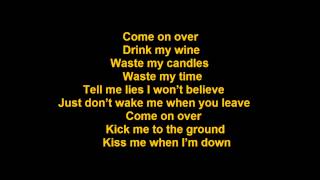
Watch the official Kiss Me When I'm Down
music video
The chorus turns humiliation into confession
The title phrase is the emotional key. To ask someone to kiss me when I'm down
is to ask for tenderness at the exact moment pride is gone. The song does not hide that loss of dignity. In fact, it leans into it.
The chorus piles up actions that sound self-defeating: drink the wine, burn the candles, tell lies, leave before morning matters. Even the request not to be woken when the other person leaves suggests the singer would rather stay in a half-dream than face the emptiness again.
Tell me lies I won't believe
Just don't wake me when you leave
That short section captures the whole emotional bargain. The narrator knows any comfort offered tonight is false, but false comfort still feels better than none.
What the verses reveal about the narrator
One of the strongest parts of the lyric is how concrete it is. The singer keeps a few forgotten items around, and they admit those objects are little more than an excuse to make contact. That is believable writing. Many breakup songs talk in big feelings; this one uses everyday clutter to show denial, longing, and strategy.
Later, the narrator imagines the ex at a noisy bar, then offers to pay the cab fare. That is not romance. It is emotional availability mixed with desperation. They are trying to make it easy for the ex to choose convenience over distance.
This is why the song feels sad rather than angry. The speaker does not blame the other person much. They mostly expose their own need.
A simple timeline of the story
- The relationship has ended, and the ex has moved out.
- A few leftover belongings become an excuse to call.
- The narrator imagines the ex out drinking and alone at closing time.
- They invite them over for one more night, knowing it means very little.
- They accept that
an hour or two
feels better than total absence.
That final idea may be the song’s bleakest truth.
How Gary Allan's style deepens the meaning
Gary Allan has long been one of country music’s best singers for bruised material. His voice often carries a grainy weariness, and that works especially well here. He does not sing this song like a grand dramatic speech. He sounds like someone trying to hold it together long enough to make one vulnerable phone call.
According to Songfacts, Allan told The Boot that the song reflects “human nature” after a breakup: trying to call someone back over “just for a night.” That comment is useful because it confirms the song is not mainly about reconciliation. It is about the pull of the familiar.
Production matters too. The arrangement stays grounded in modern country, but it leaves room for ache rather than swagger. The steady tempo, clean guitar framing, and restrained build keep the focus on the emotional trap. Nothing in the track sounds triumphant. It sounds suspended, as if the narrator is stuck between memory and morning.
The album context makes it even heavier
On Get Off on the Pain, Allan repeatedly explores damage, regret, and the ways people can almost identify with suffering. Critics noticed that pattern when the album came out. In its review, PopMatters described “Kiss Me When I’m Down” as a plea for a former lover to return, if only briefly, and tied it to the album’s larger interest in pain as something people sometimes cling to.
That context sharpens the song’s meaning. This is not just a lonely call. It is part of a bigger emotional world where hurt is familiar enough to feel almost safe.
Interpretation: the song suggests that heartbreak can distort judgment, but it also shows why. Familiar pain may feel easier than unfamiliar emptiness.
Why listeners connect with it
Many listeners hear themselves in this song because it avoids fake strength. It admits that a person can know better and still reach backward. The request is small, almost modest, but that makes it more devastating. The narrator is not asking for forever. They are asking for contact, warmth, and a pause button.
That honesty is the real power behind the meaning of Kiss Me When I'm Down Gary Allan. It captures the moment when love is gone, habit remains, and loneliness makes even a bad idea feel merciful.
Final takeaway
“Kiss Me When I’m Down” is about post-breakup vulnerability in its rawest form. It shows a person who understands the relationship is finished but still wants one last borrowed comfort from the person who used to feel like home.
That is what gives the song its sting: it is not hopeful, but it is deeply human.
Disclaimer: This interpretation is based on the lyrics, recording context, and published artist comments. As with any song, individual listeners may hear it differently.








