Why 'Honky Tonk Time Machine' Feels Timeless
The meaning of Honky Tonk Time Machine George Strait starts with a simple scene: one regular walks into a bar, feeds a jukebox, and changes the whole room. From there, the song becomes more than a party track. It turns into a tribute to country music's power to carry people backward into memory, community, and tradition.
"Honky Tonk Time Machine" - George Strait
Pockets just jinglin' like a tambourine
Makes a beeline over to that old jukebox
Loading lyrics...
Unable to load lyrics
We're unable to display the lyrics at this time. Please try again later.
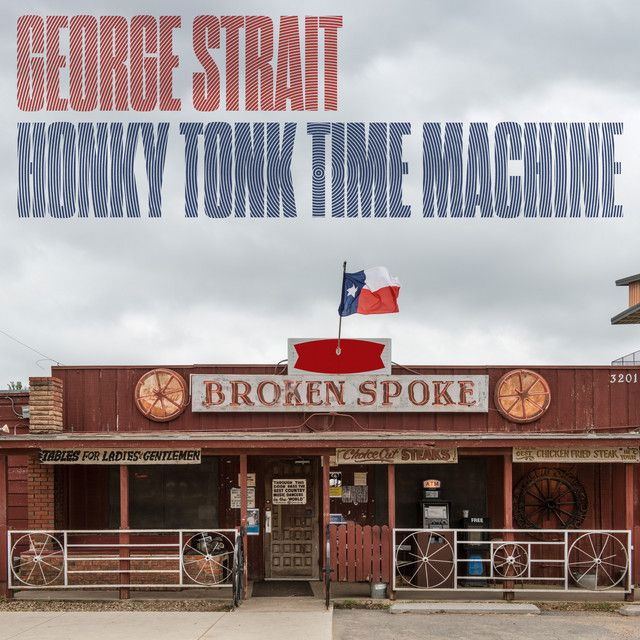
George Strait released the song on his 2019 album Honky Tonk Time Machine, and that context matters. By this point, they were already one of country music's strongest symbols of continuity. So when they sing about old records, boots, and a packed dance floor, the song feels like both a story and a mission statement.
A Jukebox as a Time Portal
At the center of the song is a man who appears on the first and fifteenth, likely payday, with enough change to keep the music going. The detail that his pockets are jinglin' like a tambourine
makes him feel vivid and familiar. He is not rich or glamorous. He is simply devoted.
Once he reaches the jukebox, the room transforms. The song describes that shift with the phrase off like a rocket
, which suggests sudden energy, motion, and lift. In plain terms, one person's song choices restart a whole culture inside the bar.
Interpretation: the so-called time machine is not a real machine at all. It is the jukebox, and beyond that, music itself. When the right songs play, people do not just hear them. They return to who they were when they first loved them.
Watch the official Honky Tonk Time Machine
music video
More Than Nostalgia, It Is Social Memory
A weaker song would stop at simple nostalgia. This one goes a little further. It shows how memory becomes shared experience. As the music starts, drinks flow, the dance floor fills, and the room becomes a living archive of country life.
The line about the good old days
is important, but the song does not sound sad about time passing. Instead, it sounds joyful and active. The past is not gone; it is being rebuilt in the present every time the jukebox spins.
That is why details like cowboy hats, boots, and jeans matter. They are not just costume pieces. They stand for belonging. In this world, honky-tonk culture is something people step into together.
Beer gets to flowin'
and the whiskey pours
Those two short lines show the bar atmosphere in miniature. The point is not just alcohol. It is looseness, fellowship, and a release from ordinary time.
The Narrator Watches, Then Celebrates
The song uses third-person storytelling, which gives it the feel of a barroom portrait. Rather than placing the spotlight on a confessional "I," it watches this jukebox regular from the side and lets the crowd's reaction explain his importance.
That choice matters. It turns the man into a type: the keeper of old-school country values. The lyric about an old-school
DJ makes this clear. He may not be working a radio board, but he curates the emotional life of the room.
There is also a playful edge in the line about making sure the jukebox does not "rock." In context, that sounds like a defense of traditional country against outside styles. The song is not subtle there. It proudly prefers fiddle-and-steel-era feeling over trend chasing.
How George Strait's Persona Shapes the Meaning
The song was written by Bart Butler, Brice Long, and Bubba Strait, George Strait's son. That family link gives the track an extra layer, especially on an album that often looks backward while still sounding alive. According to MCA Nashville, the album marked Strait's continued return to straight-ahead country themes.
George Strait's performance is key to the song's meaning. They do not oversell the joke or push too hard on the nostalgia. Instead, the vocal stays relaxed, steady, and conversational. That restraint makes the song feel lived-in.
Because Strait has spent decades representing traditional country, listeners are likely to hear the song as self-aware. He is not only singing about a man who loves old records. He is also standing in for the kind of artist who keeps those records alive.
The Sound Keeps the Promise
Musically, the track supports its message with bright, classic-country movement. The rhythm feels made for dancing, and the arrangement leans on the clean, bar-friendly swing that has long defined Strait's best-known work. Even without studying every instrument in isolation, listeners can hear a design built for motion rather than introspection.
That matters because the chorus is not about private grief. It is about collective lift. The phrase neon haze
paints the room in bar signs and memory glow, while the groove keeps everything grounded in the body. People are meant to move, not just remember.
A Small Story With a Big Theme
On its surface, this is a fun song about a jukebox hero. Underneath, it argues that country music can preserve identity. The bar becomes a place where time folds in on itself, and where ordinary people keep tradition alive without speeches or grand gestures.
Interpretation: one possible reading is that the song is also about George Strait's own career. Just as the man feeds the jukebox, Strait keeps feeding country audiences the sounds that reconnect them to an earlier era. Another reading is broader: any beloved song can become a time machine when it returns listeners to a version of themselves they thought was lost.
In the end, the meaning of Honky Tonk Time Machine George Strait is less about escape than renewal. The song says the past still matters because it can still be danced to.
Disclaimer: This interpretation is based on the lyrics, recording context, and George Strait's public artistic image. As with any song, listeners may hear different meanings.







