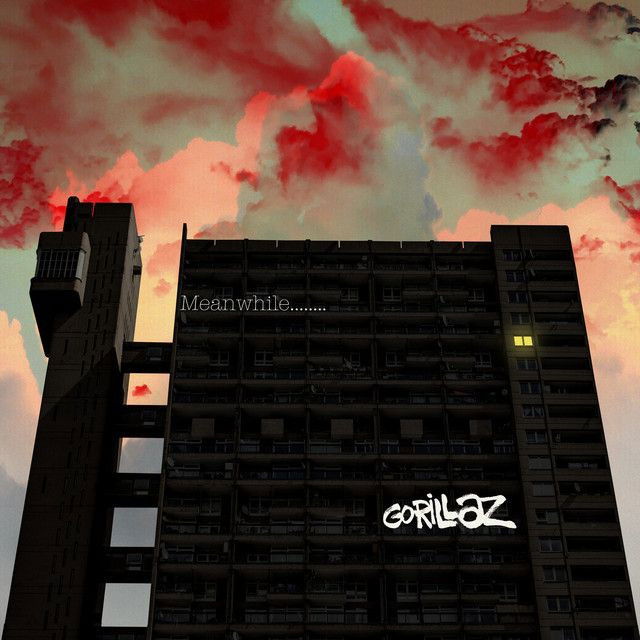
Why ‘Meanwhile’ Feels Like a Carnival Memory
The meaning of Meanwhile Gorillaz, Jelani Blackman, Barrington Levy starts with a simple tension: how do they celebrate a place they love when that place no longer feels quite the same? That question drives the whole song.
"Meanwhile" - Gorillaz ft. Jelani Blackman, Barrington Levy
I don't like hate (nah)
See when the sound system break
Loading lyrics...
Unable to load lyrics
We're unable to display the lyrics at this time. Please try again later.
Released in 2021 as the title track of the Meanwhile EP, the song was presented as a tribute to Notting Hill Carnival and West London. It features Jelani Blackman and Barrington Levy, and according to reporting at the time, the EP was created to celebrate Carnival and West London culture. Research on the song also notes it was the first track recorded at Studio 13 after Covid-19 lockdowns. That matters, because the song sounds both joyous and haunted by absence.
A Love Letter With Friction
At its core, “Meanwhile” is about belonging. They frame carnival not just as a party, but as a living archive of family, neighborhood memory, and Black British identity. The speaker welcomes movement and growth, but draws a line against hostility and erasure.
Early on, the song contrasts openness with resistance. A phrase like I don't mind change
is quickly followed by I don't like hate
. In plain terms, they are not rejecting evolution itself. Interpretation: they are rejecting the kind of social change that pushes people out, strips a place of its roots, or turns culture into a backdrop.
That helps explain why the chorus sounds so protective. When they repeat that things don't feel the same
, it is not just nostalgia for old parties. It suggests a community noticing shifts in mood, ownership, and access.
Watch the official Meanwhile
music video
Notting Hill as Memory, Not Postcard
The song’s strongest images come from local detail. It mentions carnival drinks, streets, and family history in a way that keeps the song grounded. Rather than treating Notting Hill as a tourist symbol, they present it as inherited space.
One of the key lines points back to older generations and the neighborhood’s tougher past. The mention of granddad and Teddy Boys recalls the racial tensions that shaped postwar London. In that sense, the song remembers that carnival joy did not appear from nowhere. It grew out of struggle, migration, and community-building.
When Blackman says Notting Hill weren't no film
, the point is clear even without quoting more. They push back against any polished, outsider version of the area. This is not a movie set. It is a real place with scars, ancestors, and rules of survival.
The Chorus Draws a Boundary
The hook is catchy, but its message is firmer than it first seems. References to carnival drinks and rave culture create warmth, yet the repeated warning not to get in the way turns the chorus into a defense of space.
That is why the line don't get in my way
matters so much. It sounds casual on the surface, but it works like a boundary marker. Interpretation: they are speaking to anyone who enjoys the style of carnival without respecting the people and history behind it.
The contrast between luxury and everyday staples sharpens that point. Champagne appears, but so do Red Stripe and Wray. The mix suggests a culture that does not need outside approval to define taste or value. They can hold elegance and street tradition at once.
How Barrington Levy Changes the Song
Barrington Levy’s presence adds weight. His voice carries roots reggae and dancehall history, so when he enters, the song suddenly feels older and wider than one neighborhood scene. Damon Albarn’s soft vocal layer beside him makes the bridge feel half-memory, half-dream.
Yeah, it's just the same as I thought it would be
When I was in carnival
Do you really think I'd forget you?
Meanwhile
This is the article’s only longer lyric excerpt, and it captures the emotional pivot. The bridge moves from street observation to remembrance. Instead of guarding territory, they pause to ask whether deep connection can survive distance and time.
The Production Sounds Like a Street Turning a Corner
The music carries the meaning as much as the words do. Available credits list Damon Albarn on bass, keyboards, vocals, and steelpans; Remi Kabaka Jr. on percussion and drum programming; and Femi Koleoso on live drums, with strings and extra vocals also in the mix.
That blend matters. Steelpans and percussion place the song near carnival sound systems, while the bass and drums keep it moving with real physical weight. But the arrangement is not chaotic. It is clean, spacious, and slightly reflective, which gives the track a sense of looking back while still dancing forward.
Interpretation: the production mirrors the song’s theme. It celebrates communal motion, yet leaves enough room for grief and distance to echo through the beat.
Post-Lockdown Energy Hides in the Background
Another layer of the meaning of Meanwhile Gorillaz, Jelani Blackman, Barrington Levy comes from timing. Because the song was reportedly the first cut made at Studio 13 after lockdowns, its refrain about things not feeling the same hits differently.
They never turn the track into a direct pandemic song. Still, listeners can hear that context in the mix of relief, caution, and longing. Carnival itself had become charged with absence, memory, and the wish to gather again.
The Best Way to Read “Meanwhile”
The most convincing reading is that “Meanwhile” is both tribute and warning. It honors Notting Hill Carnival as a source of joy, style, and belonging. At the same time, it protects that space from flattening, forgetting, and displacement.
A second valid reading is more personal. The song may also be about returning to a beloved place and realizing they can love it deeply while knowing they cannot fully live in the past. That tension gives the song its ache.
In the end, “Meanwhile” works because it never chooses between celebration and critique. It holds both. They dance, remember, and defend at the same time.
Disclaimer: This interpretation mixes verified context with informed reading of the lyrics and sound. As with any song, meaning can vary from listener to listener.









