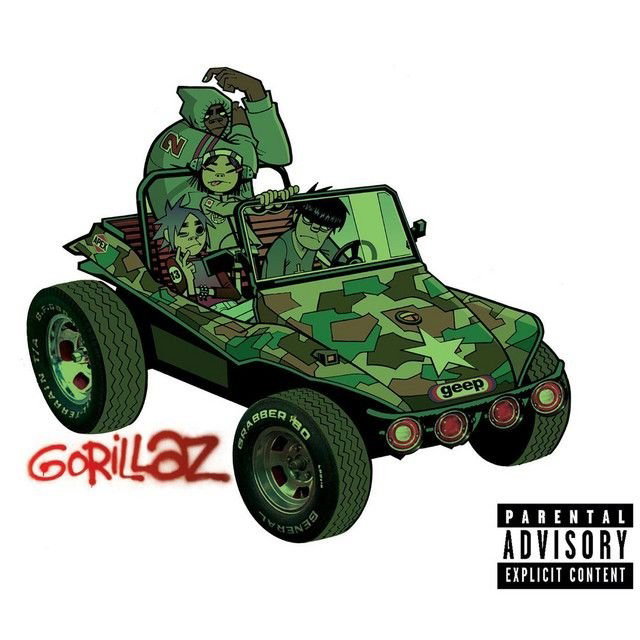
Tomorrow Comes Today by Gorillaz
The meaning of Tomorrow Comes Today Gorillaz centers on a strange but simple fear: what if the future is already pressing down on the present? In this early Gorillaz song, they sketch a world where pleasure, pressure, media, and isolation all arrive at once. The words are brief, but the mood is heavy.
"Tomorrow Comes Today" - Gorillaz
We got no camera to see
Don't think I'm all in this world
Loading lyrics...
Unable to load lyrics
We're unable to display the lyrics at this time. Please try again later.
First released as the title track of Gorillaz’s debut EP in November 2000, the song later appeared on the band’s self-titled album and was issued as a single in 2002, reaching No. 33 on the UK chart, according to research summarized by Wikipedia and Songfacts. That timing matters. Gorillaz were introducing a virtual-band identity built around image, screens, and mediated fame, so this song’s references to cameras and digital life feel especially pointed.
A future that arrives too early
At its core, the song seems to describe someone who cannot stay fully present. They are surrounded by people, but still sound detached. Early on, the line Everybody's here with me
suggests company, yet the next ideas undercut any comfort. Even in a crowd, they do not feel seen in a real way.
That tension leads into the title phrase. The chorus is tiny, but it carries the whole concept: Tomorrow comes today
. In plain terms, the song imagines consequences arriving before a person is ready. There is no clean split between now and later.
Interpretation: This can be read as anxiety. It can also sound like burnout, where the future already feels spent before it even begins.

Watch the official Tomorrow Comes Today
music video
Cameras, verdicts, and digital control
The most striking images in the lyric involve outside forces that seem to judge or trap the speaker. When they say the camera won't let me go
and The digital won't let me go
, the song moves from personal feeling into a broader comment on technology and image.
These lines do not need to be taken literally. They may point to surveillance, public attention, or the way modern life turns people into pictures, data, and performance. The word “verdict” adds another layer. It suggests judgment, as if the speaker feels watched and already decided upon.
For an early-2000s song, that idea feels ahead of its time. Gorillaz were built as animated characters, not a standard rock band, so they were always playing with the gap between real people and mediated identity. In that context, the camera imagery feels less like decoration and more like theme.
What the chorus really means
The hook includes one of the song’s most important phrases: I'll pay
. That changes the title from abstract poetry into a warning. If tomorrow arrives today, then today’s actions carry an instant cost.
Songfacts quotes Gorillaz character Murdoc Niccals describing the song as the idea of taking tomorrow up front, then realizing that doing so also ruins today. That explanation is useful because it matches the lyric’s emotional logic. The song is not just about time passing. It is about borrowing against the future and feeling the debt immediately.
When tomorrow
Tomorrow comes today
Those two short lines feel simple, but they create a loop. There is no release, just the same realization coming back again.
The sound makes the loneliness deeper
Part of the meaning of Tomorrow Comes Today Gorillaz comes from its production. Research summarized by Wikipedia credits Damon Albarn, Jamie Hewlett, Dan the Automator, Tom Girling, and Jason Cox, with Albarn also contributing vocals, keyboards, bass, and the song’s memorable melodica.
That melodica is crucial. It gives the track a weary, distant sound, almost like a street melody drifting through fog. The beat moves slowly, with trip-hop, dub, lo-fi, and alternative textures. Nothing rushes, but nothing feels secure either.
This matters because the arrangement mirrors the lyric’s numbness. The song does not explode with panic. Instead, it drifts. That drift makes the ideas about media pressure and emotional exhaustion feel more believable. They are not screaming for help; they are half-lost inside the atmosphere.
A song about fame, or just modern life?
There are at least two strong ways to read the track.
Reading one: media and identity
Because the lyrics mention cameras, digital force, and judgment, the song can sound like a statement about visibility. They may be describing what it feels like to become an image before they can remain a person. For a project like Gorillaz, that reading fits well.
Reading two: depression and dislocation
Another reading is more private. Repeated lines like I'll be here too long
suggest fatigue, dread, or a wish to disappear from a painful emotional state. In this version, the camera and digital world are symbols for distance and detachment, not just fame.
Both interpretations work because the writing stays open. The song gives emotions first and explanations second.
Why the song still resonates
The track’s video, directed by Jamie Hewlett, used drawings of the band over real London imagery and even included early Banksy graffiti, according to Wikipedia and Songfacts. That mix of cartoon identity and urban reality reflects the song itself: human feeling filtered through media surfaces.
What keeps the song alive is how modern it still sounds. The fear that technology can trap identity, the sense that the future is already demanding payment, and the blur between being surrounded and being alone all feel current.
In the end, the meaning of Tomorrow Comes Today Gorillaz is less about one plot than one state of mind. They present a person caught between attention and emptiness, between now and later, between image and self.
Disclaimer: This interpretation blends documented context with informed reading. Gorillaz songs often invite multiple meanings, so listeners may hear the track differently.