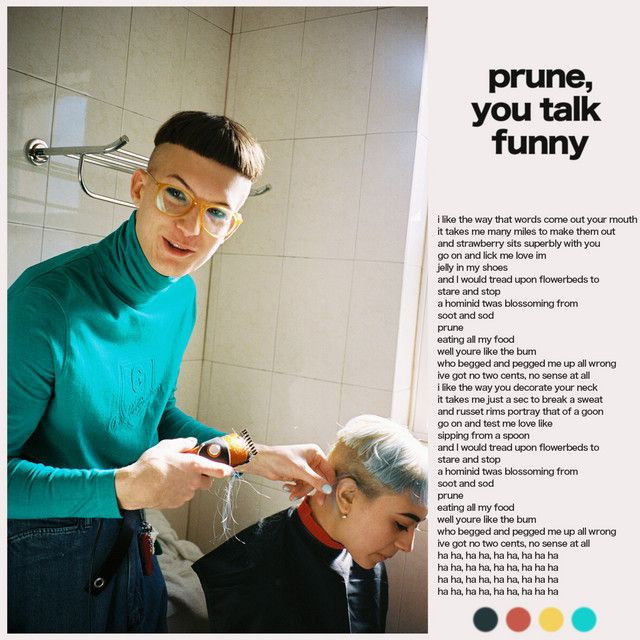
Prune, You Talk Funny by Gus Dapperton
The meaning of Prune, You Talk Funny Gus Dapperton starts with a crush that feels exciting, strange, and a little hard to decode. The song sounds bright and playful, but its words are full of mixed signals. The narrator is pulled toward someone whose style, speech, and attitude leave them dazzled and off balance at the same time.
"Prune, You Talk Funny" - Gus Dapperton
Ooh, it takes me many miles to make them out
Ooh, and strawberry sits superbly with you
Loading lyrics...
Unable to load lyrics
We're unable to display the lyrics at this time. Please try again later.
Released on December 5, 2017, the track was presented as the first single from Gus Dapperton’s second EP, You Think You’re a Comic! according to the Gus Dapperton Wiki. Brendan Patrick Rice, Gus Dapperton’s real name, is credited as the writer in the material provided here.
A Crush Told Through Confusion
At its core, this song feels like a portrait of attraction that is almost too vivid to process. The narrator admires the other person’s voice and presence, but they do not fully understand them. Early on, they focus on how words come out of the person’s mouth, then admit it takes distance and effort to make sense of them. That creates the song’s main tension: desire without clarity.
This is why the title matters so much. talk funny
does not have to mean comedy. It suggests a person who is unusual, hard to read, or simply magnetic in a way that scrambles ordinary logic. The narrator is not rejecting that mystery. They are drawn in by it.

Watch the official Prune, You Talk Funny
music video
Sweet Images, Nervous Energy
Much of the song’s language is sensory. It uses food, color, and touch to make attraction feel immediate and slightly absurd. Phrases like jelly in my shoes
turn nervous desire into a cartoon image. Instead of saying they are shy or weak around this person, the narrator makes the feeling physical and funny.
That matters because Gus Dapperton often leans into quirky phrasing rather than direct confession. Here, sweetness is not calm. It is unstable. Even admiration comes with embarrassment, sweat, and confusion.
The same thing happens when the song notices style details, such as the way the person dresses or presents themselves. These details are small, but they hit the narrator with force. They become signs of charisma.
The Chorus Turns Desire Into Devotion
The clearest emotional statement comes when the narrator imagines extreme effort just to pause and stare. They would cross boundaries and ruin something delicate for the chance to witness this person. That exaggeration shows infatuation at full volume.
“And I would tread upon flowerbeds to
Stare and stop”
This is the article’s strongest clue that the song is not just a joke song full of random images. It is using surreal language to describe obsessive attention. The flowerbeds suggest beauty, innocence, or social rules. The narrator would step over all of that for one moment of awe.
Then the image grows stranger with soot and sod
. Interpretation: this suggests something beautiful emerging from dirt, grime, or ordinary life. In other words, the beloved person feels rare, as if something luminous has grown out of a rough setting.
Why “Prune” Sounds Both Cute and Sharp
The repeated word prune
is one of the song’s most memorable choices. It sounds affectionate, comic, and faintly teasing. A prune is sweet, wrinkled, and a little odd, which fits the song’s whole mood.
Interpretation: the nickname may show fondness for someone who is unconventional. It can also imply that attraction here is not polished or glamorous. It is messy, specific, and personal.
Right after that, the song swerves into the line about eating all my food
. On one level, it is funny and domestic. On another, it hints that this person takes up space in the narrator’s life. They consume attention, energy, and maybe emotional resources too.
A Relationship That Feels Off Balance
The sharpest lines in the song arrive when admiration turns into complaint. The narrator compares the other person to someone who has judged them badly, then admits they have no two cents
. That phrase suggests speechlessness, low confidence, or losing the ability to defend themselves.
This is where the song gets richer. It is not only about a crush. It is about being overwhelmed by someone who can charm and unsettle in the same breath. The narrator seems aware that they may be getting misread or pushed around, but they are still hooked.
That tension gives the song its emotional edge. Without it, the lyrics would just be whimsical flirtation. With it, the track becomes a study in attraction that makes a person feel foolish.
How the Sound Supports the Meaning
Factually, the track was released as an upbeat single, and that upbeat surface is important. The music does not frame the story as heartbreak. Instead, it gives the confusion bounce and color.
Interpretation: that bright arrangement makes infatuation feel playful rather than tragic. The listener hears a person laughing at their own helplessness. Even the repeated vocal sounds near the end push the song further into a dazed, giddy state, as if language has finally broken down into pure feeling.
The music video supports this reading too. Its school halls, bouquet dancing, bowl cuts, and surreal doughnut imagery all lean into awkward youth, stylized flirtation, and comic dream logic. The visual world matches the lyric world: a crush so strong it starts to feel ridiculous.
Final Take on the Song’s Meaning
So, what is the meaning of Prune, You Talk Funny Gus Dapperton? Most likely, it is a playful but pointed song about being fascinated by someone who is attractive, confusing, and emotionally disorienting. The narrator admires this person’s voice, look, and energy, yet also feels judged, scrambled, and unable to think clearly.
That mix of desire and self-consciousness is what makes the track memorable. It captures the strange stage of attraction where someone seems magical one second and impossible the next.
Like many Gus Dapperton songs, its exact meaning stays open. This interpretation is based on the lyrics, the song’s tone, and available release context, so listeners may reasonably hear it differently.







