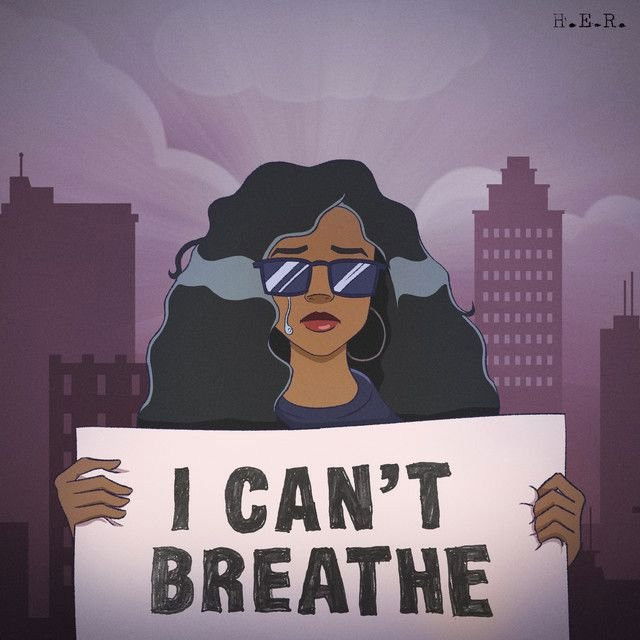
I Can't Breathe by H.E.R.
A single voice, a guitar, and a plainspoken truth: H.E.R.’s protest ballad turns a personal gasp into a national reckoning. For listeners seeking the meaning of I Can't Breathe H.E.R., this song is both memorial and megaphone, tracing pain to its roots and asking what justice really looks like.
"I Can't Breathe" - H.E.R.
All the corruption, injustice, the same crimes
Always a problem if we do or don't fight
Loading lyrics...
Unable to load lyrics
We're unable to display the lyrics at this time. Please try again later.
A Protest Ballad in Plain Words
At its core, the song is about the pressure of systemic racism and the human cost of police brutality. When H.E.R. sings I can't breathe
, she draws from a phrase heard in several high-profile killings of Black Americans. The line stands as a symbol for lives constrained by fear, inequity, and exhausted hope.
The opening images name the contradiction: Started a war screaming 'Peace'
. The lyrics argue that calls for order can mask violence, and that equality promised on paper still fails in practice. Interpretation: the song frames “breath” as a right—safety, dignity, and the ability to live without constant threat.
Watch the official I Can't Breathe
music video
Who Speaks, And Who Must Listen
The narrator toggles between a singular “I” and a community “we.” Phrases like Will anyone fight for me?
personalize the plea, while later sections widen the lens to address bystanders, institutions, and media. Interpretation: the shifting voice positions the listener not as a spectator but as a participant who must choose empathy or indifference.
From Headlines to a Bedroom Guitar
H.E.R. began writing the track in 2020 amid nationwide protests, co‑writing with Tiara Thomas and completing it with producer D’Mile. She first performed it June 10, 2020 during a living‑room concert broadcast. In 2021, the song won the Grammy for Song of the Year, and its visual earned MTV’s Video for Good in 2020. In a brief acceptance remark, H.E.R. noted they wrote it “over FaceTime,” underscoring its urgency and intimacy.
Production choices are stark and intentional. The acoustic guitar—reportedly kept from an early voice note—sits up front, dry and close, while H.E.R.’s vocal rides between lament and resolve. There’s space in the mix: breaths, consonants, the grit of a pick against strings. Interpretation: the minimalism suggests testimony, not theater, letting each claim land without distraction.
The Chorus as a Rallying Cry
The hook compresses the message into a direct appeal. Before reading the words below, note how the melody drops, almost as if the breath itself is failing. Then the final question tilts from grief to action:
I can't breathe
You're taking my life from me
Will anyone fight for me?
Interpretation: the chorus reframes mourning as a demand. It asks who will show up beyond hashtags and headlines—and whether protection truly includes those most policed.
Images That Name the System
Throughout, the song links individual harm to structure. When H.E.R. asks What's it gonna take?
, she has already described systems that “make us the enemy.” The coda’s spoken-word section catalogs history: stolen land, romanticized violence, uniforms that both protect and kill, and media narratives that distort.
There’s also a chilling allusion to “strange fruit,” recalling lynching and the long arc of racial terror. Another line, The revolution is not televised
, nods to a cultural refrain about how real change often happens outside sanitized coverage. Paired with We breathe the same
, the song insists on shared humanity even as it documents unequal realities.
Interpretation: the lyric turns slogans into scrutiny. It challenges comfort, calling out performative allyship and the desire to skip “uncomfortable conversation.” The effect is to move listeners from sympathy to responsibility.
Closing Thought
If the meaning of I Can't Breathe H.E.R. could be distilled, it’s this: a witness statement that refuses to be drowned out. The music stays hushed so the message can rise. It names pain, remembers the lost, and presses the question of who will act.
Interpretation is subjective. This reading draws on the recording, performances, and public reception; other listeners may hear different nuances based on their experiences.







