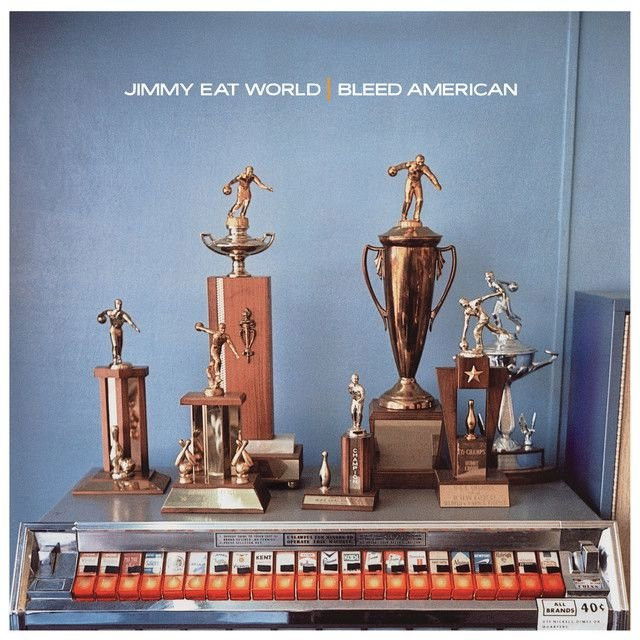
Bleed American by Jimmy Eat World
Jimmy Eat World’s “Bleed American” sounds like a rush of adrenaline, but its lyrics are more uneasy than triumphant. The meaning of Bleed American Jimmy Eat World often comes down to pressure: pressure from media, medicine, politics, and public life. They pair a huge, fast alternative-rock sound with lines that suggest overload, numbness, and a country trying to hype itself up while falling apart.
"Bleed American" - Jimmy Eat World
I'm not crazy 'cause I take the right pills every day
And rest, clean your conscience
Loading lyrics...
Unable to load lyrics
We're unable to display the lyrics at this time. Please try again later.
The song opened the band’s 2001 album Bleed American and quickly became one of their defining tracks. Factually, it is a high-energy alt-rock single from a band known for mixing emo vulnerability with radio-ready hooks. Interpretation: beneath that surface, the track feels like a critique of modern American life as something loud, restless, and hard to escape.
The Big Idea Behind the Song
At its core, the song presents a speaker trying to hold themself together in a culture full of distraction and strain. Early lines point to false comfort: the TV is on, the pills are right, and conscience can supposedly be cleaned. That does not sound like peace. It sounds managed.
When the singer says the TV's on
, the idea is not simple companionship. It suggests background noise replacing real connection. Likewise, the right pills
hints at a life regulated by treatment, routine, or social expectations. Interpretation: the song is less about one person’s breakdown than about a wider system teaching people to cope instead of heal.

Watch the official Bleed American
music video
America as a Physical Mess
The chorus gives the song its most famous image: salt, sweat, sugar
scattered on the asphalt
. Those words feel tactile and immediate. They evoke labor, appetite, exhaustion, and the harsh surface of modern life all at once.
Then the lyrics move to hearts littering the topsoil
. That image is striking because it turns emotion into waste. Instead of hearts being protected or cherished, they are thrown into the dirt. Interpretation: the song may be describing a culture that uses people up, then leaves the remains in public view.
There is also a class angle hidden in the repeated phrase about our lives, our coal
. Coal suggests fuel, labor, and something burned for power. In that reading, people become resources for a machine larger than themselves.
A Chorus Built on Choice and Control
One of the smartest parts of the lyric is how it turns public participation into a trap. The line about the picket line or the parade
offers two very different forms of group action: protest or celebration. Yet both are presented as something to sign up for, almost like roles handed out in advance.
That matters for the meaning of Bleed American Jimmy Eat World because the song never promises freedom outside those roles. Tune in, sign up, join the crowd—everything sounds scripted. Interpretation: the track may be asking whether modern citizenship is genuine involvement or just another performance.
Salt, sweat, sugar on the asphalt
Our hearts littering the topsoil
These two short lines act like the song’s thesis. They compress bodily effort, public space, and emotional damage into one image. Even without a detailed story, the song makes its world feel crowded, dirty, and overheated.
How the Sound Carries the Message
Musically, “Bleed American” hits hard from the first seconds. The drums and guitars come in with a punch that feels almost celebratory, which creates useful tension with the lyrics. The track is catchy enough to sound like a summer anthem, yet the words point toward burnout and social decay.
That contrast is important. Jimmy Eat World often write songs where emotional discomfort rides inside bright, accessible rock. On this track, the vocal delivery is urgent rather than fragile. The band do not whisper these concerns; they drive them forward.
The production also helps. The guitars are clean enough to keep the hook sharp, but heavy enough to feel abrasive. The rhythm section pushes everything ahead, giving the song a sense of momentum that mirrors the pressure inside the lyric. According to the band’s album credits and release history documented by AllMusic, the album marked a polished but still forceful stage in their sound.
Two Strong Readings of “Bleed American”
Reading One: A Social Critique
The clearest reading is that the song targets American consumer culture and public spectacle. TV, medicine, alcohol, labor, protest, and parade imagery all pile up into a portrait of a society that keeps moving while its emotional core erodes.
In this view, the title itself sounds provocative on purpose. To “bleed” can mean suffering, sacrifice, or exposing what is under the skin. Interpretation: the song may be stripping away patriotic gloss to show pain underneath.
Reading Two: A Personal Panic Inside a National Frame
It is also possible to hear the song as intensely personal. The repeated self-justifying lines sound like someone trying to convince themself they are fine. If so, the national imagery does not replace the inner crisis. It magnifies it.
That ambiguity is part of why the track lasts. They make a personal spiral sound like a public event, and a public event sound like a private panic.
Why the Song Still Connects
More than two decades later, the song still feels current because its concerns never really disappeared. Media saturation, emotional numbness, and pressure to perform belonging are still central parts of American life. The track’s energy makes it easy to shout along with, but its imagery keeps pulling listeners back to harder questions.
For many fans, that is the lasting power of the meaning of Bleed American Jimmy Eat World: it captures both release and alarm at the same time. It is fun, tense, catchy, and suspicious of the world that produced it.
Final Thought
“Bleed American” works because it refuses to be only one thing. It is a rousing rock opener, a portrait of emotional overload, and possibly a critique of national identity all at once. Interpretation: the song’s real subject may be what happens when people are taught to stay loud, busy, and functional while something deeper is breaking.
Disclaimer: This interpretation is based on the released lyrics, musical context, and publicly available background. As with many songs, listeners may reasonably hear different meanings in it.







