
Why "Living on the Moon" Feels So Unstable
Joe Bonamassa’s “Living on the Moon” turns a rocky relationship into a vivid space-age metaphor. The core idea is simple: being with this person feels thrilling, lonely, and physically exhausting all at once. That is the best entry point for anyone searching for the meaning of Living on the Moon Joe Bonamassa.
"Living on the Moon" - Joe Bonamassa
Without my suit, bruised and swollen
It's hot as Hades
Loading lyrics...
Unable to load lyrics
We're unable to display the lyrics at this time. Please try again later.
Rather than describe heartbreak in ordinary terms, the song compares love to surviving in a place where a person cannot breathe, cannot stand steady, and might not make it home. That image gives the song its bite. It is not just about romance gone wrong. It is about emotional whiplash.
The Central Meaning Hides in the Hook
The title phrase is the whole song’s engine. When the singer says being with someone is like living on the moon
, they are not describing wonder alone. They are describing isolation, bad conditions, and the sense that basic human needs are suddenly hard to meet.
This is why the opening images matter so much. The song begins with breathlessness and damage, suggesting a relationship that leaves them drained. The line about the air being stolen paints love as something that should sustain life but now does the opposite. In plain terms, this person makes closeness feel unsafe.
Interpretation: the moon image works because it combines romance and danger. The moon is beautiful from far away, but terrible as a place to live. That fits a lover who seems exciting in theory yet painful in practice.
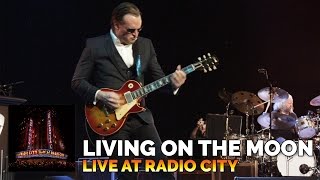
Watch the official Living on the Moon
music video
A Love Story Built on Swings and Reversals
One of the smartest parts of the lyric is how often the situation flips. The narrator gets pushed away, then pulled back. They leave, then return. They feel hurt, but they still see the attraction.
That cycle appears in small phrases like took me back
and all too soon
. Even without many details, the pattern is clear: this is an on-and-off relationship. It runs on impulse instead of trust.
The song also admits the bond is not purely bad. There are moments when the other person seems like the best thing on earth
. That contrast is essential. If the relationship were only cruel, there would be no real drama. The problem is that the highs are real enough to keep them invested, while the lows are harsh enough to make the whole thing unsustainable.
The Chorus Turns Space into Emotion
The chorus does more than repeat a catchy line. It reframes every verse as a survival story. Each complaint in the song—instability, bruising conflict, emotional distance—feeds back into the moon metaphor.
Hard to keep feet on the ground
Love the ups, hate the downs
These two short lines capture the relationship’s emotional physics. They cannot stay balanced, and every high comes with a drop. The phrase about keeping their feet on the ground suggests they have lost stability, judgment, and peace.
Interpretation: Bonamassa uses outer-space imagery to describe a very human problem: some relationships feel intense because they are unstable, not because they are deep.
Symbols That Explain the Emotional Damage
Several recurring images sharpen that idea:
- Air and breathing: love has become suffocating instead of life-giving.
- Bruises and swelling: the relationship leaves visible emotional damage, even if the song speaks in metaphor.
- Dunes and ground: they are searching for solid footing but keep sliding.
- Space and distance: closeness exists, yet they still feel alone.
- Marooned: they feel stranded with no easy rescue.
Near the end, the song hints at a possible solution: need some space
. That line is clever because it works in two ways. On the surface, it means separation may help. In the moon metaphor, it also deepens the cosmic setting. They are already in “space,” yet they still need distance. That irony suggests the relationship has become too crowded emotionally, even while it feels empty.
How the Blues-Rock Sound Supports the Meaning
Bonamassa is best known as a modern blues-rock guitarist, and that matters here. According to his official bio, they built a career on blending traditional blues feeling with hard-edged rock power. “Living on the Moon” fits that approach well.
The song’s groove gives the lyric forward motion, but the guitar tone and vocal delivery add friction. Instead of sounding dreamy or cosmic, the track feels earthy and muscular. That contrast helps the meaning. The moon image could have become soft or psychedelic, but Bonamassa keeps it grounded in blues tension.
The push-pull dynamic in the arrangement also mirrors the lyric. Tight rhythm playing suggests control, while the lead guitar adds bite and release. In effect, the music sounds like a person trying to keep composure while emotion keeps breaking through.
Songwriting credits list Bonamassa and James House, as noted in the song information provided here. House is a seasoned Nashville writer, and that may help explain why the lyric is so clean and direct. It gives listeners one big metaphor and trusts it to carry the emotional weight.
Artist Context Makes the Song Land Harder
Bonamassa often works in a style where pain, pride, and longing sit side by side. That blues tradition is built for songs about relationships that are both irresistible and destructive. On AllMusic, they are described as a guitarist and singer who brought fresh energy to modern blues-rock. That context matters because “Living on the Moon” is not trying to be a confessional diary entry. It is trying to turn emotional trouble into a sharp, memorable blues image.
That also helps explain the song’s reception among fans. Even if listeners have never felt “marooned” in a literal sense, many recognize the emotional version: being stuck in a relationship that alternates between comfort and chaos.
Final Reading: Beautiful, But Not Livable
The strongest reading of the song is that it warns against confusing intensity with health. The relationship feels rare and exciting, but daily life inside it is harsh. What looks magical from a distance becomes impossible up close.
So the meaning of Living on the Moon Joe Bonamassa comes down to this: they portray love as a hostile environment that still holds a strange pull. It is passionate, memorable, and sometimes beautiful, but not easy to survive.
Disclaimer: This interpretation is based on the lyrics, musical style, and available song context. Like many songs, “Living on the Moon” can support more than one reasonable reading.







